advertisement
Bang & Olufsen is bringing back a beloved CD player

Bang & Olufsen is bringing back a beloved CD player

Built-in obsolescence in technology products is an open secret. As companies include mechanisms designed to feel antiquated just in time for their next release, consumers are left to reckon with the issue – and pick up the tab. In 2023, the UN estimated that individuals produce about 8kg of electronics waste every year, equating to 61.3 million tonnes of discarded computers, phones, cables, batteries and televisions worldwide.“If we continue to operate the industry in the same way, we’ll have a huge problem,” says Mads Kogsgaard Hansen, head of product circularity and portfolio planning at Bang&Olufsen (this portfolio stretches back almost a century to when the company was founded, in 1925). “We use too many materials for too short a lifespan, motivating consumers to replace their devices early without any concrete reasons. The consequence is the waste being generated and [we need to consider] how to handle the substance of the waste.”Tiina Karjalainen Kierysch, head of design at Bang&OlufsenMads Kogsgaard Hansen with a Beosound 9000It’s a windy day in Struer, on the Danish peninsula of Jutland, and Kogsgaard Hansen is walking Monocle through Bang&Olufsen’s Factory 3. Here, technicians are busy sourcing and taking apart Beosound 9000 CD players, originally designed by the late British industrial designer David Lewis in the 1990s. The Bang&Olufsen team have purchased the CD players from their previous owners to refurbish as part of Kogsgaard Hansen’s Recreated Classics Programme, a project that began in 2020 with the revisiting of the 4000c turntable from 1972; this year, it will release 200 refurbished Beosound 9000c CD players.Considering Lewis’s futuristic-looking design, with its sleek aluminium-and-glass surfaces, it seems anachronistic to watch these devices being painstakingly taken apart, cleaned and fixed by hand. Across the factory floor, boxes brimming with metal parts are carefully organised and stacked. “The refurbished products coming out of the workshop are often better than the new ones because they’ve been reassessed with knowledge that we didn’t have when we first launched them,” adds Kogsgaard Hansen, as he explains that, for example, the laser reader is always replaced during the restoration process as it is the mechanism most likely to be faulty. “We need to make sure that we’re future-proofing as well, so we replace the parts that often have a reduced lifespan or might malfunction down the line. There is a long list of proactive fixes that we can make thanks to the experience that lies in the building and in our team.”Components built to lastDetail of a Beolab 28 speakerTechnological quality speaks volumesErik Vennevold, manager of technical assembly, worked on the original Beosound 9000 in 1996 and has nearly 30 years of experience fixing them. “When we started making the Beosound 9000, it was said that the acceleration of the CD-grabbing mechanism was faster than a Ferrari,” he says, demonstrating how the CD player silently whizzes at speed between the six albums encased in glass. When the technology was first introduced, the idea of seamlessly gliding between different albums and genres was unheard of, a kind of prototype for a shuffle playlist before the age of digital streaming. Today, Vennevold is in charge of passing down his accrued technical know-how to a team of Bang&Olufsen engineers tasked with reassembling the CD players using original equipment from the 1990s that was brought up from storage especially for this project.“Bang&Olufsen has always been challenging the status quo – no one thought that a CD player could look like anything but a black box”After the manual disassembly in Factory 3, the aluminium parts are sent to the nearby Factory 5, where they can be milled, polished and painted black to look as good as new. Often the cabinets show scratches and marks on the panes. For aluminium, this is an easily rectifiable problem but the glass lids, in this instance, are being fitted from new materials so as not to compromise the overall quality of the design. Compared to the rather old-fashioned and analogue craft taking place in Factory 3, Factory 5 is where Japanese robotic arms engage in a hypnoticpas-de-deuxto bend, polish, stretch, press, fold and mill aluminium into the recognisable Bang&Olufsen shapes. The sound of machinery whirring and clanging can be heard as metal is crushed and moulded into shapes of sound systems, speakers and TVs, at times with the help of a press that can exert the weight of 117 tonnes (the equivalent of about 30 Asian elephants). On one side of the cavernous space, rows of metal parts are being dipped into vats of bubbling liquid to achieve the all-important anodising step of manufacturing: the electro-chemical process that creates a scratch-resistant surface.Electronic chip with labyrinthine groovesDecades-old equipment still in useTiina Karjalainen Kierysch, Bang&Olufsen’s head of design, joins monocle for this section of the tour. Despite being based in Copenhagen, Karjalainen Kierysch makes the four-hour train journey to Struer to visit the factories frequently. “It’s nice to be more hands-on because many of the prototypes are perfected here, in dialogue with the factory. Sometimes even a small detail, such as a polished edge, can enhance an object’s desirability,” she says, leading us through the labyrinthine layout and greeting technicians. “From a design point of view, Bang&Olufsen has always been designing the future, challenging the status quo. Before the Beosound 9000, no one thought that a CD player could look like anything but a black box.Mounting aluminium parts for anodisationRefurbished Beosound 9000c from the 1990s (on left) with 21st-century Beolab 28 speakerAs we leave the busy factory floor, it’s time to see the refurbished Beosound 9000c in action. The CD player is placed on a matching black aluminium footstand, in tandem with a pair of Beolab 28 speakers from the 2020s that can be wirelessly paired to the CD player. Through refurbishment and the addition of a Beoconnect Encore converter box, 21st-century advances can be introduced to a design from the 1990s, a compelling manipulation of time and the linear progress of technological knowledge. “All of us on the design team were reluctant to change it too much because we liked the brutalism of the simple lines. There’s everything you need and nothing you don’t,” says Karjalainen Kierysch. “So for this recreated version, we kept the integrity of the lines and the materials but we inverted the colours by reanodising the aluminium parts in black.”As the Beosound 9000c stands proud, its Lewis design looks as futuristic and slick as ever, with its six CDs on display to offer a glimpse of its owner’s musical taste, be it 1950s Ethiopian jazz or 1990s grunge. As a design, it’s a sculptural piece capable of commanding attention in any space. As a piece of technology, it provides an opportunity to dig out old CDs and engage in a more ritualistic approach to listening to music once more.Polishing also requires some elbow grease“We’re hoping to show that a second life is not a compromise but actually that it is sometimes a more attractive option,” says Kogsgaard Hansen. “We’re trying to demonstrate a different way of thinking about electronics.” This might be more difficult to argue in favour of when it comes to old, broken wired headphones with dated aesthetics but it is certainly an interesting proposition regarding a well-crafted collector’s item from the 1990s. Perhaps, then, the only cure to obsolescence is simple design that transcends time. Ready for a revival?Here three more Bang&Olufsen designs that we would love to see come out of the archive:1. Hyperbo 5 RG SteelThe Bauhaus-inspired 1934 design is a compelling early example of sound-as-furniture.2. Beovision Capri TVA 1959 television set on teak wood legs, inspired by Danish modernism.3. Beocom 6000Designed in 1998 by Henrik Sørig Thomsen, this telephone makes a stylish case for having a landline.

Walla Walla Foundry: The factory helping artists turn ideas into material reality

Walla Walla Foundry: The factory helping artists turn ideas into material reality

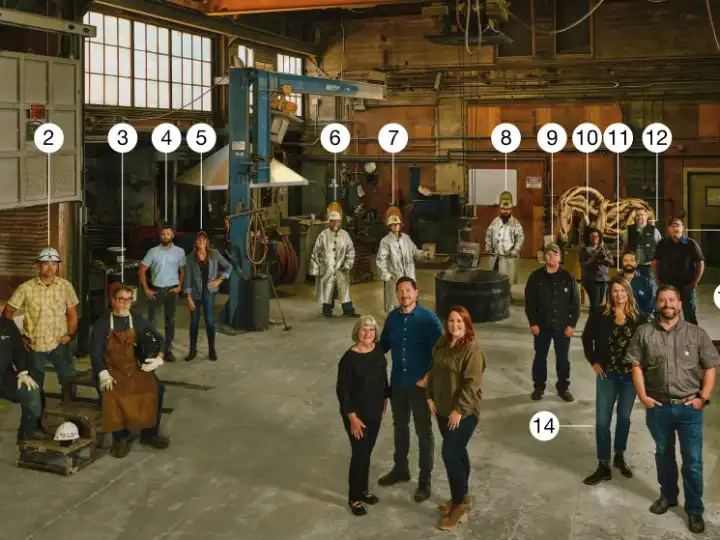
For some of the world’s leading contemporary artists, the path from studio concept to museum exhibition runs through a small town in southeastern Washington state. The Walla Walla Foundry specialises in metal fabrication and bronze-casting for artworks as tall as 18 metres. Founder Mark Anderson, a Walla Walla native, studied at the town’s Whitman College, a liberal-arts school, and learned metal-crafting at a small foundry focusing on American Western art. His tastes veered towards contemporary art, however, and he established his own factory in 1980.Pop artist Jim Dine put the foundry on the map and it has since become a preferred fabricator for the likes of Matthew Barney, Yayoi Kusama and Wangechi Mutu. Anderson died in 2019 but his widow and children continue to uphold his legacy. “Success for us means focusing on contemporary art and supporting creatives,” says co-owner Jay Anderson.Jay studied art at universities in Seattle and New York. Though he still practises his craft, he returned from the big city to the family homestead to further his father’s mission. His extensive experience is what encourages many people to make the trek to Walla Walla from far corners of the art world.“For artists, our team is like a physical extension of the studio,” says Jay. “There are 100 technicians here who can all work as your assistant if needed.”These factory workers translate artistic concepts into tangible works of art, whether that involves bending metal or shaping wood. The accumulated experience of the past 40 years has taught the foundry’s team how to do just about anything. “Artists have an idea but they might not know how to make it,” says Anderson. “That’s why we’re here. We help them to solve their problems.”The Anderson familyPatricia Anderson co-founded the foundry with her late husband, Mark, in 1980. She continues to preserve the company’s history and provide the next generation with guidance. As a trained painter and sculptor, her son, Jay, has a deep understanding of the contemporary art world. He also runs the family winery. Her daughter, Lisa, studied art history and business. She handles the fine print – contracts, budgets, insurance and red tape. For the Andersons, the foundry’s mantra is simple: “We don’t want to say no.”1. Roberto Morales, Metal fabricator, “Monumental problem-solver”.2.Dustin Jones, Metal shop supervisor, “Steady hand and taskmaster”.3. Byron Peterson, Metal fabricator, “Keeper of stories and wisdom from his 38-year career”.4. Ryan Bagley, Operations manager, “The authority on safety and efficiency”.5. Tammie Buchanan, Finance director, “Budget whisperer and numbers genius”.6. Leif Dillow, Foundry supervisor, “Casting wizard with unmatched expertise”.7.Brandon Perez, Foundry technician, “The new guy with great promise”.8. Caleb Schmidt,Foundry technician, “Casting understudy and friendly Viking”.9. Matt Ryle, Director of production, “Art-world veteran and project mastermind”.10. Brianna Wray, Photographer, “Pun-loving documentarian who captures working processes”.11. Humberto Gonzalez, Lead painter, “Paints inside the lines every time”.12. Jeremy Lilwall, Wax-room and patina supervisor, “Expert patineur and tracking maestro”.13. Grant Griffin, Facility and crating manager, “Keeps everything together – literally”.14. Deirdre Bealey, HR manager, “Resourceful human and HR guru”.15.Jonathan Follett, President, “Public-facing, forward-thinking team leader and big-picture strategist”.

Farewell to arms as the demand for weapons skyrockets in uncertain times

Farewell to arms as the demand for weapons skyrockets in uncertain times

The world’s largest aerospace and defence companies look set to earn record revenues as countries seek to rearm in the light of the Ukraine and Gaza wars. This reported bonanza is hardly surprising, given the vast expenditure of munitions and materiel in both conflicts. It’s a marked departure from the decades of relative peace following the demise of the Soviet Union. Armed forces around the globe shrunk, with some notable exceptions, as governments spent on other priorities. Nowhere was this trend more acute than in Western Europe – but that peace is now over.The alarm bell first went off in 2014 when Russia illegally occupied Crimea and the snooze button was permanently switched off with the subsequent full-scale invasion of Ukraine in February 2022. Governments belatedly woke from their slumber and looked to their armed forces once more. Many were embarrassed by the decline that had taken place when they weren’t looking. Countries had grown complacent and were now playing catch-up. There was also a stinging realisation that expanding armed forces and equipping them adequately would not happen overnight. Many domestic defence-industry manufacturers of the past were simply no longer in business.So does all of this signify a boom time for the arms industry? Yes and no. Certainly, a huge amount of materiel and ammunition has been sent to – and expended by – Ukraine. Much of it has come from the national stocks of its allies, which now need to be replenished as quickly as possible. Likewise, Israel has been kept supplied in its struggle against Iran’s proxies, particularly Hamas and Hezbollah, by weapons exports primarily from the US, Germany and Italy. However, while it might seem as though the current conflicts have made it a seller’s market and that manufacturers have been given a licence to print money, other factors come into play. And politics, both global and domestic, is never far away.Demand for weapons and equipment around the world has clearly increased. But in the words of the Rolling Stones, “You can’t always get what you want.” The US and other Western nations have supplied some support to Ukraine reluctantly and placed restrictions on its use. Governments are also facing increasingly vociferous demands from pro-Palestinian activists to halt arms sales to Israel while the war in Gaza continues. The UK has now partially bowed to popular pressure; the US and others have not. Manufacturers are being curtailed from making as much as they might like to do as a result.There are domestic constraints too. The UK’s Ministry of Defence has committed £7.6bn (€9bn) in military aid to Ukraine over the past three years. Stockpiles of ammunition and other materiel have been run down because of both government parsimony over past decades and donations to other nations, to the extent that the recent chief of the general staff, Sir Patrick Sanders, said, “It would make your hair stand on end.” At the same time, the incoming Labour administration has been startled by the poor state of the nation’s finances, meaning little guarantee can be given on future arms orders.The UK government has commissioned yet another strategic defence review, which cynics say is a euphemism for future defence cuts. The country’s armed forces are in dire straits, with a projected £80bn (€95bn) “hole” in its budget over the next decade and clearly some equipment programmes might have to be cancelled to balance the books. There is a very real possibility, therefore, that the arms boom will be short-lived, unless governments, from the UK to Germany, commit to serious investment in new production facilities, plus storage space for armaments. This could take time, if it happens at all.The challenge for the defence industry is a long-term conundrum. Is it worth investing further? And most importantly, who is going to pay?Born in Glasgow, Crawford is a journalist and former soldier who served the UK over a 20-year career.

Inside Mioveni: How Dacia transformed a village into a global auto hub

Inside Mioveni: How Dacia transformed a village into a global auto hub

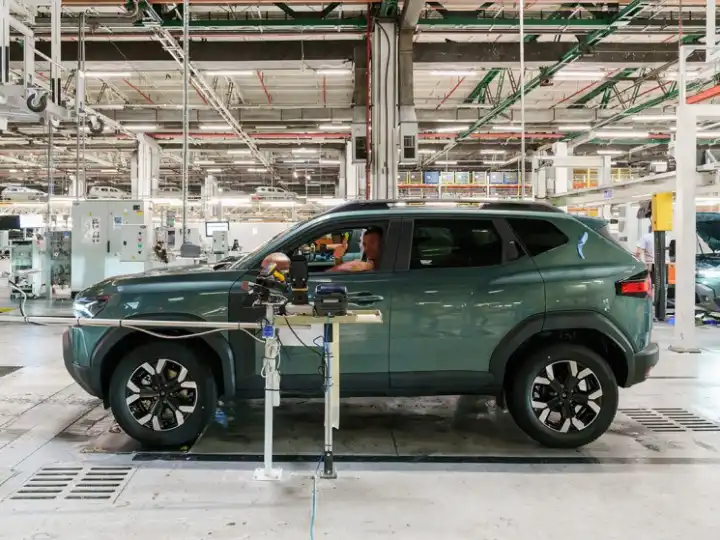
The rumble and thud of heavy industry is overwhelming. Inside the stamping department at Dacia’s production plant in Mioveni, Romania, sheet metal is being sandwiched under pressure to create doors for the car brand’s new Duster model. For the robotic machinery to do its thing, huge, heavy moulds are being manoeuvred across the hangar by a yellow crane arm that spans the entire 15-metre length of the roof. “This is the high speed line,” shouts Alina Predescu, the department’s senior manager and a Dacia employee for the past 15 years, referencing the equipment on display. The combined 12 lines that operate here produce 4.5 million pieces a month. Next, they’re passed to the body shop where the cars start to take form.To call Mioveni a production hub would be an understatement. Opened in 1968 during the early years of Nicolae Ceausescu’s Socialist Republic of Romania, the Dacia factory is a beast that almost never sleeps. Operating 24 hours a day over three shifts, it rests only on Sundays. A car is produced here every 55 seconds, while 350,000 cars roll off its production line each year. The figures are a testament to the phenomenal success of Dacia in recent years. The brand was long seen as a budget, no-frills player but has morphed into much more. Dacia now sells more than 650,000 cars a year and its Sandero recently became the best-selling car in Europe. The relationship, though, is reciprocal; Dacia wouldn’t be where it is today without its historic mothership plant, located about a 90-minute drive northwest of the capital, Bucharest.Cars in progressGetting hands-onWhen Monocle visits the plant – a series of grey, flat-roofed buildings surrounded by large car parks – we’re told to imagine it more as a town than a factory. On a map, its 288 hectares look almost as big as Mioveni itself, which sits below the plant’s slightly raised vantage point next to woodland. Before Dacia arrived, Mioveni (pronounced with a short “I” at the end) was a sleepy village of about 6,000 inhabitants. Today the automotive town is home to 30,000 people. Many Mioveni residents have either worked here or know someone who has – attracted by what one employee calls a job opportunity “gold mine”. With revenue of €5bn a year, the plant represents some 2 per cent of Romania’s GDP and about 2 per cent of its exports. Dacia began by mass-producing cars for the local market through a licensing agreement with Renault. Car kits were dispatched from France and assembled in Romania under a local brand name, though the plant shifted to making its own parts not long after. Dacia’s debut model, the 1100, was based on the Renault 8 and its second car on the Renault 12. That relationship came full circle in 1999, when the Paris-based multinational bought the brand. Renault’s CEO at time, Louis Schweitzer, had been to Russia and seen the success of Lada. He was convinced that there was a worldwide gap in the market for Dacia, especially in post-Iron Curtain Eastern Europe. With Renault’s arrival, efficiencies were greatly increased. Monocle is anecdotally told that before that, in the 1970s and 1980s, 30,000 employees were producing 100,000 cars a year, with capacity tripling at the plant between 2004 and 2010. “The factory has changed each year,” says the plant’s general manager, Sile Fulga, who has been here since 1987, wearing a Dacia logo wristband to protect his watch. “In 2000, we didn’t have any robots.” Underlying Dacia’s expansion has been an idea that counters the trends of the automobile industry. There has been a push back against the expensive bells-and-whistles cars that had already started to come onto the market at the end of the 1990s. “The idea was to say, what if we have a piece of the group that would not play the game of always more,” Dacia’s CEO Denis le Vot, also group chief supply chain officer, tells Monocle. Under Renault’s stewardship, Dacia launched the no-nonsense Logan model in saloon and estate versions, which came with wind-down windows and no air conditioning.Mioveni workers with their 2008 Dacia Logan pick-upCatalin Filip with his Dacia 1100 from 1969A 1974 Dacia 1300 parked in central MioveniMioveni policeman with his Dacia Logan patrol carThe car bodies being welded together by automated arms when Monocle visits are very different from those of the original Logan. Given how popular SUVs are worldwide – representing more than half of all sales in Europe – Dacia’s decision to pivot to an SUV look for most of its cars has proved prescient, even if many of them are smaller superminis, compact SUVs and crossovers. But Le Vot says that, though some aspects have changed, “the spirit is the same”. The less-is-more concept, for example, still prevails. Some might call them under-equipped but Le Vot prefers to say that Dacia produces cars with only the essential features. “We like to quit anything that is not strictly necessary,” he says, adding that the idea of “essentiality” is nonetheless shifting all the time given the types of vehicles coming onto the secondhand market, often a direct competitor of Dacia. Its cars feature manually adjusted seating, plastic over leather upholstery and understated screens; air conditioning, once deemed a luxury, is now part of the package. For a long time, Dacia also shunned lane-keep assist – the sometimes tedious feature that steers you back onto the road should you drift outside the lines – as too much technology, but new EU safety regulations mean that this is now part of the brand’s essentiality too. One of the less visible reasons why Dacia has become a superstar of the region – and beyond – is the way it has been run by Renault. Though brand studios in France might get design input, Dacia has been allowed to keep plenty of devolved powers, maintaining a 3,000-strong engineering corps in Bucharest, as well as a Romanian design team. There is a strong focus on what the Dacia CEO calls “design to cost”. Dacia cars are created with a sharp focus on the core things that matter to consumers in a process meant to separate real value from unnecessary technical glitz. Despite its range of cars, with the exception of its single electric model, Dacia also keeps the same platform across its catalogue – all the bits out of the consumer’s view, including the bulk of the body structure, axles and even a lot of the powertrains – which lowers costs. Lastly, Dacia taps Renault Group HQ and its R&D, which Le Vot refers to as “big brother”, to borrow technology developed years earlier.The city of Mioveni is dominated by the St Peter and Paul Cathedral, with its distinct orthodox spires, which sits just off a main thoroughfare. Inaugurated little more than a decade ago, it’s one of the many buildings constructed here since the 1970s – many of them nondescript communist-era blocks – as the population started to grow. Walking around town, the influence of Dacia is difficult to miss. The yellow taxis driving around the streets are Dacias, as are the police cars, both Logan models. The workers in blue overalls fixing up the square arrive in a Dacia pick-up, while a family of three we talk to is driving a workhorse Dacia Solenza from 2003 that needs pushing to get its engine going. Later, we meet members of a local Dacia classic car club, all eager to show off their vintage models. Catalin Francu was a driver for Dacia in the 1980s and 1990s during the company’s original foray into rally car racing (Dacia recently announced that it would be joining Dakar Rally from 2025). Like many people, for Francu there’s a pride and perhaps even sentimentality attached to a brand that is still seen as indivisible from Romania itself. “I was born with Dacia,” he says. “And for many Romanians, it’s the same thing.” Both Alin Stanciu, owner of a 2003 Dacia 1310 estate, and Catalin Filip, whose 1969 1100 turns plenty of heads as people walk past, agree. Stanciu talks about a “nostalgia” for Dacia that clearly comes from where he has grown up. “It’s normal because everyone has a connection to the plant,” he says. “Four members of my family worked there.”Still, present-day Dacia wants to be seen as much more than Romanian, even if CEO Le Vot calls it the heart of the brand. “Dacia is Romanian but Dacia goes way beyond Romania,” he says. “The uniqueness of the brand is not specifically the geography, though the history is linked to the geography.” For one, Romania is no longer the top sales market, with top spot going to France followed by Italy. The Mioveni plant also isn’t the only factory producing cars. Le Vot is quick to add that Mioveni has a “bright future” but there are two plants in Morocco that make what the CEO calls the “low drive”, more budget cars such as the Sandero and Logan, as well as the seven-seater Jogster. The Mioveni plant focuses on higher-end cars, including the Duster. Part of that gradual shift in brand orientation involved a redesign of the Dacia logo in 2021, which started to feature on new cars from the following year. It’s one of the many logo iterations we see on Dacias during our time in Romania. The kissing “D” and “C” feels modern and has been coupled with Dacia moving away from its traditional blue to an olive green. This has been complemented by lifestyle advertising that makes Dacia feel outdoorsy. Le Vot, quoting the brand markers, says that it’s all part of being “robust and outdoors, eco smart and essential but cool”.Alongside the brand’s first electric car, the China-made Spring, which hit the UK in October (a first-generation model has been available in other markets for longer), 2025 will see the release of a large suv, the Bigster – a bid to cash in on that lucrative segment of the market. It will be made right here in Mioveni, from the metal stamping to the final conveyor-belt quality control.Alongside the evolving look and feel, Le Vot argues that the way Dacia is perceived continues to shift. While he says that Dacia is “still the cheapest on the block” for those who want it, buyers aren’t just secondhand car owners looking for the only new car they can afford. Premium brands have become so expensive, he says, that plenty of new Dacia owners have gravitated from higher-end players. It means that 70 per cent of Dacia’s sales are now made up of its most expensive models. “The market is coming to us,” he says. And with it, Dacia’s evolution continues apace.Sizing upRenault has seen growth in medium and large-sized cars, and Dacia wants a piece of the action. Its Bigster is out next year and two more similar-sized bodies are planned for the near future.

Why those seeking to decouple manufacturing from China would do well to consider Monterrey

Why those seeking to decouple manufacturing from China would do well to consider Monterrey

Monterrey is Mexico’s original factory town, a hot and hazy outpost in the northeast of the country that is watched over by majestic green mountains. It was made rich in the early 20th century by steel and cement works, as well as a foundry that still looms on the skyline, and today the city could be on the verge of another industrial revolution. Just three hours by lorry to the Texan border, it is becoming the landing pad for global companies that want to be closer to the US market.Lego has its largest manufacturing facility in the world here, which it expanded in 2022. There are factories assembling Toto toilets, along with Whirlpool white goods and Mattel’s Barbie Dreamhouse. Tesla has bought land to build a new giga-factory. All have come here to plug into well-established rail and freight routes that run right up to Canada and to operate at a fraction of the cost of being based north of the border.In the shadow of the mountains“Every week, two or three companies from around the world invest in or expand into this state,” says Iván Rivas Rodríguez, the economic secretary of Nuevo León, where Monterrey is the capital. Part of the draw, he tells Monocle, is the thousands of engineering graduates who emerge every year from its highly regarded technical universities.“Nearshoring”, as this great global reshuffle of manufacturing is called, was long an El Dorado dream for Mexico, promising great riches without quite delivering them. Then the coronavirus pandemic kicked things up a gear as it underlined the fragility of global supply chains. Meanwhile, the US trade war with China, which spiked under Donald Trump’s presidency and has not subsided, brought hefty tariffs on Chinese-made goods coming intoAmerica. All of this is prompting companies that have traditionally relied on Asian manufacturing to find other ways to get their goods to the world’s number-one market.In 2023, Mexico supplanted China to become the biggest exporter to the US. Morgan Stanley predicts that nearshoring could add as much as $46bn (€43bn) in new investment to the economy over the next five years. The stars might be aligning for Mexico, provided that it can seize the moment.“This is the land of the eternal fantastic opportunity that’s never 100 per cent fulfilled,” says Emilio Cadena, the chairman of the board of the US-Mexico Foundation. He is also the ceo of Prodensa, a private company headquartered in Monterrey that helps manufacturers make a “soft landing” in the country and plug into nearshoring. Cadena says that he talks to businesses from countries such as Taiwan, Japan and, yes, China that are looking to get in on the action. Yet he is critical of successive Mexican governments’ lack of a strategy to capitalise on nearshoring’s full potential. With a forthcoming election in June, there’s a widespread view among industrialists that Mexico still has a lot of work to do, from securing a greater supply of electricity to making it easier to do business here. “We need to think big,” says Cadena.Emilio CadenaGerman CarrilloCar manufacturer Kia, owned by South Korea’s Hyundai Automotive Group, opened a gargantuan factory in Monterrey in 2016 and was a pioneer in a scrubby suburb of smokestacks and golf courses called Pesquería. The area often gets referred to as “Peskorea” these days because of the abundance of South Korean-owned factories – and excellent hotpot restaurants – that have pitched up.Every 53 seconds, a Kia car rolls off the production line with two celebratory beeps of the horn. Deputy production director German Carrillo proudly tours Monocle around his slick, highly automated operation, where two Mexican engineers using robotic arms tighten up a car’s suspension and car doors float above our heads on conveyor winches.Kia’s Monterrey plantAbout a quarter of a million cars drove out of this factory in 2023, with most destined for US and Canadian roads, and the rest going to more than 30 other countries. “We have the capacity to make many more,” says Carrillo. Last year there were reports, denied by executives in Mexico at the time, that the factory would get a $1bn (€900m) expansion to build Kia’s next- generation electric vehicles.Most of the welding and heavy-duty lifting is done by robots, while the more intricate work – affixing stereo speakers into car doors, for instance – is performed by skilled workers. This is not the “cheap labour” that once drew manufacturers to Mexico. Kia’s leadership says that it is fighting for engineering talent as more car firms come to the state. There’s even a “Pits Zone” on the factory floor where employees on the line can take time out, talk to a counsellor and receive legal and nutritional advice.Looking upWhen Hyundai came to Mexico, it brought its family and its connections. Metal for the chassis comes from suppliers including Hyundai Steel, Ternium and ArcelorMittal, while the body is put together by Kia’s welding shop. Much of the components are made within a couple of kilometres of the factory and are fed into the main site via a grand network of conveyor belts. “Everything is becoming more regional,” says Humberto Fernández Montes, deputy director of parts development for Kia Mexico, leaning on a well-buffed new hatchback. He reckons that, as more suppliers open up to serve a growing automotive industry, 80 per cent of this car will be made in Mexico within the next five years.It’s a profound shift from a time when Mexican factories mostly assembled parts produced in Asia. If the US wants to “decouple” from China, limiting its economic entwinement with its rival amid heightened global tensions, then it will need a handy local partner such as Mexico. Meanwhile, other regions are also rethinking their supply chains and Malaysia, Turkey and Morocco are similarly vying to be the next workshops of the world.Opening doors“Mexican workers have a real sense of commitment to their companies and that’s a cultural advantage,” says Benito Gritzewsky, the founder of Nuevo León-based Hemaq, which designs production lines for companies that supply components to the aerospace industry, such as Bombardier and Honeywell.“But as a country, we have a lot of pending homework.” Security and corruption are major concerns. Mexico’s notorious cartels remain a powerful force in control of large swaths of the nation and banditry is an issue for those trying to move goods around.Such challenges can also be an opportunity. Nowports is a start-up that was founded by two young entrepreneurs from Mexico and Uruguay who wanted to digitise the whole business of getting goods in and out of Latin America, from streamlining paperwork to safeguarding shipments with insurance. “We are a one-stop shop, from port to warehouse,” says Carolina Samsing, Nowports’ vice-president of global growth. On the wall of the company’s headquarters in Monterrey is a neon sign that reads “Shipping happiness” and the business, valued at more than $1bn (€900m), has already been called a true Mexican unicorn.Getting thereMonterrey is expanding its airport. It now offers 21 direct international routes to cities including Madrid, as well as destinations across Latin America, with connections through many Mexican cities. It is the home airport for airline Viva Aerobus, which recently beefed up its flight map to the US, with direct flights to Monterrey from Austin, New York and San Francisco.Despite the smog that settles on downtown Monterrey, you can’t miss the energy that’s blowing through this city. The Mirador restaurant downtown has been the dining room for the local business and political elite for more than 30 years and it’s still the place to spot regional politicians courting investors over steak tacos. But as more global firms arrive, ambitious restaurateurs are also moving in. Noted Mexico City chef Edo López, for example, has a new outpost of his Japanese- inspired dining group here. And it’s not just newcomers who are upping the game. Alan Wapinski, a Monterrey resident who runs a successful Mexican-Thai fusion spot called Mar Del Zur, has just opened his second restaurant in town.San Pedro Garza García to the west of the city has long been Monterrey’s glitzier side, with high-end villas and corporate offices. (It’s home to some of Latin America’s biggest earners.) Global architecture firm Perkins&Will opened its first Mexican office here in 2020 and its associate principal architect, Antonio Pérez Vázquez, says that it is working on masterplans for leafy new neighbourhoods and designing HQs for incoming companies.Antonio Pérez Vázquez (on far left) at the Perkins&Will officeAna Isabel GarzaArboleda is a fast-growing enclave of independent shops, cafés and elegant apartments that’s attracting well-heeled Mexicans and expats, with pedestrian-friendly streets and tropical birds. Its founder, Patricio Garza, and his daughter, Ana Isabel, who runs a space in Arboleda that champions local coffee roasters and artisanal food brands, hope that this mixed-use neighbourhood can inspire more considered forms of urbanism as Monterrey grows. “As developers, we’re using real estate as a tool for the positive transformation of the city,” says Garza.There might be a fresh breeze in muggy Monterrey but much of the city was built to keep the wheels of industry turning. “The advantage that we have – being the neighbour of the world’s number-one customer – was not something that we ever planned or could have anticipated,” says Bonito Gritewsky, the owner of Hemaq. “But it is something that many, many countries envy us for.”In numbers:3.8 millionAlmost four million cars were manufactured in Mexico last year.95 millionThe number of Mexican-made Lego boxes exported per year.$475.6bnMexican exports to the US in 2023 amounted to almost €443bn.$29bnForeign direct investment to Mexico is at more than €27bn.40 per centThe proportion of Mexican economy that is in manufacturing.

“Why I’d rather get lost than let my phone give me directions”

“Why I’d rather get lost than let my phone give me directions”

I recently took a work trip to Sussex in southern England. I hadn’t had a chance to check where we were going and just hopped in my colleague’s car. She typed the address into her smartphone, slipped it into a holder on the dashboard and off we went. When I wasn’t following the blue dot on the screen, I was startled by the views. We traversed an exotic-looking heathland. A gothic church loomed over a mysterious hill town. Unexpectedly, I glimpsed the sea. Where were we? I felt as though I was in a foreign land. This is not how I normally travel. I am one of the few remaining smartphone refuseniks; my phone is a brick. I use Google Maps but only before I set out, so that I can draw a route onto a scrap of paper. In the car, I consult the road atlas. When I’m out on my bike, I tap on the windows of cabs waiting at red lights. I ask bus drivers where to get off. These human interactions now feel very countercultural. But my brief period of Sussex disorientation is now how most people live all the time – unaware of where they are going and in which direction. I do sometimes get lost but I’m usually aware of the general lie of the land. I am mindful of my increasing eccentricity but I believe that not having a sense of where we are is profoundly disempowering. It means that we walk blindly down a dark corridor, guided only by technological corporations with dubious motives. Several studies have shown that relying on “egocentric navigation” (or turn-by-turn instructions) rather than paper maps is eroding our navigational ability; it’s a “use it or lose it” skill. Indeed, we have our own gps system in our brains: researchers have identified triangular “grid cells” that map territory, rather like longitude and latitude co-ordinates. This is just one way in which we underestimate our own highly sophisticated cognitive capacities in favour of the shiny new technology at our fingertips. Satellite navigation is improving all the time and rarely lets us down. When it does, though, the consequences can feel catastrophic. Researchers have found clear links between spatial awareness and memory. London taxi drivers who have memorised the city’s entire street plan (known as “The Knowledge”) acquire an enlarged hippocampus – the part of the brain associated with learning and memory. There is also evidence that orientation helps us to remember not just places but events. Neuroscientists believe that, remarkably, parts of our brain also give us the ability to imagine ourselves in, and plan for, the future. In June, scientists based in the UK and US discovered how the brain’s prefrontal cortex and the hippocampus work together to enable us to make decisions by envisaging potential outcomes.Replacing paper maps with phones feels like progress but are we actually travelling backwards? If we give up our sense of direction, we forfeit agency and control. We might feel liberated but we lack the freedom to explore what lies between A and B. Worst of all, we lose context. That loss is part of a more general disorientation. Children no longer appear to be taught countries and capitals. My own kids are growing up without a clear sense of their place in the world. History for them is a series of unconnected events; music is a playlist of singles, detached from any discernible movement or era. Digital technology is rendering us both tethered and unmoored. We lose the big picture at our peril.Glaser is a writer, lecturer, radio producer, broadcaster and author whose books include ‘Elitism: A Progressive Defence’.

How the Ford Tourneo is becoming the taxi of choice in Europe

How the Ford Tourneo is becoming the taxi of choice in Europe

Looking for a vehicle to shuttle you between fashion shows at Pitti Uomo in Florence? Or are you on the hunt for a driver to whisk you around Milan during Salone del Mobile next year? If so, you might find yourself buckled into a Ford Tourneo Custom. The 2024 edition of the smart-looking people-mover that can carry up to nine passengers is quietly becoming the executive car service’s vehicle of choice in Italy.“It’s an elegant yet comfortable car to drive,” says Stefano Ciappi, who Monocle trails for a morning on the road in Florence, where he’s taking clients to the airport or between events in his newly minted Tourneo Custom. Ciappi, who runs chauffeur business Chianti Drive, which services central Tuscany, bought the vehicle earlier this summer. The driver’s preference for the US brand is unusual in a sector where the ubiquitous Mercedes Benz V-Class people-mover currently reigns supreme – but Ciappi says that’s likely to change. “The Tourneo Custom is going to be really popular in the chauffeur and taxi industry in Italy,” he says. “I already have several taxi-driver colleagues trying it. They’re satisfied with it because it’s comfortable for both the driver and the passengers. It’s absolutely on the way to being a success.”The Tourneo Custom has been in production since 2012 but has had a dramatic overhaul for 2024, which has generated a renewed interest in the vehicle. There are sleek new headlights and a refined front grille but the game-changing component has been the introduction of a seating mechanism that allows for all nine seats to slide and rotate within the cabin. It’s a move that allows seating layouts to change to suit the needs of the customer: rows of three chairs can be turned to face each other, creating a “conference” configuration; or they can be twisted to face the same direction for a more solitary ride. There has also been a significant increase in storage space at the rear of the vehicle (handy if you made some purchases at Pitti Uomo), plus a generous touchscreen for the driver makes navigation a breeze.In short, Ford might just be on to a winning concept – and it seems that the company knows it. “Every passenger can enjoy the best seat in the house,” said Ford Europe’s vehicle line director, Pete Reyes, at the launch of the Tourneo Custom. “The vehicle has been transformed from top to bottom, combining the comfort and quality of a luxury car with outstanding space and practicality.” It’s a hype that the vehicle is living up to – and the reason why you’ll be hoping that one picks you up from Peretola or Linate next time you’re in town.Follow that cabTaxi services are integral to the identity of cities across the world, offering not only vital transport options but a distinct emblem for the community they operate in (writes Perry Richardson). When thinking of New York, the famous yellow cab springs immediately to mind. In London, the black cab is synonymous with the city’s DNA. It’s also big business in Europe: the continent’s taxi market is expected to grow by 8.11 per cent between 2024 and 2029, with the sector set to be worth €104.6bn by the end of the decade. This presents enormous commercial opportunities for those supplying vehicles – and the Ford Tourneo Custom might just be edging out the competition.For those European cities looking for a cab that can either entwine itself into an already established taxi fleet, or enhance its credentials, the Tourneo Custom can offer a fresh alternative, combining reliability, affordability and functionality. As the “custom” in its name suggests, almost every detail of the car can be tweaked, including its three powertrain options (diesel, hybrid or electric) flexible seating configurations and the possibility of adding ramps and electric side-steps. Custom-fitted grab rails and a two-way hearing loop intercom can also be added, plus its interior finishes and paint job can be readily changed to match the requirements of any city’s taxi colourway.Did Ford design the Tourneo Custom with the prime focus of it becoming a widely used taxi vehicle across Europe? No, but it was designed for tailored versatility, which makes it a prime candidate to become that globally accepted taxi vehicle. The challenge now lies in shifting perceptions away from the current limited saloon-style taxi options and encouraging taxi operators to consider the array of possibilities that a vehicle such as the Ford Tourneo Custom has to offer. Perry Richardson is the editor of ‘TaxiPoint’ (taxi-point.co.uk) and a taxi-industry specialist.

Inside The Luxembourg Freeport that’s part fortress, part transit lounge

Inside The Luxembourg Freeport that’s part fortress, part transit lounge

On the far periphery of Luxembourg Airport, among a collection of low-slung lorry depots is The Luxembourg Freeport, one of Europe’s busiest air-cargo handlers. Its large, angular, grey brutalist base is clad with stone-filled gabion fencing punctuated by thin window slits. It resembles a modernist fortress, or perhaps a contemporary art museum. In truth, this strange building is somewhere in between.Designed by Swiss architects 3BM3 Atelier d’Architecture, the 22,000 sq m building opened a decade ago as the Luxembourg Freeport, a place where high-net-worth individuals could store anything from precious works of art to rare bottles of wine, behind myriad layers of security, within walking distance of a runway and immune from taxation. Though a freeport is discreet by nature, the world got a glimpse, of sorts, of the concept in Christopher Nolan’s 2020 filmTenet, in which a similar, albeit fictionalised place (the “Oslo Freeport”) played a central role. “Sort of a transit lounge for art?” asks one character, when hearing of the place.Lighting the way at The Luxembourg FreeportFreeports are nothing new. As early as the 1500s, ports such as Livorno and Marseille were granting tax benefits and less-onerous customs controls to merchants, believing that it helped to boost trade. In 2012 the UK announced the rollout of eight new freeports, at locations including Plymouth and East Midlands Airport. (The country’s prime minister, Rishi Sunak, wrote a pro-freeport paper while a backbench MP.) Opinion is divided on whether they are economic spurs or simply tax havens.The Luxembourg Freeport, along with sister properties in Geneva and Singapore, also designed by 3BM3, was the brainchild of Yves Bouvier, the now-notorious Swiss art dealer who last year reached an out-of-court settlement with Dmitry Rybolovlev over a decade-long case in which the Russian billionaire alleged that he had been the victim of a billion-dollar overcharge on art purchases. For Bouvier, whose family owned Natural le Coutre, a 160-year-old Swiss firm specialising in the transport and storage of fine art, the freeport was a sort of natural extension: not just somewhere to store art but a marketplace where art could change hands in a “suspensive VAT regime” (ie, tax-free). It was a site tailor-made for art’s increasing status as a global investment vehicle.Hub lobby with fresco by artist VhilsHub lobbyBut as Bouvier’s reputation began to suffer, so, seemingly, did the Freeport’s. A member of the European Parliament’s Special Committee on Finance Crimes, Tax Evasion and Tax Avoidance demanded an investigation into the Freeport, noting that it had “been alleged to be a fertile ground for money laundering and tax evasion” (a claim rebuffed by the European Commission’s former president Jean-Claude Juncker, who, as it happens, used to be prime minister of Luxembourg). Amid a more general anti-money-laundering campaign in the country (often viewed as a European tax haven), the Freeport reported a loss of €730,000 in 2022, according to theLuxembourg Times. Bouvier had pulled out, new management had come in, and various changes were afoot. Monocle travelled to the Freeport at Findel Airport to learn more.The first sign of change comes via Google Maps. Though locals might still refer to “Le Freeport”, the facility is listed on the map as the “Luxembourg High Security Hub”, the result of a 2020 rebranding. It is not the easiest place to get to. What looks like a 1km walk on the map actually requires a taxi ride (albeit a ridiculously short one); when the driver drops Monocle off at a security entrance for the larger airport cargo facility, the guards explain that Le Freeport is actually further along, requiring another short taxi ride.One of the 300 or so security cameras monitoring the HubGabion fencingAt the facility’s rear, entry is through a rotating steel door, set into a high fence topped with razor wire. The push of a button summons a security guard, who leads us to an interior room equipped with an airport-style security gate. Once through (after removing belt and watch), we meet Philippe Dauvergne, CEO of the High Security Hub, as well as Olivier Thomas, a French investor (he has backed start-ups including Zenly, which was recently sold to Snapchat), who last year became the property’s “unique” shareholder, after buying out Bouvier, his one-time partner. They wear stylish suits and long coats, which they keep on, owing to the fact that the facility is kept at a constant cool temperature.Speaking in an austere lobby, with poured concrete walls that have been dyed ivory and patterned to resemble wood, Dauvergne has the world-weary, mordant air of the lead inspector in a European detective drama. As well as an anti-money-laundering consultant for the UN Office on Drugs and Crime, he’s a lieutenant colonel in theréserve citoyenneof France’s Gendarmerie Nationale. He stresses that the Hub has nothing to do with Bouvier these days. “We do not mix,” he says. Art is still a focus but the Hub is trying to market itself as also attractive for the storage of precious metals, such as rhodium, which are used in both industry and jewellery. “You have two legs on the ground and it’s very stable.”There are myriad vaults, ranging from 100 sq m to 400 sq m – numbered randomly as a security measure to confuse those who don’t belong there – which tend to be leased in three- to seven-year blocks. Dauvergne can’t divulge precisely what is in those vaults, because he does not know. The Hub cannot enter the vaults; nor does it even handle the incoming and outgoing goods. Instead, the Hub has a handful of “licensed operators” (companies such as Brinks), that work with Luxembourg customs, which has a small office on-site.This opacity would seem catnip for illicit activity but Dauvergne notes that the national customs office inspects 100 per cent of incoming and outgoing goods (in typical warehouse environments, he says, the figure is closer to 1 per cent). The fact that more than €200m of Russian assets were seized from the Freeport in 2022 is, he says, proof that the process is working. Goods are not free from inspection and laws, they are exempt from taxation: if a painting stored here were to be sold, say, to the US, no VAT would be assessed because the good never technically entered the EU. “We are based in the territory but we are not in the tax territory,” says Dauvergne.He leads Monocle to an adjacent room, a garage-like space where trucks enter to unload. “Before being granted access, the licensed operator has to inform us 24 hours in advance, without giving us any information about what is inside,” he says.He ticks off the Hub’s security features with the well-practised patter of an estate agent. The garage door, he says, is “not anti-missile but anti-ballistic” (good “up to .50 cal”). Retractable bollards will resist up to 44 tonnes of force. There are thermal detection and X-ray cameras, explosives detectors and a ceiling-mounted mirror. A magnetic sensor is used to detect vibration; it’s sensitive to the point where the heartbeat of a stowaway mouse was once detected (and triggered a police call-out). The Hub, monitored by some 300 security cameras, state-of-the-art cooling and nitrogen fire-suppression systems, has a secure rating of 99.85 per cent from the firm Axa, up from 97 per cent a few years ago.Scanning equipment used on goods entering via the Hub’s airside entranceFirst point of entryThis security, says Dauvergne, leads to reductions in insurance costs, which is one of the Hub’s common sales pitches. Another is that unlike the freeport in Geneva, the Hub is distinct in that products can enter directly from the tarmac. Another garage door, towards the rear of the building, opens onto the airside environment of Luxembourg International, but requires various clearances, from security to air-traffic control, to be opened. From a small rooftop terrace, there is a direct view over a fleet of CargoLux jets; a high-pitched whine and the smell of jet fuel fills the air.Touring the Hub is a bit like walking through a Delphic riddle. Dauvergne notes that the massive elevators can accommodate cars; when he’s then asked if there are any cars currently in the Hub, he exclaims: “Good try!” Walking down a seemingly blank corridor, Monocle asks Dauvergne if photography is accepted. He shakes his head with a vaguely mournful smile. But what’s the risk in taking a picture of such banality? “There is always something when you know what you are looking for,” he says, his words echoing in the emptiness. One of the few concrete details that Dauvergne reveals while leading Monocle around the Hub’s art-restoration facilities is that a painting by Frank Stella – “Karpathenburg II” – was stored and worked on at the Hub. The work was acquired at a Bonhams auction in 2016 for $277,500 (€258,000) and shown in a nearby exhibition in 2022.The tour concludes in the Hub’s “ballroom,” a soaring atrium with polished concrete floors, a few minimalist furniture arrangements, a small bar and, dominating the space, a looming fresco in raised cement by the Portuguese artist Vhils (whose work, ironically, typically adorns outdoor public walls). Occasionally the Hub will host security-minded events. One of these was a new BMW car launch in which visitors’ phones were confiscated. Off to the side, behind a slanted, opaque wall of glass, are a series of small “showrooms” in which dealers might tempt purchasers, or insurers might value works. While goods could theoretically linger forever in the Hub, “this is not a cemetery”, says Dauvergne. “Tenants prefer to have a lot of movement for merchandise, because movement is money.”

The business agenda: Manufacturing cranes in the US, Colombia’s hospitality scene and the business of Tracht

The business agenda: Manufacturing cranes in the US, Colombia’s hospitality scene and the business of Tracht

Manufacturing – USATall ordersWhile the security of global shipping routes has preoccupied governments around the world in recent months, the US has also swung its attention to another fixture of its maritime infrastructure: cargo cranes at its ports.A 2023 newspaper report alleged that US officials were concerned that technology woven into the cranes that lift containers from ship to shore might be harvesting data on the US’s maritime economy. The majority of these contraptions are manufactured in China: Shanghai-based firm ZPMC makes 70 to 80 per cent of the world’s cargo cranes. The claims have been refuted but in February the US government announced a $20bn (€18.4bn) investment in its port infrastructure, with a focus on reviving its largely dormant crane-manufacturing sector.The return of US crane production is set to take shape over the next five years, meaning that domestic manufacturing will do much of the heavy lifting in a sector of the US economy that currently generates $5.4trn (€5trn) every year. Monocle comment:There’s a fine balance between security and paranoia. Trade barriers damage as well as protect.Audio – AustriaSound effectsProfessional-grade audio equipment has long ceased to be the preserve of radio journalists and sound engineers, and established audio hardware companies are investing heavily in versatile and easy-to-use microphones and recorders.One of them, Austrian Audio, emerged as a reaction to off-shoring. In 2017, when AKG – Austria’s celebrated maker of microphones and headphones – was acquired by South Korean giant Samsung and closed its facilities in Vienna, a group of its engineers stayed behind and set up on their own. “We wanted to create something new but respectful of our heritage,” says Austrian Audio’s Perry Damiri.Though it caters to entry-level creators, its biggest sellers are expensive microphones used in the world’s best recording studios and concert halls.Transport – Canada&USASpark and rideFor school students across North America, there is one sound every morning that makes the heart either sink or sing: the trundling arrival of a bright yellow school bus. But a quiet overhaul to one of North America’s most recognisable forms of transport is under way at a new manufacturing plant built and operated by Blue Bird, the firm that debuted the famous buses in the 1920s.The facility, in the US state of Georgia, opened a year ago to cater to the soaring demand from school districts across the US and Canada for electric buses, rather than diesel. The plant has the capacity to produce almost 5,000 buses a year.School buses are well-suited to electrification. Fixed routes make them ideal for range-limited EVs and the periods outside the school run give plenty of charging time. They also ensure cleaner air for children, which has encouraged education authorities to start electrifying fleets. By 2032 it’s estimated that almost half of school buses will be electric, which will make the school run less arduous – for the environment, at least.Publishing – IbizaCreative outletWhen Sonja van der Hagen settled in Ibiza after a career at German furniture firm Dedon, she was excited to discover a rich community of artists, artisans and architects, yet many were struggling to be seen and heard. So her new book,Made in Ibiza: a Journey into the Creative Heart of theWhite Island, lands like a celebratory lifeline. On an island where superclubs and summer crowds cast shadows, she hopes her compendium of Balearic creativity will inspire more people to buy local. How much did your perception of Ibiza change while researching the book?Everyone knows the “party island” cliché but it was reassuring to discover an almost-invisible creative community and delve into thousands of years of history. But we had to dig for information, highlighting how little these layers are available. More needs to be done to honour the island’s artistic spirit.How can you encourageisland visitors to ‘give back’?I wanted to connect people to the quality of island products by showing the integrity of the people behind them. I enlisted journalists to get to the heart of their stories, some of which stretch back generations. All contribute to Ibiza’s identity.What advice do you have for others hoping to find the right publisher for their own book project?Be ready: have a good concept; make the presentation shine; be prepared to adapt. Most importantly, find a publisher that understands your vision and shares your passion.The EntrepreneursLaura Kramer on…Pure shoresNestled on Tierra Bomba Island, a breezy boat ride away from Cartagena, Blue Apple Beach isn’t your run-of-the-mill retreat. As the first island resort worldwide to earn B Corp status, it’s aiming to be a game-changer in Colombia’s hospitality scene.Tierra Bomba IslandFounder Portia Hart (pictured) didn’t set out to save the planet when she opened the doors in 2016. “I just wanted to start a company that sold rosé on the beach with good music and nice food,” she tells Monocle.  Originally from the UK, Hart followed the sun to the south of France where she worked for almost a decade before finding her way to the Caribbean coast of Colombia. “I wanted to live somewhere where there was a sense of optimism.”Founder Portia HartHart, whose mother is from Trinidad and Tobago, immediately felt a sense of belonging. “Everybody looked like they could be my cousin. For once it wasn’t hard to buy makeup or to find a hairdresser,” she says. “The country was coming out of a dark time and everyone was enthusiastic and starting businesses with no money.”Today, Blue Apple Beach has 11 bedrooms and the hotel is a love letter to Hart’s years in the Côte d’Azur, with its beach club, Mediterranean-Caribbean fusion restaurant and a DJ who spins European and Latin house tunes.Hart has three other ventures, including a non-profit focused on job creation through waste management and glass recycling. At the heart of it all is a commitment to creating vibrant businesses that play a role in the neighbourhood. “A huge part of being a sustainable business is the human side,” she says. “It can be something that improves the quality of life in the community.”For more inspiring business stories, tune in to ‘The Entrepreneurs‘ atmonocle.com/radioFashion – AustriaBack on trachtThe biannual Fesch traditional costume trade fair is held in Salzburg and attracts about 200 brands and 1,500 shop buyers – all of which are focused on what is now a growing market for long-established Alpine andTrachtdress (think lederhosen,dirndlsand some seriously good hats).Marcel Pachteu-Petz, owner of menswear label Trachten KaiserHandmade straw hats by Bittner, a hatmaker based in Bad IschlWhat started as a village uniform that was sported by 16th-century peasants across Bavaria, Austria and South Tyrol has been elevated to a focus of fashion shows, premium shops and bespoke fittings. It’s also an industry that to this day supports a world of impeccable craftsmanship and a network of family-owned ateliers.And as the ceremonial costume has ceased to be a symbol of political affiliation, today’sTrachtenhave found function as an urban alter-ego. “On the streets of Munich, it’s not unusual to see Bavarian jackets on dress-down Fridays,” says Sebastian Haufellner, head of buying at longstanding Bavarian department store Lodenfrey. It’s all a joyful way of holding on to a sense of identity.Cowhide lederhosen by Salzburg-based label BergheimerHungarian dirndl maker Kinga Mathe designed Trachten for Hugo Boss
Business agenda: Supermarket success stories and a new frontier in data storage technology

Business agenda: Supermarket success stories and a new frontier in data storage technology

Supermarket 1 – Canary IslandsThe way of the dinosaurIn April the Canary Islands-based DinoSol supermarket group bought six new locations, bringing its total number of shops to more than 250 across five Spanish islands. What’s behind the brand’s success? “I always say that it’s due to working a lot,” Javier Puga, the group’s CEO, tells Monocle. “We are aggressive on pricing and have worked hard to renovate shops and train our staff to provide excellent service.”The supermarket offered an average of 1,300 product discounts a month in 2023. Its business model combines the conventional SuperDino- and HiperDino-branded shops, where the margins are lower, with the more expensive HiperDino Express offerings in the Canaries’ tourist areas. The latter makes up about a third of its outposts and provides the bulk of its profits.HiperDino has also stayed true to its roots. Alongside positioning itself as a progressive player committed to getting more women into the workplace and discussing food waste, it has invested heavily in the local food market. Puga says that 40 per cent of products sold are from the Canaries, which works well for overheads. This helped to bolster sales figures to €1.46bn last year and increase its share of the market to 26 per cent, ahead of both Lidl and Spanish giant Mercadona.It’s quite a turnaround for a chain that was sold to venture capitalists in 1996 and endured many unhappy years. The owners, the Domínguez brothers, were able to buy back the Canary side of what had been a national business in 2012. The CEO says that DinoSol hopes to grow by up to 10 per cent this year. “We have another nine signed [supermarket] projects in construction.” Puga adds that he is eyeing expansion into southern Morocco and Spanish-speaking Equatorial Guinea, alongside some of peninsular Spain’s tourist spots. Supermarket 2 – USAShop aroundFood retailers in the US had a bumper 2023, with sales at major supermarkets reaching about $846bn (€786bn). Yet the sector is shifting, with shoppers now being catered to by online retailers and independent bricks-and-mortar food shops – and the big brands are taking stock.Though US supermarket profits were in good health last year, in-store sales at big-format stores fell slightly. In response, many retailers are rolling out smaller iterations of their shops. In March, Austin-based Whole Foods announced the first of several new smaller supermarkets set to open this year in New York. Another big retailer, Trader Joe’s, trialled its first smaller-scale Pronto concept in New York earlier this year. Michigan-based Meijer, Colorado’s Natural Grocers and Arizona’s Sprouts Farmers Market are making similar moves.“It’s a newer idea in the US and Canada,” says David Soberman, a professor of marketing, at the University of Toronto’s Rotman School of Management, noting that the format has long been a staple elsewhere. Tesco, the UK’s largest retailer, debuted its Express supermarkets in 1994. “It’s an opportunity to extend the brand among younger adults who live in cities and don’t want to have to get in a car and drive to do their shopping.”Smaller city outposts tend to promote their own in-house products more prominently than their bigger-box, out-of-town locations too, Soberman adds. So existing neighbourhood food retailers that stock goods by independent producers won’t necessarily be competing for a piece of the same pie. The EntrepreneursLaura Kramer on…Shooting for the moonAs the founder, chair and CEO of Lonestar Data Holdings, based in St Petersburg, Florida, Chris Stott and his team are aiming to do something that has never been done before: establish commercial data centres on the moon. Lonestar will operate on, in and around the lunar surface, which, it says, provides a safe place to store the company’s payloads. Stott is aware that this idea will raise eyebrows. “Data centres on the moon sounds insane,” he says. “But every day we create 2.5 quintillion bytes of new data, more than the day before. And we were close to losing it all, it almost happened.”The aim is to store and safeguard humanity’s knowledge by protecting it from cyber threats, natural disasters and all the risks in between. Stott got the idea at a conference in 2018 after the NotPetya malware was deployed. “A few months after that cyber weapon got loose, in the early stages of the Russian-Ukrainian conflict, I was approached by people looking for somewhere to store data safely,” he says. A veteran in the aerospace industry, Stott has spent his career looking to the skies, from launching rockets with Boeing and McDonnell Douglas to helping to run space projects for Lockheed Martin. “I was a space entrepreneur before it was trendy.”Following successful tests involving virtual data centres, Lonestar’s first physical off-planet data centre is scheduled to launch later this year. The infrastructure is transported to space using conventional rockets. SpaceX provides the launch services and, once in orbit, Intuitive Machines or companies like it take the equipment to the moon using lunar landers.For more out-of-this-world business ideas, tune in to our weekly radio show, ‘The Entrepreneurs’, or download as a podcast.

Five property experts on how we can harness evolving landscapes

Five property experts on how we can harness evolving landscapes

1.The diverse business districtMore bang for your buckCéline CrestinThe high-rise office towers of the Parisian business district of La Défense are home to more than 500 companies and 180,000 office workers. The pandemic not only changed what the buildings are used for; there has also been a shift in what people want from their workspaces, including more common areas, multi-use spaces and access to good restaurants, shops and recreational activities. We have seen a shift towards co-living.But the key to making sure that La Défense continues to grow and thrive is by mixing functions. Each building should have a floor that is open to the public. We’ve had much success with designing events, including exhibitions and festivals, that interest office workers, students and residents alike. We have been working together with businesses and residences to understand how this neighbourhood should look and function. It’s about bringing people into the area who might not have visited before. But it’s also about giving opportunities to office workers to experience the district in a different way. We hope that this approach will make La Défense the model for the business district of the future.Since it was first established in the 1950s, Paris’s La Défense has defined not only the French capital’s skyline (it is home to the first skyscrapers built in the Paris metropolitan area) but also its financial markets.Crestin is the district’s chief strategy and sustainability officer and is responsible for making sure that the iconic neighbourhood hits its environmental goals.2.The role of the developerBalancing actJin LinAs a developer you have the opportunity to change city skylines. Because of this, the quality of buildings is something that we at Aqualand are very focused on. Once a building has been built, it’s a perpetual part of a city’s image, so the decisions you make during the development process need to be precise and you need to respect the land you’re building on.I have the strong view that land is a one-time opportunity: if you deliver an ugly building, it will always look that way; if you deliver a beautiful building, it will always be beautiful. Buildings outlive humans and are like sculptures, works of art, that belong to the entire city. As such, developers have a responsibility to deliver projects that aren’t just suitable from an economic perspective but also have a long-term benefit to a city’s urban design.Doing so requires patience. With Central Barangaroo in Sydney, for instance, one of Aqualand’s landmark projects, it took many years because we worked closely with the government. In the past, I’ve walked away from developments that completely worked at the feasibility level because I wasn’t satisfied with the overall urban design.“Developers have a responsibility to deliver projects that aren’t just suitable from an economic perspective, but also have a long-term benefit to a city’s urban design”In Sydney, we also hope to address the city’s ongoing housing crisis through a new scheme that focuses on low-to-mid-rise projects. We recognised that large-scale developments typically take at least five years to come to fruition and so we are focusing on smaller, shorter projects. By entering this sector and completing boutique developments more quickly, we hope to free up and provide more housing stock.Low to mid-rise development is exciting because they’re often mixed-use and community-focused. We see our buildings as hardware and the local businesses and projects that fill the developments and activate the precinct as the software. They’re both equally important.Aqualand Groupis an award-winning Australian owned and operated luxury property, hospitality and investment firm.Lin is the managing director and, over the course of a decade in the role, has overseen a slew of major projects overlooking Sydney’s iconic harbour.3.The importance of being preparedGame planCaleb DunnWhat has previously built wealth and property portfolios has been the mindset that if we put a few million pounds, dollars or euros into a particular transaction, then review tenants’ rent every five years, income will go up and up. As a result, detailed scenario planning was often put in the “too hard” basket and the outlook that, “Hey, we’ve done this before, we know how to succeed,” was prevalent.But that’s all had to shift due to new and different demands in the market. You have the “hotelification” of the office and expectations for services to come with apartments, so the return for investors is far different. Before, particularly in commercial properties, you could be very hands-off and make a lot of gains. But the expectations from tenants or clients are now extremely different.“As an owner, would you know what you’re going to do if a tenant does leave? Are you prepared to take on development risk and change the use of the building?”Owners and investors now need to be even more prepared for a situation to change rapidly. Tools are needed to quickly assess things like rapid increases in interest rates and delayed development time, which affect borrowing costs. Having scenario planning completed is important. For instance, as an owner, would you know what you’re going to do if a tenant does leave? Are you prepared to take on development risk and change the use of the building? Or are you going to put in a concierge and amenities, which is going to increase your chances of getting a higher rent, and increase your return on an investment?By thinking these things through, rather than just relying on the traditional outlook that property is a super-solid investment – and the mindset that, “We’re always going to have a tenant in this building because commercial real estate is a safe bet” – owners can be proactive, rather than reactive, and not risk losses when circumstances change. This is why being agile and planning for downside – as well as upside – is extremely important. Today, what got you here won’t necessarily get you there.After working in property and technology for nearly a decade, Dunn co-founded Pantera, noticing his clients’ need for software that could quickly and accurately create robust cash flows and investment models –his proprietary software does just that.4.The downtown sceneFocal pointsFrançois TrauschSince March 2020 people have been concerned about what to do with their office space. My initial hypothesis, near the start of the pandemic, was that if you drew a concentric circle of 5km around each city centre, the office buildings within that ring would probably do well and those outside it would struggle.We now know that in Europe and in Asia this is mostly true: tenants congregate towards the inner city, choosing to give up suburban offices. But this hypothesis was wrong in the US. In city centres in the likes of San Francisco, the downtown is struggling. This problem stems from the fact that, in the US, commutes are typically longer, which means the question for office owners is, “Does my building and its neighbourhood earn my commute?” If not, people tend to stay at home.In Europe, businesses aren’t facing this challenge: people tend to need to be huddled together to solve problems and work. Despite this, the average occupancy of an office is 50 per cent over the course of a week – at peak times it’s 70 per cent but on Fridays as low as 20 per cent. This means that you still have to cater for that peak period.So offices are still essential. We need to think about what we do with them outside peak times; how we can make them earn the commute. Do we put a playground on the roof or does the space find another use at night? It’s about making sure that the buildings in our cities are appealing and used for different purposes.Trausch is managing director of PimcoandCEO of Pimco Prime Real Estate. He is regularly on the Mipim jury and is a global trustee of the Urban Land Institute.5.The local championCommunity serviceOlaide ObohIt’s a travesty that in some of our major cities we’re creating significant developments and the local community doesn’t benefit positively from them. At Socius we have made people, not just property, our business. We realised that, as a developer, we can have an effect on people’s lives that goes beyond just housing them; we have the ability to address the health inequalities that individuals and communities face and to create education opportunities.One of the bigger challenges you face as a developer is addressing ingrained, multi-generational issues. For instance, we’re working in Cambridge: to the surprise of many, it’s one of the most unequal cities in the UK, with significant levels of deprivation. To try to turn this around, we have put boots on the ground, meeting the community to understand what the issues are and identifying which people we need to work with to address them. It’s important for us to build such connections before construction. And once the buildings are built, we don’t walk away. We continue to create the right infrastructure so that the buildings and community can continue to thrive over the long term.All of this is looking to address the element of mistrust associated with developers. It’s not just PR; it’s about credibility.Oboh is an executive director at Socius, aproperty developer that focuses on building relationships with partners and developing mixed-use neighbourhoods.

Interview: Vattenfall’s Anna Borg on navigating global energy challenges

Interview: Vattenfall’s Anna Borg on navigating global energy challenges

The CEO of Swedish energy firm Vattenfall, Anna Borg, is a positive presence in an industry that can seem rather glum. Though many energy firms are facing heat over sustainability practices and the role that they play in climate change and energy security, Borg seems almost glowing about their potential. She’s also rather sparky in person. Unmissable in her double-breasted purple blazer and chunky Chanel shades, she cuts a dash in the autumn sun, brass buttons glinting as she heads to meet Monocle on an island in the Stockholm archipelago.Anna Borg“It’s possible to live a modern, comfortable life with an acceptable climate footprint,” she says between panel discussions at a conference hosted by the Stockholm Chamber of Commerce. “We [Vattenfall] want to work towards fossil freedom,” she adds, settling at an outdoor table beneath a windswept fir tree. “It’s a necessary and good thing to do – and it’s what it will take to be competitive in the future.”Borg joined the Swedish energy giant in 1999. Barring two years away (she joined Swedish technology firm Klarna between 2015 and 2017 before returning), she rose from CFO to the top job in 2020. Here’s what the woman in charge of one of Europe’s largest energy producers and retailers thinks about the future of fossil fuels, why there is no need to scare people and why we should still be optimistic about the industry.We waste a lot of energy. Do customers need to accept sacrifices or should that fall to producers and suppliers?I’m not so sure that it’s about making sacrifices. What’s needed in the green transition are investments on top of existing investments [in other technologies]. This is something that’s happening around the world: companies in the Nordics, Europe, Asia and the Middle East are all funding green transformation. The cost curve is trending downwards. Markets have realised that anything with a fossil footprint is risky, so they’re moving money into eco-friendly technology. Offering consumers products and services that are attractive and acceptable from a climate perspective is a wise, natural move. That’s where the opportunity lies, not in scaring people into something else.That’s reassuring to hear. But fossil fuels aren’t going anywhere any time soon. Should we also be thinking more in terms of the fuel mix?We need to have a conversation about options. The starting point is different depending on where you are. Energy is produced from natural resources and those vary in places across the world. We’re in a fortunate position in Sweden because our energy system is practically fossil-free. We only have to meet the increased demand in order to electrify our industries, transportation and so on. In some parts of the world, you have to work on transforming the energy system while also meeting this increased power demand. So it’s not really about whether we use nuclear or renewable energy or carbon-capture systems for oil and gas. We’re going to need all the technologies that we can get our hands on. Then it will then be about which technologies win out or whether they can support each other rather than compete. They all have different pros, cons and capabilities. Some are more stable or volatile. Some are less expensive or better at integrating and interacting with others. But there will also be technologies that we aren’t as aware of because they haven’t yet been commercialised.I take your point about only seeing so far. But what are you excited about? Is there anything new on the market or interesting conversations around storing energy?Costs are decreasing across the sector. Solar panels are very cheap now compared to what they were a decade or two ago. The same will happen when it comes to offshore and onshore wind turbines, and nuclear developments. Nuclear energy can produce a lot of power with a fairly small physical footprint. All of this comes down to how we can utilise the grid in the most efficient way to be able to provide electricity and energy where and when it’s needed, and at an acceptable cost.Conflict in Europe and the Middle East and the arrival of forthcoming arrival of winter in the northern hemisphere are fuelling discussions about energy security. How are global events changing conversations in the industry?Energy – and access to it – has been used as a weapon in many conflicts. There’s an awareness in Europe about the need to be more self-sufficient. Europe wants to be more independent but we still live in a globalised, international world. The regionalisation of power, commodities and products doesn’t mean that there won’t be a global market or international co-operation.Attendees at the Stockholm Chamber of Commerce eventYou have worked your way up the ladder at Vattenfall. What has that experience taught you about leadership?For any business, it’s important to have a clear purpose. Why are you there? What are you going to do? Our goal is to deliver fossil freedom. We want to ensure that people can live, work and travel in a way that reduces their climate footprint. That’s our business strategy, not our sustainability strategy. We need to offer products and services that are attractive to customers but also profitable for us: you need to make money to invest in new technologies and be successful.And that means working with partners. Tell us about the some of your current projects.We are working on new value chains, such as fossil-free steel and fossil-free cement, with a few businesses. We have announced a collaboration in fossil-free electricity, for example. I recently met with the CEO of chemical company BASF in the Netherlands, which we have partnered with to co-invest in offshore wind. The company needs access to enough fossil-free electricity and at a reasonable price. We’re at the forefront of offshore-wind technology in Europe. Working on joint projects means that we can improve energy developments and fuel industry transformation.Newspapers tend to paint a dire picture of human impact on the environment and the energy sector’s role and outlook. Is this fair?I’m optimistic. I’m also realistic and very focused. We need to act now. It’s important to look at yourself in the mirror. Those of us who are here today [at the Stockholm Chamber of Commerce] need to lead the charge. We shouldn’t look to anyone else. The world around us is changing and we need to bear the consequences. We might not be moving at the speed some people are hoping for but we’re moving in the right direction. Yes, there are obstacles. But did anyone think that it would be an easy ride?  That was never the case. We need to figure out where we’re going – and, to me, that’s very clear.

Interview: Embraer’s CEO on sustainable aircraft and navigating a course for success

Interview: Embraer’s CEO on sustainable aircraft and navigating a course for success

By one estimate, an Embraer aircraft takes to the skies somewhere in the world every 10 seconds and the firm’s planes carry some 145 million passengers every year. That’s before we take stock of the Brazilian multinational’s defence and security arms, agricultural operations and R&D work.All of which begs a question: why don’t people know more about the world’s third-largest aerospace firm and Latin America’s biggest defence business as it celebrates its 55th birthday? The man navigating a course for the aviation giant’s commercial operations, Arjan Meijer, isn’t fussed. People who know the industry know us and like the firm, he tells Monocle’s editorial director, Tyler Brûlé, at the company’s Amsterdam office, not far from Schiphol Airport.Here’s what Meijer says when asked about what’s on the horizon, the parts of the industry that are still up in the air and the technology that’s primed for take-off.Even though we’re sitting in your European HQ, let’s pretend we’re on an Embraer E-Jet E2. We sit down beside each other and start having a conversation. I say, ‘Nice to meet you, what do you do?’ How does Arjan Meijer introduce himself?Oh, wow. I normally tell people that I work for Embraer. I don’t always immediately say what I do but if they keep asking, then I’ll tell them that I’m responsible for its commercial-aviation business.And what if they say that they have never heard of the company?Sometimes they have heard of it and sometimes they haven’t: it’s a mixed bag. If people know the aviation business well, then they’re aware that there are three big brands: Airbus, Boeing and Embraer. If you take the average person who doesn’t know much about the industry, then they will probably have an awareness of the first two brands and be interested in hearing about the third. They become even more interested when you tell them that it originated in Brazil.How do you talk about this company that comes from the other side of the world? How do you define what it has become?I love to discuss the business’s history. It was founded in 1969 and started off small, producing the [Embraer EMB 120] Brasilía and the [Embraer EMB 110] Bandeirante, but quickly progressed onto bigger things. People are amazed when I tell them that we build aircraft with up to 150 seats or when I mention the airlines that we operate with. I also tell them about my experience; the first time that I went to Brazil and saw what Embraer had achieved. When you go to the factory, you realise what a great business it is.During your previous role at KLM, you had to interact with the plane-makers that are now your competitors. What makes Embraer an interesting company compared to European or American multinational players?All of the major manufacturers are proud of what they have built. What you really notice when you go to the factory in Brazil, however, is the passion for the product and the way that people share that passion. Embraer allows guests to walk freely around the production floor. You can speak to the engineers and technicians who build the aircraft. It’s an amazing experience to talk to them directly and to feel the love that Brazilians have for constructing these products. Embraer is passionate about what it does but also about being such a hi-tech, Latin American company and bringing opportunities to young people in Brazil.Quick-fire questions for Arjan Meijer:Window or aisle?For me, window.I’ll give you three hubs. Frankfurt, Paris or Amsterdam?Amsterdam is my connectivity into the world.Red or white?I’ll take the white.Wifi or a nap?On a plane, I’ll take a nap.Props or jets?Nowadays, I believe in jet, but the future might surprise us.Is provenance important?Eventually, yes. Politics plays a big role in our industry. European airlines are looking at European products and US airlines are looking at US products. Over the years, globalisation has opened up the markets. Our products are being used in aircraft around the world. We’re very big in the US, where all the main airlines are serviced by Embraer.We’re popular in Europe and Canada too, where the E2 is now flying with Porter from Toronto. It’s hard to miss an E2 when you’re in Toronto Pearson Airport. In addition to this, we have always had a large presence in Africa, where we are the second-biggest OEM [original equipment manufacturer] after Boeing. There are more than 300 aircraft from our brand flying in the continent alone. Our numbers are also growing in Asia, China and Australia. Airlines know that Embraer builds great-quality products. The fact that the company is based in Latin America instead of, say, Europe or the US doesn’t really matter when you do business in the aviation sector.Brazil is in an interesting position. It’s in the Americas but feels European in many ways. Does this sort of middle ground benefit Embraer?Sometimes. But I wouldn’t say that it’s solely because the company is from Latin America. This middle ground is advantageous for us because it sets us apart from other brands. It’s in the best interest of the business world to have competition between multiple strong companies. The aviation industry has garnered a lot of attention over the years. Airlines are keen to talk to Embraer because they are aware of what it has achieved. They are aware that we not only know how to build aircraft but also how to certify them and support customers after they are built.Does Embraer have a unique advantage because it is now a major player in executive aviation? Does its legacy in building smaller aircraft give it an edge?Those are great questions. We have three main business units at Embraer: commercial, executive and defence. Then we have a separate unit focusing on service and support. There is hardly any overlap between our customer bases. Some clients might come to us for executive jets for their training business or narrowbody aircraft, such as the E2, for their mainline business but that’s very rare.Our engineering and operations departments work across the three main business units and this allows us to be innovative with our work. One example that I like to give to illustrate this point is about the E2, which is now in its fourth generation. Before the E2, there was the E1. The second and the third edition of this aircraft emerged from our executive and defence branches. The creation of these models then led to a fourth, improved iteration: the E2. So you can see that engineering develops across the company, which makes for stronger products.I’m a passenger at Zürich Airport. I’m heading across the tarmac to a plane that belongs to Helvetic or, perhaps, Porter. Does the manufacturer of the aircraft matter? Should passengers know that they’re flying in an Embraer jet?I don’t think that it’s necessary for passengers to know about the brand that they’re flying with. But there are a couple of strong points that we market as Embraer. One of them is that we have a very spacious cabin and there are no middle seats. You have a little bit of an executive-jet experience when you travel on one of our aircraft. Frequent flyers know and like the Embraer brand.There were a series of models in the 30- to 50-passenger territory at the Farnborough Air Show this year. Is there a the gap in the market for aircraft of this size now that sustainability is a key focal point in aviation?The industry has committed to a net-zero CO2 output by 2050. Sustainable aviation fuel [SAF] is also under development. We know that this is one angle. It’s probably what I’d like to call the “low-hanging fruit”; something that’s achievable with our current engines.We’re trying to reduce fuel burn in our aircraft from the beginning of the manufacturing process, and to certify SAF by the end of the decade. We want to comply with sustainability goals in new technologies, whether they’re electric, hybrid or hydrogen-based.Is Embraer well positioned to enter this market?We know that we’ll have to start small. It won’t be possible to build an E2 on batteries or fly purely on hydrogen any time soon. That’s why we established Energia, an experienced team of airlines, suppliers and other aviation experts that advises us on the development of sustainable aircraft. We founded the group for three reasons. First, we wanted to study the application of these new technologies. What would they look like? How would they work in practice? Second we wanted to contact partners that are active in this space. And, third, we wanted to talk to our customers to understand why smaller aircraft have disappeared from the industry over the past 40 to 50 years. Would they make a comeback if we made them more sustainable?Though we haven’t launched anything in this space yet, we’re talking about it with our partners. It’s important for us to understand whether there’s a viable case for aircraft of this size in the future.Long-haul or short?Short-haul for us, for sure. I do too much long-haul.Favorite business city? São Paulo aside.I love Japan, so Tokyo.Holiday destination of choice?Of course, somewhere that’s E2 compatible. The French Alps.First flight or last flight?First flight.It’s the football World Cup: Netherlands or Brazil?Oof. I’ll support the Netherlands. But if we lose, Brazil is my second team.Why do you think that the 30- to 50-passenger aircraft disappeared?This is a question that continues to crop up in discourse between different aviation companies. Embraer recently created an airline advisory group; some 30 different parties are involved.This segment has probably disappeared as a result of the high unit cost of smaller aircraft. Newer technology fuel requires more money to buy, so exploring this market would be relatively expensive. On the flip side, it could open airlines up to secondary networks, allowing for more point-to-point flights between cities. Some customers might even pay a premium for flying directly from A to B, therefore bypassing major hubs, all while travelling green.Smaller aircraft represent a largely untapped market. We don’t have an answer as to where we’ll go next in this space but we have laid different scenarios out on the table. It’s something that we’re monitoring closely as we consider the possibilities.There are very few airline CEOs left who are still visionaries (most are former accountants). How much do you, as Embraer, have to build on your dreams?There’s always an element of building involved. It starts with concepts. We first need to figure out how an idea could take shape and be economically viable. Those are the first steps whenever we decide to launch a new product. There are many companies around the world that do this but we believe that Embraer is the best at it: we know how to build aircraft, certify products and support our partners.This process is common when it comes to manufacturing helicopters. It’s something that we adopted when we established Eve Air Mobility, our first product of which will be a vertical takeoff machine for four to six passengers. It will fly a relatively short range – up to 100 km – and come to market in 2026.Do you see potential for Embraer to further cement its presence in the helicopter space?Producing more helicopters could help to satisfy the demand for more aircraft in the aviation industry. As we speak, 2,900 EVTOL [electric vertical takeoff and landing] aircraft are under lois [letters of intent] with customers. There’s a lot of interest in developing this area of the business, which is very promising.We live in a world where nimbyism is on the rise. Do you think that an increase in the number of people objecting to aviation developments could make it difficult to get them off the ground?EVTOLs are a very strong proposition, especially for heavily congested cities. Though they are a little noisy, there are many circumstances in which they could prove useful, including transport to events or even airports. Europeans are well known for being sensitive about noise and emissions, so we’ll have to see how something like this could work in a city such as Amsterdam.“The Netherlands should be proud to have Schiphol”We’ll see. Will you stick to manufacturing single-aisle aircraft or move on to widebody models for the commercial business?There are two questions when it comes to producing widebody aircraft: one, can Embraer do it? And two, will Embraer do it? Airlines are already asking us to get involved in the sector, which is extremely flattering. Some carriers have commented on how well we are performing in terms of not only building aircraft but also delivery and reliability. Making something of this size is not for the faint-hearted but we have proven that we could do it from a technical perspective. Take the C-390 [Millennium], our biggest multipurpose mission aircraft from defence. It’s bigger than a Boeing 737 and has the width of a widebody. The first Embraer aircraft had between 20 and 30 seats, which then increased to 50, 80 and, finally, 150. Larger aircraft are a consideration but we’ll have to see what the future brings.We’re not far from Schiphol. The airport has been a bit of a flashpoint in the past, with the Dutch government cutting back operations to limit emissions. How much of your time is focused on showing that flying can be a force for good?It’s something that’s important to me. We need to demonstrate that we can build more sustainable, quieter aircraft. If we have proven anything by the launch of our newest E2-Jet family member, it’s exactly that. We have reduced emissions by more than 25 per cent per seat and the noise profile is about 60 per cent smaller than it used to be. I live under the approach path of Schiphol, so I can hear the aircraft coming over.So you heard me on the 737 this morning?[Laughs] Yes. But I also heard the improvements that we’re making as an industry. Compared to the big four-engine aircrafts of the past, the planes flying over are now noticeably quieter.What do you think about Schiphol’s efforts to cut back operations?The Netherlands should be proud to have Schiphol. You can’t kill transit traffic and then expect to continue travelling around the globe on a frequent basis. The airport brings huge economic value to the Netherlands, so the discussion [about limiting services] continues to amaze me. KLM says that we need to focus on improving the world by reducing the noise and emissions of aircraft. That’s the right way to go.If you look at the tarmac right now, is any airline a potential customer for you? Or is there a deal that you would love to win?We have a solid relationship with legacy carriers, which need a variety of aircraft sizes to operate. You need larger aircraft for long routes and smaller aircraft to feed your hub. That’s where our models fit in well. In the US, regional airlines such as Republic and Sky West feed bigger carriers, including United, Delta, American and Alaska. Other operators have a single fleet. And then there are airlines such as Azul in Brazil, which has much more of a local focus.So does the key to improving carriers’ operations lie in diversifying their fleet?We have 350 E-Jets flying in Europe. It’s likely that many of those will be replaced by E2s over time. They’re the bread and butter of our business. Porter’s network is solely made up of E2s. In the past, choosing to operate smaller aircraft meant that trips were cheaper but seats were more expensive. With our E2 family, trip costs are still low but seat costs are similar to other models, including Airbus A320s and Boeing 737s. Airlines are starting to see this now.Single-fleet carriers recognise that E2s work well as a standalone aircraft, which allows them to have a competitive business plan. Porter is a great example of this, as are low-cost carriers that have traditionally leant on 737s or A320s to form the majority of their fleet. We’re coming to a point when adding a second type of aircraft to operators’ fleets could work well for them. This will be one of the biggest points of difference in the market going forward.I know you’re not supposed to pick favourites but who impresses you? Who do you admire on the airline side?Well, I don’t like to single out any of my customers too much but there are a couple of examples that come to mind. I have mentioned Porter already and what it is doing outside Toronto is amazing. It started small in Billy Bishop and has launched the new airline from Pearson on a new footing. It’s very successful. I also think of airlines such as Azul in Brazil, which is replacing its E-Jets with E2s. It has told many people that the E2 and A320 Neo have similar seat costs. We love carriers that not only try our models but also tell the world that they really work. It’s even better that our customers have started to recommend the E2 as a complement to widebody fleets.You’ve highlighted two businesses that broke the mould. Is there potential for the European market to be more daring?Europe is starting to learn that bigger, narrowbody aircraft aren’t always the most efficient to manufacture or run. The turnaround times are longer and the flying distance in Europe is a little bit shorter. If you speak to major airlines, you’ll learn that they see a lot of potential in smaller planes. Over the next couple of years, many more carriers will be operating with them in their fleets.How do you envision this change taking place at European airlines? Is there still room for the continent to grow in terms of aviation?Several discussions are taking place with European airlines about replacing the E-Jet fleet. Many years ago, you might have had, say, a 30:70 mix between your regional jets and E-Jets. Today it makes sense to have more of a balance between the two. That new seat-pricing paradigm shift puts E2s on more of a level playing field with the larger aircraft out there. So there’s a huge opportunity for Europe to grow and adapt to a different business model. This has been embraced with the E-Jets already but E2s will allow the airlines to play that game even better.

Reliance on mental short cuts leaves us open to economic exploitation. Can technology help?

Reliance on mental short cuts leaves us open to economic exploitation. Can technology help?

In the US, the holiday known as Black Friday, an orgy of consumerism, follows Thanksgiving, which is probably the least commercial holiday of the year. As sure as night follows day, family togetherness gives way to a kind of market purge. The typical Black Friday purchase is the flat-screen TV, and one can hardly avoid ads that look like this: “4K ultra hdtv deals! $1,299.99 – now $649.99!” This marketing technique exploits a psychological theory called “anchoring”, effectively appealing to what some scientists think is a weakness of the human brain in which we are unable to make rational assessments of value when we anchor our judgements around a given number. In the game of prices, which can be thought of as a kind of intellectual duel between companies and consumers, this almost seems like a form of cheating. After all, when I see that struck-through high number, I don’t know offhand if that really was the price of the television yesterday. But the deal will only stay good for a few days so I have a limited time to decide. Instead, I have to rely on what is called a “heuristic” to make a decision, balancing my sense of the importance of the purchase – how much I need that TV – against the sense I have of the value of the commodity. So, I find myself deciding on the basis of what information is given to me in the ad: the anchor of the original price.The idea of the anchor as a cognitive bias comes from a body of research called behavioural science. This research has been widely adopted by behavioural economics, which applies insights from psychology to markets, finance and business, especially management. This area of research was created by psychologists Daniel Kahneman and Amos Tversky in the 1980s (Kahneman died in March at the age of 90, having transformed the social sciences). He and Tversky discovered that humans were systematically unable to quickly make optimal decisions using evidence, even if they had advanced training in the statistical theories that define what “optimal” means. They found that instead of doing the difficult maths required, their experimental subjects replaced problems with simpler questions that Kahneman named a heuristic: a cognitive short cut that they theorised was necessary because the brain was unable to process information quickly and cleanly enough. In other words, rather than weighing the evidence, we jump to conclusions, pairing things that are superficially alike and relying on the evidence we have access to most immediately: adjusting around an anchor. Behavioural economist Dan Ariely – now under investigation for potential fraud – points to a use of anchoring by The Economist, which once listed subscriptions at the following prices: digital only, $59; print only, $125; and print plus digital, $125. The middle option, print only, is a decoy price there to underline the alleged value of the bundle, which is more than twice as expensive as the digital-only option. Ariely points out that with two prices, you have to make your own comparison, whereas the comparison of the two is supplied to you by the middle option, which anchors you to a number. What is happening here is a version of Kahneman and Tversky’s original experiment, in which they gave two versions of the same maths problem to two different groups: 8 X 3 X 7 X 3 X 6 X 3 X 5 X 3 X 4 X 3 X 3 X 3 X 2 X 3 X 1 and 1 X 3 X 2 X 3 X 3 X 3 X 4 X 3 X 5 X 3 X 6 X 3 X 7 X 3 X 8. The groups gave back median guesses of 2,250 and 512, respectively. The real answer is 40,320. Without enough time to do the taxing amount of mental arithmetic, the groups leaned on the lead number, which anchored them. If people do this consistently in experiments, how does it influence their decisions in real-life scenarios? The barrage of digital advertisements, app reminders and “nudges” – to use behavioural economists Richard Thaler and Cass Sunstein’s term – that we face every day is effectively a form of competition to set baselines for us. It is hard to overstate the influence of this heuristics and biases theory, not just on the subsequent development of science – Kahneman and Tversky’s original paper has amassed nearly 50,000 citations on Google Scholar – but on our digitally mediated lives today. It’s not just Black Friday; we are inundated with marketers and managers trying to exploit our biases, to get us to heuristically jump to their desired conclusions. There is nothing new about advertisers appealing to our deepest desires or even attempting to “manufacture” them. But anchoring is both widespread in use and scientifically murky. I have written in the past that behavioural economics is shaky as science but it also poses some interesting philosophical questions about how we go about our daily digital lives. One of those questions is how we decide about value and what counts as a good decision. AI might be transforming this game, since it allows nearly infinite experimental testing in real time. For example, the headline that you see over a digital article is tested using algorithms that “learn” which version of the wording is more clickable. In cases such as this, algorithms search for baselines that work – effective anchors – without the need for actual advertisers or writers to craft them. The psychological theory, combined with the advance of digital technologies, might soon lead to the automation of a lot of marketing. As the science-fiction author Ted Chiang recently put it, “Will AI become the new McKinsey?” A core method of the consulting firm is large “strategic” layoffs.But what happens when AI provides the strategy? The hard, human work of exploiting our cognitive biases gets automated, creating a weird situation in which a psychology that was allegedly devoted to questions of human rationality is executed without any human decision-making to exploit the least rational aspects of our minds. Economists usually think of prices as expressing preferences – when I buy a cup of coffee, for example, I am asserting my preference for that particular product, as opposed to any other, at that particular price, which I am willing to pay. Decisions of this sort may be more or less “rational” (I should not pay $8 for a single cup of coffee, something that is becoming harder and harder to avoid in New York, where I live) but they are mine. When AI exploits anchoring, it looks less like I am making a rational choice from among options and more like an industrial amount of data-mining is being plugged directly into my unconscious. This outcome was predictable, if not rational. German psychologist Gerd Gigerenzer has spent his career arguing against heuristics and biases as a framework. He thinks humans adapt well to their cognitive circumstances and can remain rational even in the face of algorithms designed to win the game. He even points out that terms such as anchoring hide more than they reveal – he calls terms of this kind “surrogates for theories” – creating an obstacle to science that too easily becomes a way of exploiting human minds without illuminating us in the least. Indeed, many a marketer may ask: supposing this anchoring thing is scientifically valid, how does one know which anchor will work? As the number of heuristics and biases has proliferated – lists often include dozens, and hundreds have been proposed – the absence of a theory becomes a pragmatic problem. If I am in a restaurant and the prices seem high, do I anchor to them or do I walk out? Questions such as this multiply as soon as one thinks about anchoring philosophically: are we collectively anchored to 2 per cent inflation? Am I anchored to my parents’ sense of what an apr on a mortgage should be? If we think of all quantitative expectations as a set of anchors that do not properly evaluate evidence, the paltriness of the original theory becomes clear. After all, what would it mean for me to be unable to anchor around a baseline? If I could not do that, I would spend most of my brainpower calculating values anew at each moment. Every price would be abstract, every decision prohibitively costly in time and energy. If AI and other algorithms take over that function, it unburdens us – but at a different cost. When prices do not communicate human values but are just the results of data processing with the goal of bringing in revenue, then it is not individual humans who are irrational but all of society. What seemed like a virtuous science aiming to illuminate us about our behaviours has become a monstrous obstacle to a good society. Let’s call it the short-cut society, held up by Big Data and bad philosophy pretending to be science. We have to decide if we want our society to be run on the ceaseless consumption of eternally discounted products. If not, we’ll need to impose some actual rationality on the digital economy that feeds off our acquisitive tendencies. Or, in other words, we’ll need to know if $1,299.99 was ever the real price.About the writer:Leif Weatherby is the director of the Digital Theory Lab and an associate professor of German at New York University. His next book, out in 2025, will be Language Machines: Cultural AI and the End of Remainder Humanism.
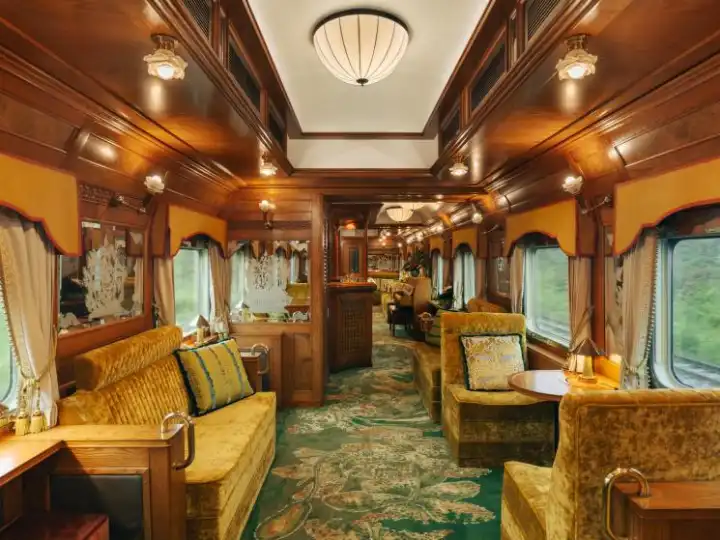
The colourful story behind the Danish paint giant’s state-of-the-art coatings

The colourful story behind the Danish paint giant’s state-of-the-art coatings

Farrow&Ball is known for its outré colour names that include “Elephant’s Breath”, “Arsenic” and “Dead Salmon” but the company that owns the UK paint-maker has more than the luxury interiors market covered. Hempel A/S, a 109-year-old Danish company that owns various brands such as Crown, also manufactures cutting-edge coatings including those that adorn London’s Tower Bridge, the Louvre Abu Dhabi and Amsterdam’s Schiphol Airport. Elsewhere, its innovations can be glimpsed on the exteriors of oil rigs and gas platforms, as well as wind-turbine blades and ship’s hulls. All are rigorously formulated to reduce drag and pollution, and dazzle for far more than their hue.Inside Hempel’s airy headquartersWatching paint dry has never been this fascinating or this lucrative: in 2023, Hempel’s revenue grew by a record 13.7 per cent to €2.4bn. “Our marine business has seen huge growth in the past three years,” says Michael Hansen, Hempel group president and CEO, when Monocle meets him just north of Copenhagen at the company’s headquarters in Lundtofte. “Shipping is experiencing a paradigm shift. The focus now is on the environment and decarbonisation. Our marine coatings are here to help these organisations achieve their goals and if we can solve the biggest challenges facing the wind-energy industry, there is potential for real growth there too.”The technicians in the research and development technology centre downstairs are busy tackling these issues. As we don anti-static overshoes, goggles and white coats, formulations specialist Camilla Holmberg informs photographer Mathias Eis that, due to the solvents used, this is an ATEX (“explosive atmosphere”) zone. For safety reasons, he’ll need to shoot at a minimum height of 80cms.First we visit the Colour Room, which is painted the most neutral of greys, where colours can be assessed under all sorts of lighting conditions. Next, Holmberg hands me a tongue of polyurethane paint that is used to coat the blades of wind turbines. Rain is an existential threat to offshore wind farms. In testing, Hempel subjects the blades to its helicopter-engined weather simulator and they come out looking like they’ve been gnawed by a colony of vicious rabbits. The paint’s rubbery texture counteracts this by enhancing wind resistance and providing protection against adverse conditions. Another of its miracle paints can help to maintain the integrity of burning buildings by puffing up to 50 times its original volume. It can withstand temperatures of 500c and is typically used for oil refineries but also coats the steel frame of Schiphol Airport.Paint samples in the Colour RoomCamilla Holmberg, formulations specialistHansen is particularly proud of Hempel’s newer marine coatings: one protects hull interiors against brutal cargos while also being easy to clean, enabling a quick turnaround in ports; another super-slippery, self-polishing, silicone-based external paint can reduce drag, and therefore fuel usage, by more than 17.7 per cent. There’s even a special paint to smooth over vertical welds on a ship’s outer hull. “This is really cool because welds are structural and you can’t grind them down,” says Hansen, taking nerdy delight in the details. “Using our paint on welds alone can reduce fuel consumption by 2 to 3 per cent. And it’s biocide-free, so it’s non-toxic.” To demonstrate the challenges faced when applying marine paints, Holmberg shakes a bottle of tomato ketchup. “To paint a ship, you need to be able to spray it but it mustn’t run or drip,” she says. “Just like ketchup when you shake it out of the bottle, it has to flow with the perfect consistency.”In this context, Hansen’s move from shipping to paint, after 19 years at Danish shipping giant Maersk, doesn’t seem like such an odd career change. As he notes, Hempel started out in 1915 and Maersk was its first major customer. It was responsible for formulating the trademark “Maersk blue”. There are similarities between the company’s founders too. “Like Maersk, JC Hempel was a very entrepreneurial, outward-looking and innovative man: he went into the Middle East and Asia in the 1960s, for example,” says Hansen. “In addition to this, he firmly believed in moral responsibility.”This mindset led Jørgen Christian Hempel, who died 1986 aged 91, to effectively give away his fortune in 1948 when he created the Hempel Foundation, which is still the sole owner of the company. “He did it primarily to protect the group from a hostile takeover but over the past 20 years it has grown as a philanthropic foundation, giving more and more to charity,” says Hansen. Many of Denmark’s larger organisations, such as Lego, Maersk and Carlsberg, have separate charitable foundations but it is rarer for an entire company to be owned and run by them. It does have implications when the company needs to raise funds, though. “True, it means that we have to live from our own retained earnings but we want to be the industry leader in sustainability. For that, it is an advantage to have the foundation’s long-term approach. Above all, the fact that our dividends go to philanthropy gives the people who work here a huge sense of purpose.”CEO Michael HansenThe R&D lab’s paint storage“The foundation is a major reason why so many people are drawn to roles at Hempel,” says Pernille Fritz Vilhelmsen, chief people and culture officer. “When we go to work, we know that our proceeds are not going straight to shareholders or an owner but towards doing good. It is a unique proposition in terms of employer branding and we do use it in recruitment.”This purpose-driven loyalty is one of the reasons why Hempel is considered to be among the best companies in Denmark to work for. Its HQ is appealing too. Built by Swedish architects Sweco, it has a central spiral staircase that emulates a can of paint being stirred. There is a fully staffed canteen and working hours are flexible. “Our Danish business is [financially] insignificant but we are still inspired by the country’s values,” says Hansen, who took over the top post a year-and-a-half ago. “We put our people first because innovation doesn’t come from nowhere. It also makes sense to be in Denmark. It’s easy to reach the rest of the world from Copenhagen; the reputation for quality of life here means that we attract overseas talent; and we have access to educated labour.” Since 2017 the Hempel Foundation has supported a science and technology centre within The Danish Technical University (DTU) that specialises in sustainable coating solutions. Once they have concluded their studies, many graduates join the organisation.Barnacles on a sample of a ship’s hullPernille Fritz Vilhelmsen, chief people and culture officerHempel’s business is divided into four sectors. Besides its marine, infrastructure and energy ventures, it also runs a decorative operation. Under this umbrella is paint and wallpaper company Farrow&Ball, which was founded in 1946 in Dorset, England, where it is still based. In 2021 it was bought by Hempel from US private-equity firm Ares for a reported €580m. The decorative arm also includes Crown Paints and JW Ostendorf in Germany. Farrow&Ball showrooms and Crown Decorating shops make up some of the 200 or so high street shops that Hempel runs in the UK. “Sometimes I wonder why we aren’t solely available online but the painting and decorating industry is surprisingly conservative,” says Hansen. “It turns out that professionals love to come into the shops for a cup of coffee before they start their day. It’s a big part of the appeal.” The decorative sector boomed during the coronavirus pandemic but has been hit by energy and material price hikes over the past two years. “There are still real challenges,” says Hansen. “Decorative hasn’t recovered yet.”Ana Henriques, Hempel’s executive vice-president, head of decorative, is partly responsible for nurturing the sector back to health. Henriques joined the company from AB InBev in New York and has faith that the consumer brands can innovate their way back to greater revenues. “Farrow&Ball has always been a pioneer: we were the first to have showrooms rather than just traditional paint shops,” says Henriques.Protective clothing at the lab’s entrance“We have also embraced working with colour consultants, e-commerce and collaborating with designers. These days we are very well connected with influencers and a have a more-than-two-million-strong following on social media. But what comes first is the quality of our products, which are known for their richness and depth of colour.” In total, Farrow&Ball uses 12 different pigments to blend its 132 current shades. Historically, pigments would have come from a wide range of unusual sources: “India Yellow”, for instance, was once made from the urine of cows fed on a diet of mango leaves. Today they are all chemically created. The company is in the middle of gently revamping its colour range – something that happens every five years. The expectation this year is that surfaces that were painted at the height of the coronavirus pandemic will be looking a little tatty. “It has been a while since everyone redecorated,” says Henrique.The air that we breathe in our homes and offices is a major topic among Danish architects right now. Volatile organic compounds (VOC), which are released when paint is applied, and over the longer term, are of particular concern. “Farrow&Ball was the first company to go 100 per cent water-based,” says Henriques. “People want their homes to feel healthy: they don’t want the smell of paint to linger, which means that they are going for low VOC options [Farrow&Ball paints are low-trace VOC – the best rating]. They also want to use colour to create specific moods.”Paint the town redMarine paint being mixed in Hempel’s labHempel by numbersEmployees:7,500 in total (including 400 in the Danish HQ, 1,600 in the UK and 1,000 in China).Total amount of paint produced:More than 400 million litres in 2023.Number of Hempel paint shades:6,500Number of factories:26; plus 15 R&D centres.Branding:The Hempel logo represents the helix of a stirred can of paint.The Hempel Foundation:Has total assets of €848m and donated more than €24m in 2023.Customers can enlist the help of Farrow&Ball’s colour-consultancy service, which sees a representative visit homes to suggest a palette of calming tones or energising combinations. Before the end of the year the company will also offer an upgraded virtual service. It will then be possible to scan rooms, furniture included, on your phone and see the effect of different paints.As a global company, Hempel employs a cross-cultural approach to colour and finish. “We have colour-trend teams who keep an eye on textiles, fashion, ceramics and social media,” says Henriques. “For instance, customers in the Middle East look for external paint in natural shades, you won’t see dark colours on houses and finishes need to withstand sand erosion. Cooler climates tend to like yellowish hues. In hotter climates, where the use of whiter indoor lighting is more widespread, colours appear differently. Big, bold reds are having a moment in Germany but in Scandinavia everything is white. Different countries are also drawn to different textures: in the US, smooth surfaces appeal whereas in Germany more ‘movement’ is allowed.” Even the way in which professionals work with Hempel varies. “In Germany, people prefer to use an oval paint bucket so that they can dip the roller straight in, unlike in other places, where they use trays.”Looking ahead, the popularity of cold greys is waning and warmer tones might be returning to favour. But right now, Henriques detects a definite lust for coatings with depth. “Very rich green is having a bit of a moment,” she says, nodding emphatically.

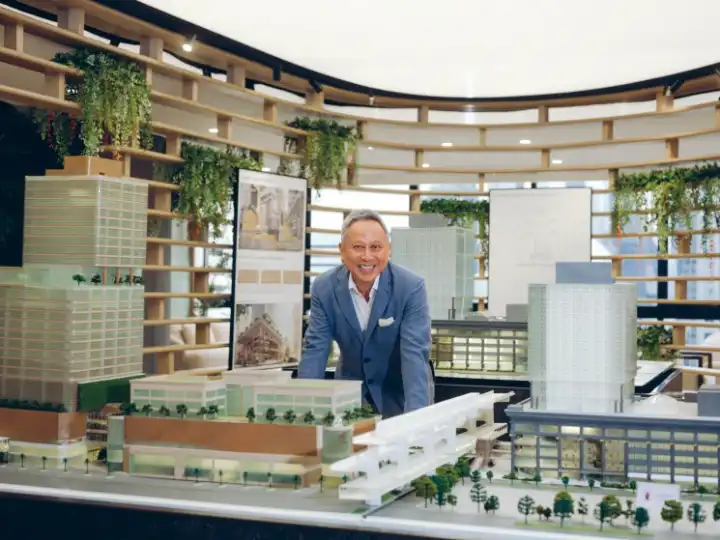
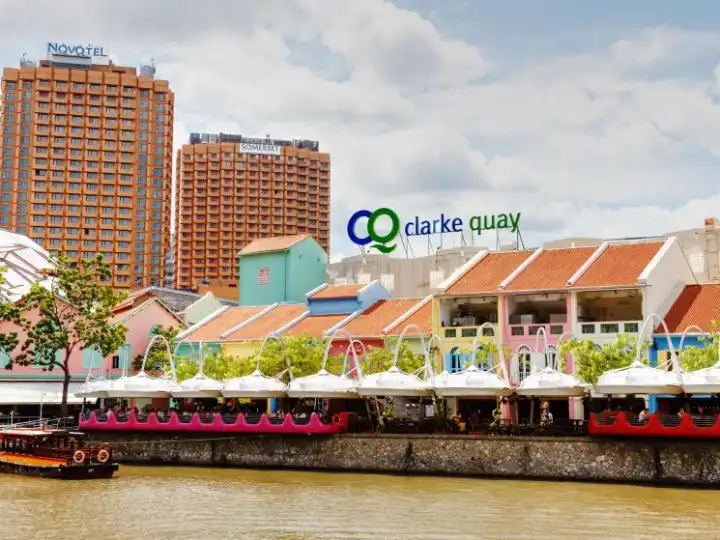
The best technology for your travels

The best technology for your travels

1.Pocket CableNative UnionThe new cable from Native Union is superbly pocketable and designed to avoid tangling. It has USB-C connectors at each end of its 17cm cable, with both able to fold back into the case for tidiness. It’s capable of supporting strong charge levels, so it’s compatible with laptops as well as phones. Get it in one of five colours, including an eye-catching bright orange.nativeunion.com2.Soundlink MaxBoseThe new Bose speaker is small enough to pack in your carry-on but sounds huge. Rugged enough to resist shocks, water and dust, it boasts a rope handle that can be swapped out for a shoulder-length strap for further versatility. The battery lasts for 20 hours and the speaker can even charge your phone while playing audio.bose.com3.Galaxy Fold 6SamsungLeave your tablet at home and take this instead. The new Samsung folds out to a bright and attractive 7.6-inch display with a centre crease that’s now near-invisible in use. An improved camera system, fast processor and larger external display add to the appeal, even if it’s still a little thick when folded.samsung.com4.Tracking CardNomadThe new Nomad tracker will help should you ever lose your wallet or have it stolen. It uses Apple’s Find My system, which means it sends a silent message to any passing Apple device when marked as lost, with its location then securely relayed to your own chosen device. Barely bigger than a bank card, it can be charged via any MagSafe charging pad, making its integration into daily life a breeze.nomadgoods.comIllustrations: Yusuke Saitoh

Patience is a virtue: But is waiting in line really worth it?

Patience is a virtue: But is waiting in line really worth it?

The queue endures. Back before the misery of coronavirus, there was a spate of people getting in very long lines for fashion drops, over-logoed skatewear and even covetable buns. But then – phew – the pandemic killed the queue. It was replaced by text messages telling you when your time was up (not in grim reaper style, rather that your table was ready). But now? Otherwise sane folk are queueing for loaves of bread like it’s the USSR in the 1970s. People are voluntarily spending whole mornings in formation just to gobble a cream puff. Generation instant gratification has discovered a yearning for a very delayed payoff. This waiting game has even ensnared the worlds of academia and psychology as people ponder what the hell is going on. Not wanting to miss out on the action, or inaction, Monocle gets in line to find out how lust and restraint are intertwined.BistroCheap as chipsBouillon Pigalle, ParisWhen it comes to classic French bistros, Bouillon Pigalle is a hit with Parisians and visitors alike. Located on Place Pigalle, in the heart of the city’s former red-light district, the queue outside the restaurant regularly snakes around the corner of the block, with waiting times that can exceed an hour. Waiters in white shirts and black waistcoats serve dishes ranging fromsoupe à l’oignonandoeuf mayonnaiseto the French-cuisine cornerstone steak frites, all at alluring prices. Many of the people queueing outside note that this is a considerable part of the place’s appeal. “I’m queueing today with my flatmates from back home in Germany,” says Stephanie Schachel, a student living in Paris while spending a semester at Sciences Po. “I know this place: it’s cheap but good.” Another queuer, Nicolas Lopez, is also an international transplant to the city and showing visitors around. “I wanted to introduce my family to the concept of abouillon[a restaurant that serves traditional French cuisine],” he tells Monocle. “I particularly like thesaucisse-purée[sausage served with mash]. It’s French and inexpensive.” Everyone in the queue agrees, Bouillon Pigalle is perfect for an extended lunch with friends, perhaps with a carafe of wine, which here can range from a modestun quartto a supersize jeroboam; again, at prices that are hard to beat. “We are queueing because this place has theesprit bouillon[bouillon spirit],” adds Cécile Vassas. “There’s traditional French cuisine and a convivial brasserie atmosphere inside. And you can always order steak frites.” The consensus is: the queue might be long but once you make it through the door you will be rewarded tenfold.bouillonlesite.comThe prize: Bouillon Pigalle’s steak fritesWould you look at that queue!It must be our go nextYou’re kidding – we could have booked!?Maybe I should have followed her leadStarting… to get… hungryGood job this place is open till midnight…This queue is ‘Immobilier’…It can’t be for McDonald’s, surely…Ooh, a queue. Let’s joinOnigiri shopBanging the drumOnigiri Bongo, TokyoCome rain or shine, there’s always a queue outside Onigiri Bongo, a renownedonigiri[rice ball] shop in Otsuka. At the weekend people have been known to wait for more than six hours. When Monocle visits, the queue is already taking shape at 08.45 – nearly three hours before opening time. The first to arrive get a stool. Everyone in the queue is served green tea and spirits are high. Bongo’s owner is Yumiko Ukon, a youthful 72-year-old, who has been working six-day weeks for the past 40 years. “I’m the face of this place and I don’t like to disappoint people, particularly my regular customers,” she says. Her late husband started Bongo in 1960; they met after she tried one of hisonigirion a visit to Tokyo. It was love at first bite. Today, Ukon runs a tight ship with a team that starts work at 07.00 and spends the morning prepping before the doors open at 11.30. Ukon uses rice from Iwafune in Niigata prefecture and a wooden mould to make the ball, adding any of the more than 50 fillings on offer and wrapping it in seaweed. “People crave the taste of home-cooked food”, says Ukon. Kiyoe and Michiyo from Tokyo are the first in line. They saw Bongo on TV. “It’s fine,” says Kiyoe of the queue. “Women are used to waiting.” Masakazu has come all the way from Shizuoka. “I’ve never waited this long for anything,” he says. He’s planning to order the grilled salmononigiri, Bongo’s most popular.Sujiko(salted salmon roe) is another favourite, as is egg yolk soaked in soy sauce.When the restaurant recently relocated, the old interior came too, including the worn counter. “The world is changing but nothing changes here and that’s how people like it,” says Ukon. 2 Chome-27-5 Kitaotsuka, Toshima City, TokyoThe prize: Bongo’s ‘onigiri’What time does the show start?You look parched. Tea?I hope the rice balls are bigger than this stoolExcellent. A white line to keep the queue straightIt’s nearly in the bag, sisSo I said, ‘Queue must be joking!’No, you cannot go in front of meExcellent. A white line to keep the queue straightBagel shopRunning ringsIt’s Bagels, LondonNew York-born photographer Dan Martensen can name supermodels and actors among his subjects but it’s his bagel shop in north London that is turning heads. The idea to bring a slice of New York bagel culture across the pond first began as a passion project. But when the shop opened in 2023 it was clear that the business would become more than a sideshow.The prize: A snack from It’s BagelsFrom the moment it opens, a long queue grows outside It’s Bagels on Regent’s Park Road. “It gets a bit lawless,” says the manager, Franklin Arthur. “When we ask people to cross the road, to start a new section of the queue, people start jumping ahead and we don’t know who was there first.” He often has to leave the assembly line to put on a high-vis jacket and control the chaos. The shop hired its first queue manager, so that Arthur will be able to focus on the bagels. “The demand is outrageous,” he says. A mixture of north London devotees and out-of-town visitors make up the daily queue, which can be 50-people long by midday. Customers who bring friends and family are helping to drive the queues: when Monocle visits, David Lock has brought his mum, Tricia, visiting from Belfast, to his new favourite spot. Every week, Lock makes the journey from Bermondsey in southeast London to It’s Bagels and describes the occasion as “a bit of a pilgrimage”. But for others in line, the idea that waiting for your bagel makes it taste better divides opinion. “When you wait a long time for something, you have to hope [it meets expectations],” says Freddie Phelops, who is queueing for his first It’s Bagels experience. Another punter, Jack Bergman, welcomes the anticipation. “If you’re waiting 30 minutes for a bagel, it’s always going to taste better.” itsbagels.comAre we there yet?I promise… The second date will be better

Could a return to its heartland of Seattle be the cure for Boeing’s crisis?

Could a return to its heartland of Seattle be the cure for Boeing’s crisis?

Aviation – USAReturn flightThe successful first flight of Bill Boeing’s Model 1 seaplane in 1916 launched a company that would change the face of 20th-century transport – and the aviation pioneer’s hometown. During the Second World War, Boeing plants built bombers (pictured) that were critical to the Allied war effort. Those factories later formed part of Jet City, with planes rolling off the assembly line. Tens of thousands of engineers and machinists prospered and Boeing’s workers were encouraged to engage in civic life and even run for public office. Seattle became the town that Boeing built.But in 2001, Boeing moved its corporate headquarters to Chicago. The then Washington state governor Gary Locke said that the surprise move “leaves a void in our economic and cultural life”. In 2022, Boeing relocated again, to Northern Virginia. Every time the company’s leadership moved further away from its core engineering and assembly operations in the Seattle area, the firm’s fortunes seemed to nosedive. First there were the fatal 737Max crashes of 2018 and 2019, then the 737Max-9 door-plug incident in January this year.The aviation giant once banked on the slogan, “If it’s not Boeing, I’m not going”. Now travellers are deliberately avoiding Boeing aircraft. This crisis of confidence led CEO Dave Calhoun to announce that he will resign at the end of this year, while former COO Stephanie Pope has taken over the commercial aircraft division. But this widely anticipated leadership shake-up isn’t enough. To truly reform what was once the pride of American industry, Boeing must move its headquarters back to Seattle.Relocation would facilitate the most urgent task – of restoring Boeing’s lapsed safety culture – by allowing the company’s leadership to visit the factory floor daily to untangle the quality-control issues plaguing its assembly lines. Closer proximity to Boeing’s talent pool would also foster the most necessary change at the top: appointing competent engineers to the C-suite.A corporate culture desperately in need of replicating Boeing’s glory days would benefit from a return to the company’s geographic roots. Executives could visit the Red Barn, Bill Boeing’s modest workshop, which is faithfully preserved by the Museum of Flight next to Boeing’s in-city airfield. They could walk along Boeing’s first runway on Lake Union and admire the B-1 on display inside the Museum of History and Industry. These monuments to Boeing’s ingenuity and mastery of craft are a far more impressive means of inspiring confidence in visiting airline executives than any lavish client dinner. It’s not too late to course correct and rediscover what helped Boeing take flight more than a century ago. Like an aircraft waiting to be assembled, all the parts are here in Jet City.Scruggs is Monocle’s Seattle correspondent.Travel – FinlandStay in touchShort-term holiday rentals have become synonymous with Airbnb. Yet there’s no shortage of companies keen to redress its market dominance. One contender is Finnish operator Bob W, which is backed by prominent investors and entrepreneurs. Unlike Airbnb, Bob W manages and operates its apartments. Co-founder and ceo Niko Karstikko says that the firm is aimed at the “Airbnb generation that has grown up and expects more”.Bob W is short for “best of both worlds” and was chosen because the company wants to combine the consistency and standards expected from great hotels with Airbnb’s “live like a local” approach. “Short-term rentals are often hit and miss and you never really know what you’re going to get,” says Karstikko. The hotel market has well-known brands and a regulated quality system; clients know what to expect. But, says Karstikko, they “don’t feel local or personal; they’re pretty much the same wherever you go”.Bob W focuses on hip areas and provides breakfast in nearby cafés. “We want our guests to feel like they are part of the community,” says Karstikko.Having launched in 2018, Bob W now manages more than 3,000 apartments in 17 cities across 10 countries. Revenues, according to Karstikko, are in the “tens of millions of euros” and are set to at least double this year. The company has also secured more than €70m in funding. “Only about one per cent of the short-term rental market is commercially branded,” says Karstikko. “The potential is immense.” 

Inside Canyon’s quest to revolutionise city cycling with high-performance e-bikes

Inside Canyon’s quest to revolutionise city cycling with high-performance e-bikes

“This is a do-everything bike,” says Arthur Janzen, Canyon’s global category director for urban and recreation, suitably dressed for a ride in shorts and a T-shirt. “No matter where you go, the bike supports you.” We’re on a two-wheeled tour of the bike brand’s global HQ in Koblenz. In the hills above us is German wine country and the sun is shining as we ride down a path next to the Rhine, testing the bike that Janzen is referring to, the Pathlite:On SUV, as well as the Roadlite:On CF. These are two of the latest e-bikes in this category.Canyon, with its huge number of pedal and e-bikes – from road to mountain – on offer via its website, is clearly ambitious. It’s determined to be at the forefront of a bicycle industry that’s continuing to develop at almost the same lick as the automotive trade.The Roadlite has wireless gear changing, lights integrated with its battery and a motor by Porsche-owned company Fazua. The Pathlite, a trekking bike with fat tyres, comes with the option of abs (the anti-lock braking system pioneered by car designers) to stop from you going over the handlebars, as well as a belt-drive system that lets the rider change gears with a twist of the right handlebar rather than a click shift. Both offer graded levels of pedal assist – and cost several thousand euros.The company’s new HQ – a collection of box-shaped, black-and-white buildings comprising offices, a showroom and an e-bike centre – opened last year. When Monocle meets the company’s CEO, Nicolas de Ros Wallace, he is sitting in a Vitra armchair in an office filled with high-performance bikes and cycling paraphernalia. De Ros Wallace, who has Spanish, Italian and British roots, is sporting one of the brand’s black T-shirts and, though we’re assured that dressing in company kit isn’t compulsory, most people here are embracing the look. De Ros Wallace came onboard in 2021, after leadership roles at Zara and, most recently, Nike, where he oversaw the Jordan segment from the sportswear behemoth’s European base in the Netherlands. He still commutes to Canyon from Utrecht.Fourth-generation Aeroad CFR in Canyon’s R&D departmentNew HQ in KoblenzBikes on displayAssembly lineDe Ros Wallace says that urban bikes represent about 5 per cent of global sales, something that he wants to increase. “One of our strategic pillars is urban mobility,” he says. “But it doesn’t have to come by bringing down performance. It has to come by pulling up urban mobility.” He is determined to bring a design-forward, technology-filled approach to city biking, an area that he thinks offers big opportunities for growth as metropolises reassess their transport infrastructure.Canyon, which employs nearly 1,700 people worldwide, including at a hub in Amsterdam, isn’t aiming to be the next Specialized or Giant Bicycles. In fact, being the biggest bike company in the world isn’t part of its game plan. “Others play that role,” says De Ros Wallace. “Our ambition is to be the most innovative and inspiring.” The brand is banking on differentiation to stand out from the pack as it looks to tweak its catalogue. Part of the plan, being an e-commerce player, is striving to provide the best customer service and extending the ways in which consumers can interact with the brand. This has been done through investment in an app and a forthcoming membership scheme. Canyon’s physical presence is also being extended with the growth of its Canyon Factory Service (CFS) centres – essentially repair workshops – that are currently operating in towns including Rotselaar in Belgium and Eindhoven in the Netherlands. Munich’s CFS is slated to open in early 2025.Founded as a bicycle retailer called Radsport Arnold in the 1990s by brothers Roman and Franc Arnold, the company moved into manufacturing and by 2002 had renamed itself Canyon. Franc is no longer involved, while Roman sold a majority stake to Belgium-based investor Groupe Bruxelles Lambert (GBL) in 2020, retaining equity in the company as well as chairmanship of the board. Despite its desire to push into cities, Canyon’s brand DNA still draws on its sporty beginnings, with a focus on high performance, and there remains a strong link to athletes. This is something that Monocle sees while touring the showroom, where bikes used by cyclists including Dutch superstar Mathieu van der Poel are on display next to floor-to-ceiling windows. More than 50 riders were on Canyon bikes at the Paris Olympics and the company sponsors some 270 athletes, as well as having several high-profile ambassadors, including US basketball player LeBron James.The link to sporting excellence is clearly aimed at making Canyon both inspirational and aspirational. “We build the best bikes for the pros but we also want to trickle down,” says Sven Reutter, a Canyon product manager, as we visit the Innovation Lab, part of the brand’s R&D centre, which features a soldering station and a set of small 3D printers. Ready to rideTest lab team manager Stefanie SchunckElectric bike showroomCEO Nicolas de Ros WallaceWheels in the factoryThe R&D is just one part of the Koblenz-based design and engineering machine. Canyon is keen to point out its state-of-the-art facilities, including a test lab where such things as frame stiffness are tested and gizmos including a 3D optical scanning arm are deployed to ensure that frames have been made correctly. There’s also a destructive test lab – which sounds more fun than it looks – where Canyon ensures that new bikes can stand the test of time before going into production.A short drive from the HQ, Monocle visits a big factory facility where the bulk of Canyon’s higher-end bikes are assembled. Hundreds of parts are needed to put the bikes together and these come from around the world, from Portugal to Taiwan. The factory, where a flashing green light indicates that work is about to begin on a line of bikes awaiting stages such as gear wiring or motor attachment, can produce up to 400 bicycles a day before they are boxed and shipped. So are there any plans to manufacture outside Germany? “For us, local for local is the ideal: Europe for Europe; Asia for Asia; the US for the US,” says De Ros Wallace. “It’s the ideal but not the reality because much of the industry is in Taiwan.” Still, there are plans to open a warehouse in Asia to make logistics more efficient.All bikes need oilAll bikes need oilAddressing minor scratches or blemishesCT scanner used to assess potential issues with a frameCanyon hopes to forge ahead, despite the industry looking a lot flatter than it did during the pandemic, when everyone seemed to want to hop on two wheels and get fit. Sights are set on growing the current sales of €741m to more than €1bn by 2025, with plenty of opportunity to increase market share in the US, where the company has a southern Californian outpost, as well as southern Europe and Asia. Canyon is also aiming to extend its clothing line and move into accessories such as shoes and helmets. “We’re investing heavily in talent,” says De Ros Wallace, who owns five bikes – all of them Canyons, of course. “We are the right size to manoeuvre.”Spoilt for choiceCustomisation will be a key part of Canyon’s future success. Customers will soon be able to pick out their bike’s paint finishes, wheels and more.

Future proofing the real estate sector: We hear from 10 industry professionals

Future proofing the real estate sector: We hear from 10 industry professionals

1.“The focus for 2024 must be a robust drive toward net zero, as well as addressing the urban affordability crisis. To tackle these challenges, there’s a critical need for the industry to unite – architects, planners, developers and other stakeholders must come together to form a cohesive, visionary voice. There are bright spots: we can see groups of pioneers bringing forward transformative ideas while technological advancements, particularly in property technology, offer significant potential to revolutionise our industry.”Coen van OostromFounder and CEO, Edge, The Netherlands2.“Issues in 2024 include a severe shortage of skilled construction workers and concerns over carbon taxes and environmental protection. Addressing these challenges involves designing for waste reduction, enhancing construction methods such as prefabrication, investing in education and prioritising the use of local materials. Sustainable and eco-friendly materials are gaining maturity, while local architectural styles are being increasingly valued.”Aaron LeeDeputy chairman, JUT Land, Taiwan3.“The buzzword for property developers and agents is ‘housing’. The rise in interest rates and the weak rental market have contributed to housing becoming one of the biggest challenges for Portuguese politicians, who have created two legislative packages called Mais Habitação [More Housing] and Simplex Urbanistico [Urban Simplex] with measures designed to increase supply.”Sofia Rodrigues NunesCo-head of Real Estate, Gómez-Acebo & Pombo, Portugal4.“Initiatives in schools can help to showcase our industry, along with large-scale efforts to engage young people through employability programmes, mentoring and paid work experience.”Andrea Carpenter Director, Diversity Talks Real Estate, UK5.“I see a massive commercial opportunity in investing in buildings that are at risk of being stranded assets from a sustainability perspective and making them more environmentally friendly. This means identifying how you can reposition a building to have a measurable positive impact.”Alexander BentCo-founder, Undivided Ventures, Hong Kong6.“Preparation is the key word for this year: paperwork, licensing and assembling land for new projects. The continued strength of the office market in Ho Chi Minh City is a major bright spot in southeast Asia.”Philip CluerCOO, Refico, Vietnam7.“Intelligent concepts and customised solutions are in demand: watch out for subsidised projects and neighbourhood developments, such as multi-generational housing, based on environmental, social and corporate governance criteria. Commercial development is on the up. Companies are reorganising to shorten value-creation routes, giving the sector a positive boost.”Michael KörnerManaging Director, Invest Region Leipzig, Germany8.“As well as sustainability, we should focus on affordability and creating ways to integrate better into the community fabric of a city. The industry needs to get used to having its asset use change quickly. It still thinks in long-term trends that don’t reflect changing customer behaviour. We need, for instance, to look at the way digital media has freed up how customers consume their product; people lead more mobile, fractional lives and our homes also need to be able to adapt. On the bright side, consensus is forming about CO2 standards in construction.”Claus Mathisen CEO, Urban Planners, Denmark9.“There will be many players who will breach loans and be in self-preservation mode. For others, assets will be repriced and they’ll find wonderful opportunities to invest. The real-estate industry is facing a mountain of challenges, from building safety issues to office vacancy and valuation crunches because of the interest-rate environment. Sectors such as housing, hospitality, studios and data centres, where owners know how to operate assets, will continue to do well.”Ryan PrinceVice-chairman, Realstar Group, Canada10.“There’s a new reality and this must be acknowledged, addressed, managed and celebrated. The world has changed, and so we must address our previous assumptions. People are social creatures and have both a need and a desire to engage, experience, interact and have a community. This is an essential element to design and development that spans across all sectors of real estate.”Hanna StrueverOwner, Retail Portfolio Solutions, USA

Building a new life and driving Sweden’s green economy in Skellefteå

Building a new life and driving Sweden’s green economy in Skellefteå

“It’s not something that I would do back home in India but it looks like fun,” says Philip Paul as he pushes a three-metre-long double kayak into the Skellefte river, preparing to try his hand at a cherished local tradition. Starting something new often feels daunting but dabbling at kayaking is nothing compared to moving across the globe and building a new life. This is what Paul and his kayaking companions today have all done. They are among the thousands of people who have relocated to this booming town in northern Sweden, just 200km south of the Arctic Circle, in search of work and a better life.Philip Paul and friends take to the water“I’ll never forget the moment I arrived in October last year,” recalls the 29-year-old Paul, who is originally from Kerala in southern India. “They announced on the plane that it was snowing in Skellefteå and I had no winter clothes with me. I had never seen snow.” One year later, Paul is working as an engineer for the battery maker Northvolt and he’s prepped for the bitter weather too.The kayak group is a microcosm of the new Skellefteå. His fellow kayakers are from China, Congo, Brazil and Portugal. In this growing city of more than 78,000 inhabitants, you hear multiple languages being spoken. It’s a remarkable change for an area that, like many old industrial mining and logging towns in northern Sweden, has long grappled with the consequences of a brain drain and a dwindling population. Skellefteå’s fortunes have turned due to the country’s green transition. Companies such as battery maker Northvolt are investing in the city because it can provide the company with plenty of clean energy: hydropower. The firm opened its Northvolt Ett battery factory here in 2021 and already employs some 2,000 people directly and an additional 4,000 through its subcontractors. Having raised more than €15bn in funding rounds, Northvolt has an ambitious goal of producing batteries for one million electric vehicles (EVs) every year at its factory here.Positive outlookIt’s why Skellefteå is now the fastest growing city in Sweden and predictions are that the population will surpass 100,000 by 2040. These are numbers that would make many cities in this part of Europe (or anywhere with an ageing population) jealous. But how can Skellefteå manage this growth in a sustainable way and ensure that the boom makes the city better to live in for all?“It’s a challenge: a positive one but still a challenge,” says the director of the Skellefteå municipality, Kristina Sundin Jonsson, when we meet in a café next to the imposing city hall, which is perched on a hill overlooking the river that bisects the city. “We need more of everything, from pre-school teachers to housing, from better transportation to culture,” she says. Her goal is to guarantee that the boom the city is experiencing, which many have likened to the gold rush that characterised this region in the 1920s, transforms Skellefteå for good. “People move here because of the jobs but we need to make sure that they stay because of the city,” she says. The quality of life that Skellefteå and other Swedish cities are known for will be key.The largest of the Sara kulturhus’s six events spaces can accommodate as many as 1,500 peopleOne vital component will be culture. In 2015 the city announced plans to build a flagship cultural centre. Today the Sara kulturhus stands 80 metres tall next to the city’s central square. Built in cross-laminated timber and designed by the Gothenburg-based White Arkitekter, it is one of the tallest wooden buildings in Sweden and without a doubt Skellefteå’s most recognisable landmark. It houses a 205-room hotel, a penthouse spa and three popular restaurants, a library and several venues for the performing arts. “We host about 800 events a year, ranging from music and theatre to dance and festivals,” says its director, Anna Jirstrand Sandlund. The building was publicly funded and is free to enter. Its programming features key figures in Sweden’s cultural life and ticket prices are kept low. “At first, some locals were sceptical about such a large-scale project but we have gradually won them over. People travel from all over Sweden to visit us,” adds Jirstrand Sandlund.A home for performances, art and talksSara kulturhus’s timber interiorAcross Skellefteå, there is a palpable feeling of a city on the up, as new apartment buildings, roads and bridges are being built. “Overall, we are investing skr42bn (€3.7bn) over 10 years to make the city better,” the city’s business director, Anja Palm, tells monocle. In per capita terms, it’s the largest spending figure anywhere in Sweden. The investment includes money for a new passenger hub for bus and rail transport, an airport terminal to handle the passenger increase (about 30 per cent last year), as well as schools and vocational training centres. To fulfil a growing need for skilled professionals such as engineers, several of Sweden’s universities have flocked to the city to open local branches. “We now have about 1,500 people studying in the universities but the number is set to hit 15,000,” says Palm.The sky bar at the Sara kulturhusDouble water, please!When asked what Skellefteå’s biggest challenge is, almost everyone, the municipal director included, says housing. Such growth in a relatively small area means there just aren’t enough apartments to handle the influx, especially when the city wants to build “good homes, not just homes”, as Sundin Jonsson puts it. Skellefteå has opted to place newcomers into temporary housing near the Northvolt factory on the city’s outskirts. “We believe that temporary accommodation is better than rapid and bad constructions, as it allows us to build higher-quality housing for everyone,” says architect and urban planner Therese Kreisel. She’s responsible for planning in the city; among other duties, this includes overseeing the creation of more than 9,000 new homes by the end of the decade. “The goal is to build mixed-use residential areas that are home not only to people but also to commercial activity and services,” says Kreisel.City transport optionsNew residents can head to Skellefteå’s city hall to help them ease into its way of lifeSkellefteå is also reaching out to new residents who have moved to the city to help them integrate. “It’s great that people come here because of jobs but if there are no other reasons for being here, we will have a hard time convincing them to stay,” says Sundin Jonsson. A space in the city hall, Welcome House, helps the new residents with everything from permits and practical advice to more complex issues such as making friends. The newcomers we meet speak highly of the reception that they’ve received. Many have made friends who have taken them skiing in the winter, hiking in the summer or taught them about the Swedishfika– a tradition of coffee and pastry moments that the Swedes take so seriously.Northvolt employs people of more than 118 nationalities in its Skellefteå factory, which means a major change in the urban fabric of the city. Ethnic restaurants are popping up, as well as English-language schools and day-care centres. The city even has its own cricket team.Waterfront viewsLife in this part of Sweden is all aboutfriluftsliv, or spending free time outdoors in nature. To help newcomers, locals have founded a freeFritidsbankenfor everyone’s perusal, where people can borrow skates, skis, fishing rods and backpacking equipment.Not all of the locals are excited about the rapid changes afoot in Skellefteå. Apartment prices have increased and the ethnic make-up of the city has transformed. Sundin Jonsson says that it’s important for city leaders not to forget about older residents and their needs. “We need to make them understand that this growth benefits everyone,” she says, alluding to the fact that an increase in the working population also means better public services. “We have more taxpayers, better schools and infrastructure, as well as a more pleasant city to live in,” she says.The city is also mindful of not putting all of its eggs in one basket. Northvolt is a major reason for the boom but the growth and investments that the city has made have served as a pull for some industries and given a boost to others. Companies such as South Korean battery materials provider Dongjin, which opened its first European outpost in Skellefteå in March, and logistics giant DB Schenker have moved here, and across the city, new factories are being built for businesses in sectors ranging from component manufacturing, green fertilisers and water purification to clean energy. According to the city, nearly 700 new facilities have either been opened or will begin construction in a few years. And when it comes to attracting new residents, it’s not only foreigners moving in. monocle meets many Swedes who have relocated to the area – or returned after years down south – not because of Northvolt but because of Skellefteå’s new image as a city of real opportunity.

Intelligent digital tools are reinventing peacemaking in Finland

Intelligent digital tools are reinventing peacemaking in Finland

From her office on Helsinki’s South Harbour, Johanna Poutanen can see the Presidential Palace, where Donald Trump and Vladimir Putin met for talks in 2018. Finland’s capital was also the favoured city for Cold War summits between US presidents and their Soviet counterparts and it remains popular with peacemakers thanks to the country’s history of neutrality and reputation for diplomacy. But in her role as head of digital peacemaking at the Crisis Management Initiative (CMI) – also known as the Martti Ahtisaari Peace Foundation – Poutanen says that she wants to bolster Finland’s diplomatic savvy with innovative solutions for resolving conflicts. “Digital tools can help us analyse, visualise and present data to enhance understanding in mediation contexts, reach stakeholders who are difficult to engage in peace negotiations and disseminate critical information more effectively,” says Poutanen, who has just concluded a tender process for providers of “peace tech”, technology designed to help prevent or end conflict.A bomb-disposal robot at the US embassy in NairobiCMI has already used the AI-powered analytics tool Remesh to understand women’s priorities for peace talks in Sudan. In Yemen it used the Inclus platform to build consensus between political groups by visualising their agreements and disagreements. Elsewhere, Project Didi, which is based in Israel, uses “ripeness theory” to explain why parties in peace negotiations might be hostile to a proposed agreement at first but later agree to the very same terms. The Human Rights Data Analysis Group in San Francisco documents human-rights violations and verifies casualty data with machine learning. Peace Geeks in Vancouver operates a messaging platform for Ugandan victims of war crimes.The trouble is that large data sets and data-driven tools for making peace can easily be turned against the people who they are aiming to protect. Take “big data” firm Palantir, which uses AI to analyse satellite images, open-source data, drone footage and on-the-ground reports. Lauded for helping to clear landmines and resettle refugees in Ukraine, Palantir, part-funded by the CIA’s venture-capital arm, is contracted to use the same technologies to supply information on targets for military forces. In the wrong hands, such tools could be exploited and used to attack vulnerable populations or manipulate peace negotiations.We need strong regulations for the safe, ethical and moral use of peace tech. “Data protection and security are an absolute priority,” says Tim Epple, managing director of Edinburgh University’s PeaceRep initiative. “The challenge is preventing dual use of peace tech. Imagine, for example, if data collected on the ethnicity of respondents in a conflict zone gets into the hands of nefarious actors.”Policing peace tech, which is often deployed in fragile states where governance is weak and accountability non-existent, won’t be easy. Can individual nations be trusted any more than big business or entrepreneurs to use technology for peaceful purposes? Of course, we’ll need top-down oversight by global institutions, such as the UN, itself a significant peace-tech developer, and a legally binding international treaty that expands the jurisdiction of war-crimes tribunals to cover the unethical use of peace tech.But we should also use technology such as blockchain to track and publicly record the development and sale of any tech that could be misused, and mandate that all peace-tech systems have a “kill switch” if they’re found to be used for warfare. An international team of digital peacekeepers and cyber experts must be empowered to intervene, neutralising threats of peace-tech misuse in conflict situations. Ethical hackers swapping red hats for blue berets might be our best bet for ensuring that technology makes peace, not war.

Australia’s ambitious public-transport plan is cutting commute times in Sydney

Australia’s ambitious public-transport plan is cutting commute times in Sydney

Many of the features that make Sydney an astoundingly beautiful city – its dramatic coastline, narrow central streets and low, rolling hills – are the same things that conspire to make it a frustrating place in which to commute. Here, the notion of getting from your doorstep to desk in less than an hour is often so unrealistic that it’s downright fantastical. But that might not be the case for much longer.The new phase of the Sydney Metro, the City Line, is due to open this month, transforming the way that Sydneysiders move through Australia’s largest metropolis. The multi­phase Sydney Metro project, first announced in 2011 and in construction since 2014, is the country’s biggest public-transport plan; an audacious, decades-long effort to deliver Oceania’s first mass rapid-transit system. Its ambition is to connect the city’s outer reaches and second international airport with the central business district – and the crowning jewel is the City Line, with its six new stations.Waterloo Station’s northern concourse(Image: Brett Boardman)Bronze-coloured wall linings on the platform(Image: Peter Bennetts)“It’s one of the biggest public transport projects since the Harbour Bridge, so it’s going to completely transform Sydney,” says Jason Hammond, director for design at Sydney Metro. “It will make the journey easier for everyone using the city, from people coming in for leisure at the weekend to office workers during the day. Sydney won’t know what’s hit it.” The metro is using customised versions of French manufacturer Alstom’s high-speed, driverless Metropolis trains, which arrive at stations at peak hours every four minutes, almost halving travel times for train passengers in the city centre. Hammond is relishing the opportunity to speed up Sydneysiders’ lives. “We’re expecting 264,000 trips on a typical weekday, moving 37,000 people during the morning peak,” he says. “One of the key things is to relieve congestion on existing central business district stations and spread the load across the network.”Global architecture firm John McAslan + Partners was selected for two of the most important tasks in the project: designing the new Waterloo Station and upgrading Central Station to become metro-ready (the latter in collaboration with Australian-founded design firm Woods Bagot). In 2012, McAslan delivered the Kings Cross Western Concourse, a global benchmark in station design, and it looked to that success when considering the challenge of untangling the commuting knot at the heart of Central Station. As Australia’s busiest train station and Sydney’s main transport hub, Central Station has weathered an accretion of extensions and additions over the years, but few changes have been as drastic, or as well-received, as McAslan’s.Ready for the commuters(Image: Peter Bennetts)“We tried to help this heritage building sing and be the best version of itself,” says Troy Uleman, director of John McAslan + Partners Sydney, as he and Monocle tap into the newest section of Central Station. “It comes down to that user experience. It’s not just about the station itself or the experience outside the building but how you move through it and use it to connect yourself from place to place.” McAslan’s improvements include a central walkway that, though nominally designed to allow access to the new metro, has also provided escalators and easier access to every train platform in the station. It can be accessed by a new northern concourse set beneath a soaring roof that crests over a cluster of Central Station’s sandstone buildings. “It was about having a great public room for Central Station,” says Uleman. “It’s an organising space that connects to everything.” Crucially for any large station, there’s room for hapless commuters to dither while they figure out which train to catch, without getting in anyone’s way. “We made room for those little places for people to stand in a corner or catch up,” says Uleman.Nods to the building’s past abound, including the use of arches and sandstone, as well as a custom typeface made with old platform lettering. But the station’s new metro future is alluded to throughout, including in the walls, where engravings of clocks gradually fade away in a representation of Sydney’s timetable-free reality, where the next train is only a few minutes away. Non-stop serviceSydney’s next milestone will be the opening of a route with six stations linking the city to the new Western Sydney Airport in 2026.Underground rail in Lagos is paying its wayAccording to a study by the American Public Transportation Association, transit schemes can create 49,700 jobs per €920m invested. This is something that Lagos – notorious for its traffic and crowded roads – is hoping yields rewards with its €124m investment in urban transport.The megacity, with more than 16.5 million residents, is in a state of perpetual rush hour, so Lagosians were elated when former president Muhammadu Buhari opened the Blue Line, the first phase of the Lagos Rail Mass Transit system, last year. This 12km rail corridor spanning some of the city’s densest suburbs has now been complemented by the 37km Red Line. Journeys that once took more than two and a half hours have been shaved down to about 35 minutes. With a carrying capacity of some 500,000 passengers daily, the project will have a huge impact on commuters’ lives.The history of the metro dates to 1983 when the idea was conceived by then state governor Lateef Jakande. Its first phase was due for completion in 1986 but when the government was toppled in a coup in 1985, the junta leader scrapped the initiative. The project was then resuscitated in the 2000s with building works commencing in 2009. Several administrations since it was revived, the project is only now being realised.The wait has proved timely. Fuel prices have skyrocketed following the removal of a subsidy, increasing the costs of transportation. The metro is not only helping to build the economy but saving residents money.

Six buildings from around the globe setting industry standards

Six buildings from around the globe setting industry standards

From São Paulo to Tokyo, these six projects are setting a benchmark for developers. It can be easy to focus on the bottom line over the quality of the build but the two go hand in hand: smart design can ensure the longevity of a project, making it a smart investment.best for heritage restorationBoksto SkverasVilnius, LithuaniaIt’s rare for developers to give architects the time and budget that a large-scale project requires. But Boksto 6, a mixed-use development in Vilnius, is one such case. Here, London-based architecture firm Studio Seilern was able to sensitively restore six buildings in the old town over the course of a decade. The original site had been derelict since the 1990s, when it was purchased in 2008 by Lithuanian retail entrepreneurs the Oritz brothers.Vilnius is a Unesco World Heritage site so Studio Seilern – led by the firm’s founder Christina Seilern – needed local authorities to sign off on every detail. The first phase consisted of an archaeological excavation that lasted seven years. Layers of architectural styles spanning 500 years – from Gothic vaults to Baroque structures – were revealed, as well as the evolving function of the site; over the years it has served as a chapel and a hospital. Deep foundations Boksto 6 owes its looks in part to the 500-year heritage uncovered by architects Studio Seilern during its initial work on the project.This provided Studio Seilern with a visual language for the project, which consists of private residences and offices but also a health club and spa, a restaurant, chapel and performance space across the six buildings organised around a central courtyard. “We were fascinated by the history,” says Seilern. “We also took inspiration from the Alhambra in Spain, with polished steel insertions that mimic reflective pools.”Since opening in 2022, Boksto 6 has reinvigorated a parcel of Vilnius’s city centre, sparking a wave of regeneration. How about that for a measure of a property development’s success?studioseilern.combest for apartment livingOnze22São Paulo, BrazilCompleted in 2023 and towering above São Paulo’s tree canopy, it’s hard to miss apartment block Onze22. This product of Franco-Brazilian studio Triptyque Architecture was built by overlapping suspended slabs of concrete in a style reminiscent of early Brazilian modernist architecture. It is in the city’s Vila Madalena neighbourhood, its floor-to-ceiling windows and translucent façades offering residents a panorama of the cityscape from every natural-light-flooded apartment. For Triptyque’s co-founder, Guillaume Sibaud, Onze22 was a chance to explore how to integrate the natural environment in an urban building. “We’re in an urban area but Vila Madalena is a place characterised by lots of vegetation,” says Sibaud. “It was about inserting the building in that soil and letting nature move through it.”High water markOnze22’s rooftop pool is just one of the development’s communal spaces that blend the shared and private realms to create its sense of a ‘grand house’.Triptyque was established by a group of French and Brazilian associates in 2000 and is made up of two studios: one in Paris and one in São Paulo. The resulting back and forth between France and Brazil inspires the studio to experiment with different traditions. “Brazilian architecture has pushed the principles of modernism to the limits, composing spaces horizontally with slabs that allow movement without obstacles,” adds Sibaud. “Onze22 is really in line with this tradition”.In addition to paying homage to the country’s architectural heritage, the structure also carefully strikes the balance between public and private space – an essential trait in any multi-residential structure – with the building set on pillars, elevating the ground floor apartments to ensure privacy. This sense of seclusion is enhanced by verdant gardens at the base, which provide screening from passersby. In addition to being able to wander through the gardens, residents can also enjoy communal amenities, from workspaces to a gym and rooftop pool. The result is a building whose tenants feel as though they are living in a grand house rather than an apartment – a key ambition in Triptyque Architecture’s work. “Giving house-like qualities to apartments keeps cities attractive, as dense but enjoyable spaces,” says Sibaud.triptyque.combest mixed-use developmentMercadoGroningen, The NetherlandsFor many years, Rode Weeshuistraat, a street running through the Dutch city of Groningen’s northern quarter, languished in the shadows of the warehouses and shops that backed onto it. It’s a situation that Dutch developers MWPO and Beauvast have addressed, commissioning architects De Zwarte Hond and Loer Architecten to let light and life back into the city with the construction of a new building, Mercado, in 2023.“We were working with a difficult legacy at the start,” says Frank Loer, founder of Loer Architecten. “Over the years, the warehouses in the centre of the city had become empty and unused, leaving the heart of Groningen full of vacant buildings. This applied to Rode Weeshuistraat in particular. We knew we had to transform the street.”Mercado’s graduated, stepped exteriorGreenery softens the outdoor spacesInside one of Mercado’s 41 apartmentsWorking in collaboration, De Zwarte Hond and Loer Architecten set out to make their vision a reality. Step one was to demolish a building used for storage, before opening a new square and constructing the mixed-use structure. “We worked with the council to develop a narrative for the area centred around walking,” says Henk Stadens, partner at De Zwarte Hond. Keeping pedestrians and businesses in mind, Stadens, Loer and their teams brought together a mix of retail spaces on the ground floor of Mercado with 41 apartments built on the levels above.Lush greenery overhangs the building’s boundaries, animating its exterior, while its stepped form means that it doesn’t overwhelm the street. “One thing we’ve noticed people appreciate about the building is its sense of generosity,” says Stadens. “The richness of the building, with its vegetation, the texture of its ceramic tiling and the variation in height captivates people. Often their reaction is just to come up to Mercado to touch it.”Loer and Stadens are clear that the way for cities to develop isn’t to invest in sprawl but to look for density. “In many ways, urbanism comes above architecture for us,” says Loer. “If you want to change a city, it’s important to consider public space. Then you can think of buildings as actors in your quest to create those conversations and interactions.”loerarchitecten.com; dezwartehond.nlQ&A: Muyiwa OkiThinking bigRiba President Muyiwa Oki is an architect at construction consultancy Mace Group.When Nigeria-born Muyiwa Oki assumed the mantle of president of the Royal Institute of British Architects (Riba) in 2023, he made history, not just as the institute’s first black president but also as its youngest. His election was built on a campaign that aimed to, in his words, “have the voices of younger, emerging practitioners heard”. It’s an aim he is furthering at Mipim, as one of the jury members of its Challengers programme: an initiative that invites 16 young real-estate professionals to share visions for how to build a better world. Why get involved in a programme championing the perspectives of young people in property?A key part of my work at Riba has been giving a platform for younger people to share perspectives on key issues in the built environment. That’s what I’m trying to do with the Challengers programme, in which young people write an essay suggesting solutions to the big issues – such as climate change or urban regeneration – and present at Mipim. We had more than 100 entrants from across the globe and selected 16 of them. Some of the ideas aren’t necessarily new but they’re left in the university curricula and aren’t broadcast to a wider audience, such as urban farming and how it could work in places like South America. Our hope is that people at Mipim see these as solutions to real-life problems and don’t stick to the status quo.Why is it important to look for more of these radical solutions?People are aware that the real estate, building and construction industry has an effect on the environment. About 40 per cent of global greenhouse-gas emissions come from construction. We want everyone to live as long as possible in prosperous communities, so we need solutions like these.What are some of the steps we can take?It’s about considering the notion of the triple bottom line: people, planet, profit. That has become common knowledge, so now it’s about how to make this happen – and do so in a sustainable way.best cultural developmentHaus 1 at Atelier GardensBerlin, Germany“It’s a modest paint job,” says Jacob van Rijs, partner at Rotterdam-based architecture firm MVRDV. That is one way to characterise Haus 1, an eye-catching architectural addition to an industrial area in the south of Berlin. It has been given an upgrade and finished in sunshine yellow paint.Step by stepBy taking things slowly and involving the local community, developers Fabrix won over what can be a tricky city to build in.Haus 1 is part of Atelier Gardens, a redevelopment of Berliner Union Film Ateliers (Bufa), the vast studios dating back to 1912 when Germany’s film industry was booming. In 2019, London-based developer Fabrix bought the site and commissioned a masterplan from Dutch studio MVRDV. Berlin is not known for welcoming foreign developers but Atelier Gardens has been met with enthusiasm. It hosts film festivals and launch parties, and thanks to means-tested rents, there is a diverse mix of tenants, from tech companies to micro-farming collectives. Fabrix also involved local stakeholders from the start. “We didn’t just show up with plans,” says its CEO, Clive Nichol. “We spent three years talking.” Haus 1 is proof that a grassroots approach can make even daring transformation easy.mvrdv.combest for the elderlyCharm Premier Grand nursing homeTokyo, JapanWith nearly a third of its population of 125 million now over 65, Japan is leading the way in thinking about how best to meet the diverse needs of its senior citizens. Nikken Housing System, a Tokyo design and consultancy practice, specialises in the subject: it recently won the gold medal for residential projects at the Mipim Asia Awards, for the second phase of an upmarket nursing home in Tokyo it built with Mitsubishi Estate Residence.With its balconies, picture windows and sleek wooden louvres, it’s apparent that Charm Premier Grand Gotenyama Nibankan is unlike most facilities for the elderly. “The feeling of ‘home’ can get lost amid the handrails and corner guards of nursing homes,” says architect Masahiro Suzaki, general manager of the design team at Nikken Housing System. There are double rooms for couples, cypress and stone baths, a premium food menu and 24-hour nursing. Other services include a concierge, yoga classes and dog therapy. The nursing home, in the leafy neighbourhood of Gotenyama, has 37 rooms that can be adapted to residents’ needs, with bathrooms and kitchens for those who want to live more independently. “We’ve tried to create an environment where residents can move in without feeling a major shift in their lifestyles,” says Suzaki. The design also allows for changes as care progresses and takes in the needs of nurses and wheelchair users. The dining room and lounge can be accessed from the street so that residents can come and go as they please and air circulates through open corridors, giving the interior a sense of the outdoors. While the home would be too high-end for many, the ideas here could be adapted to different settings. “Architecture can improve quality of life for the elderly,” says Suzaki.charmcc.jpbest for social housingSunflower HousesVienna, AustriaFor a fresh look at social housing, take a stroll through Sonnenblumenhäuser (German for Sunflower Houses) in Vienna. Part of the Wildgarten, a new residential neighbourhood in the city’s southwestern suburbs, it features 82 housing units across 11 buildings. Austrian Real Estate (ARE), the landowner, commissioned Madrid-based architecture firm Arenas Basabe Palacios for the project, which also features community spaces, shared bike-parking facilities and ground-floor commercial units.“The construction is the opposite of typical, conventional solutions for suburban environments,” says architect Luis Palacios Labrador of Arenas Basabe Palacios. “It follows neither the model of a garden city nor that of a single-function development of blocks.” The buildings have yellow, white or wood-clad exteriors, with south-oriented living spaces that open towards private gardens. A low-maintenance green space known as the Allmende(common land) adds to the community feel. The buildings vary in height and type, with small ones containing single-family and duplex housing mixed with larger structures of apartments. This ensures that all the interior rooms receive sunlight and shows that social housing need not be drab or overly uniform.“It follows neither the model of a garden city nor that of a single-function development of blocks”The decision to design buildings on different scales has implications beyond the Sonnenblumenhäuser: it provides a model for a variety of investors to get involved, from developers who can create smaller buildings and medium-sizedBaugruppen(co-living and co-housing projects) to the city council providing the backing for the largest blocks. “In this way, we open up the forming of the city to a more inclusive process, where all these agents are represented,” says Palacios Labrador.arenasbasabepalacios.com

Reaching for the sky

Reaching for the sky

About three minutes ago, Monocle took off from downtown Brisbane. There’s an empty seat to our left and two more behind us. The cabin is suspended beneath the wings of a pilotless electric aircraft, whose silver propellers hum away. “Wave if you feel woozy,” says a disembodied voice. But airsickness won’t be a problem, not least because we’re sitting in a chair on an airfield in Hampshire, England, wearing a VR headset. The voice belongs to an employee of Wisk, the California-based Boeing subsidiary that built the pilotless air-taxi model in the middle of the tent.‘Is it a bird? Is it a plane?’ (It’s a plane)It’s quite a ride. The air taxi would offer a quick, scenic alternative to a tedious 30-minute car journey. And, if all goes according to plan, it might be a transfer option for visitors to the 2032 Brisbane Olympics. But will people be willing to fly in a vehicle without a human being at the controls? “It’s like a driverless car,” says Wisk’s Carrie Bennett, who has clearly encountered this reservation before. “It’s fascinating at first but then you forget about it because everything just works. And you don’t have to worry about a child chasing a ball across the street.”The Farnborough Air Show is huge. It has more than 500 exhibitors and some 35,000 people visit over its five days. This year’s iteration is quite quiet in terms of big orders for commercial jets, though that’s possibly a reflection of an industry still searching for its level in the wake of the coronavirus pandemic. At the last Farnborough before the virus struck, in 2018, a record 1,464 orders were placed with the two biggest manufacturers, Airbus and Boeing. In 2022, that figure was 441. This year, it’s 256. Manufacturers are also beset by supply-chain difficulties, which are off-putting for potential buyers. Airbus has an order backlog of 8,585 aircraft; at current rates of production, that represents more than a 10-year wait. (Nevertheless, it’s demonstrating the A321XLR, an extra-long-haul variant of its single-aisle workhorse, which Iberia hopes to start flying this year.)Air India’s new Airbus A350Among those making purchases, Qatar Airways has made a particular effort, to the extent that the entrance to Farnborough’s main exhibition hall resembles one of its tonier Business Class lounges, complete with a string duet and a Diptyque scent dispensary (the airline has confirmed an extension of its Boeing 777-9 order from 40 to 60). A physical presence is, however, no guarantee of sales. Brazilian manufacturer Embraer has parked on Farnborough’s aprons a handsome black and turquoise E190F cargo jet but has announced no new commercial deals (Embraer has, however, sold six A-29 Super Tucano attack aircraft to Paraguay’s air force).Aerospace companies setting out their stallIf there’s one thing that demonstrates just how far the Farnborough Air Show has come since it was first staged in 1948, it is its focus on clean and renewable energy. Representatives of the aviation industry seem determined to stress that the environment has no stauncher allies. Suspend your cynicism, however, and you’ll see that there’s a lot going on in this realm. The hoardings of ZeroAvia boast of the UK-US firm’s inclusion on lists of top green-technology companies. Rudolf Coertze, its head of research and development, explains that the firm is working towards having its zero-emission hydrogen-electric powertrains adapted to small passenger aircraft the size of a Cessna Caravan or a Dornier 228. And he says that it won’t stop there. “There is no reason why this wouldn’t ultimately work with a Boeing 737 or Airbus A320 – and that could be coming by 2035. It would remove a large fraction of emissions caused by aircraft.”Small aircraft will serve as pioneers in this regard. The Cassio is French start-up Voltaero’s rear-propeller electric-hybrid aircraft. There are high hopes for the plane and Global Sky has reserved 15 of them during the show (232 were pre-ordered before the end of Farnborough). Jean Botti, Voltaero’s CEO and a former chief technical officer at Airbus, is an enthusiastic salesman. He sits us in the pilots’ seats and explains how the airframe can be adapted to carry passengers, post or cargo, or perform rescue operations. Future, larger models will have retractable undercarriages and pressurised cabins. “It could replace a lot of light aircraft and also compete with business aviation,” Botti tells Monocle. “There’s a lot of criticism of private jets and, of course, this is much, much cleaner. It will also be cheap to fly: €400 to €500 per hour.”Wisk’s four-seat autonomous air taxiIf I just press here…Curved wingtips of a British Airways Airbus A320neoCommercial planes on show at FarnboroughQatar Airways Boeing 787 DreamlinerEuropa XS monoplaneFor all the talk of a cleaner, quieter future for aviation, some aspects are eternal. The most sophisticated machines will still need the most basic parts, someone will always be needed to build them and a marketplace as busy as the Farnborough Air Show will always help to sell them. Beagle Aircraft is based nearby in Dorset; customers for its components include BAE and Leonardo. Among the exhibits at its Farnborough stall are a cargo door from a business jet, an outer leading edge from the wing of a German Air Force Tornado and a flight simulator. “We didn’t make that,” says Beagle’s order-book manager, Tom Rosser. “But if you don’t have something to draw people in, they’ll walk by. And for the five or so minutes when they’re on the simulator, you have a captive audience. That lets us explain why the things that we make are important.”Coming to Farnborough, says Prosser, isn’t just an exercise in PR outreach. A lot of meaningful business gets done here. “For a company our size – just 100 to 120 people – it wouldn’t be worth doing as a loss leader,” he says. “Last year we paid for the stand with the sales that we made on the first day. And the lunches definitely help to get agreements over the line.”Up in the airGlobalIn The Jetsons, flying cars glide effortlessly around Orbit City (writes Jakob Funkenstein). But since the cartoon was first broadcast in 1962, the basic airframe and engine designs of large and small commercial aeroplanes haven’t changed very much. However, a new generation of electric vertical takeoff and landing (EVTOL) light aircraft will soon enter the market, promising to revolutionise urban transportation. EVTOL makers, prospective operators and vertiport companies claim that these vehicles will end traffic gridlock and shorten commutes – and your ride will be fully autonomous. Though it’s unlikely that we will be riding in private EVTOLs 10 or 20 years from now, we might see ride-sharing in high-density locations, such as airports, sports venues and tourist attractions.A huge effort is now under way to figure out the infrastructure needs of EVTOL operations in big cities. Traffic and avoiding collisions with other aircraft are key concerns. Vertiport construction also represents a major investment – the more landing pads, the better. However, that requires space, which is costly. All of the investment required in design certification and infrastructure development begs the question: will the end product be affordable to ordinary users? Every player appears to have a different solution for making urban air transport economically viable. Manufacturers such as Joby and Archer are so confident that not only are they producing EVTOLs, they are planning to operate them too.How the fare of an EVTOL ride is calculated will depend on factors including distance and demand but operators will probably have to charge many times more than the current land-based taxi firms. There’ll be technology enthusiasts who will jump at the chance to be one of the first to try out this next-generation commute but there’s no guarantee that even they will remain loyal EVTOL users.If you build it, will they come? In Paris, a protest movement called Taxis volants Non merci is already opposing the idea. Safety concerns aside, the movement argues that it’s not worth paying social costs such as extra noise, let alone the desecration of Paris’s skyline. So it might be decades before average citizens can hail an air-taxi.Funkenstein teaches aviation management at IU Internationale Hochschule in Berlin.Top three deals at FarnboroughFlynasThe biggest deal at this year’s event was between Airbus and Riyadh-based Flynas, Saudi Arabia’s first low-cost airline. Flynas is best known as the airline of choice for budget-conscious pilgrims visiting Mecca: during the last Hajj season, the airline filled 100,000 seats. It is now significantly expanding its all-Airbus fleet, ordering 130 A320s and 30 A330s, with delivery to begin in 2027 – a huge move by an airline whose current fleet consists of just 64 aircraft.Japan AirlinesThis year, Japan Airlines (JAL) finalised orders for 20 Airbus A350-900s and 11 A321neos, and for 10 Boeing 787-9s, with an option on 10 further 787s. The A350 order was reduced by one from the terms announced in March: the 21st had been intended as a replacement for the JAL A350 lost in a runway collision at Tokyo Haneda in January but JAL has decided that it can live without it. Boeing was clearly grateful for the 787 order: the firm’s senior vice-president, Brad McMullen, went out of his way to thank JAL for sticking with the company. Korean AirBoeing’s recent difficulties were reflected by a restrained presence at Farnborough. The much delayed 777-9, for example, was only represented by a mock-up of its cabin. So, Boeing will have appreciated the vote of confidence from Korean Air, which signed for 20 777-9s, 20 787-10s and options on another 10 787-10s – a reported outlay of $12.6bn (€11.5bn). Due for delivery in 2028, these will be a significant boost to Korean Air’s fleet ahead of the completion of its long-planned acquisition of Asiana Airlines.Automatic for the peopleThough autonomous aircraft will initially be small, there are companies now insisting that there’s no practical reason why airliners can’t be programmed to fly as reliably as any drone.

How mini but mighty microcars are changing the way we drive

How mini but mighty microcars are changing the way we drive

The minicar, the microvan, the nanocar – the tiny vehicles that have been cropping up on city roads across the globe have many names. Japan was among the first countries to recognise their virtues, establishing thekeicategory in 1949. Others have warmed to them too – most notably China, where surging domestic sales of the Wuling Hongguang Mini EV have seen it dethrone the Tesla Model 3 as the world’s best-selling electric vehicle (EV).With consumers increasingly prioritising energy efficiency, automakers are now offering vehicles that are conspicuously more diminutive than their fuel-guzzling counterparts. Advances in engineering and design have allowed newer microcars to pack more amenities and technology into their bijou frames. Meanwhile, government incentives for compact cars are becoming common, from subsidies in South Korea to preferential parking in Guernsey.Almost every major automaker has entered the sector, responding to growing demand – particularly from young urbanites, among whom these compact vehicles have become status symbols. They make sense for urban life: they can zip down alleys and squeeze into tight parking spots, and are safer, quieter and less obtrusive than larger vehicles. But they’re not limited to cities. Models such as the Suzuki Hustler and the Kia Ray are built for country drives, while specialedition models including Fiat’s Topolino are perfect for cruising along the Italian Riviera. Here are 10 of the mightiest microcars on the market.1.Fiat TopolinoItaly2.53 metresFiat’s Topolino is a restyled version of the Citroën Ami. Like the original, it’s a two-door, two-seater electric quadricycle, though drivers who want to feel the wind in their hair can choose the Dolce Vita edition, which has a doorless open carriage and a canvas roof. Its name is a nod to the original Fiat 500, which ceased production in 1955 and was widely known as “Topolino” (Mickey Mouse’s Italian moniker). It comes in teal with cream interiors and has a top speed of 45km/h.2.MicrolinoSwitzerland & Italy2.52 metresCo-founders Merlin and Oliver Ouboter unveiled their Microlino concept at the Geneva International Motor Show in 2016. Four years later, a redesign resulted in the two-seat, four-wheel EV that’s now produced in Turin. The Microlino can reach 90km/h, though it’s so small that it’s technically classified as a quadricycle. It has a sunroof and comes in various shades of pastel or primary colours, with a glossy or matte finish. Prices range from €16,500 to €23,000.3.Daihatsu CopenJapan3.4 metresThe first generation of the Daihatsu Copen, launched in Japan in 1999, was a two-door roadster with a hard convertible top and bubbly curves suggestive of a children’s toy. The model that’s now in production is slightly more angular but retains the original’s charm and has a top speed of about 170km/h. The Copen – the anglicised form of the Japanese wordkopen, a portmanteau ofkeiand “open” – is a particularly fine example of the light automobile.4.Suzuki IgnisJapan3.7 metresThe Suzuki Ignis is a rare beast: an SUV version of the dinky Japanesekei-class car. It’s reliable and feels roomier than most micro-vehicles, with more than 500 litres of storage when the rear seatbacks are folded. But you won’t buy one for haulage – its main draw is that it’s fun to drive in the city. The 434 option is perfect for more rustic outings, while the new SZ-T version comes with roof rails, 16-inch alloy wheels and side mouldings that are guaranteed to turn heads.5.Silence S04Spain2.28 metresThis two-door hatchback comes in two versions, the faster of which can reach 85km/h. The Silence S04 has the distinction of being one of the first EVs with a removable battery, making charging more convenient – drivers can plug in at home or subscribe to a service allowing them to swap dying batteries for fresh ones at designated stations. Spain’s Silence produces the S04 at a former Nissan factory in Barcelona and Nissan is leading its distribution in Europe.6.Tata Magic IrisIndia2.96 metresThe Magic Iris is a diesel-powered microvan produced by Tata Motors, one of India’s largest carmakers. It has four seats, a front cab with two doors and a third rear door, and its top speed is 55km/h. It has diamond-shaped headlights and measures a little under three metres in length. It was designed with the domestic market in mind: it’s a safer alternative to the rickshaws and tuk-tuks that are ubiquitous in the country’s megacities.7.Wuling HongguangMini EVChina2.92 metresThe two-door, four-seater Wuling Hongguang Mini is the world’s best-selling EV. It’s also one of the cheapest, with the basic model priced at about €4,000. It was launched in 2020 by SGMW, a joint venture between SAIC Motor, Guangxi Auto and General Motors. The wallet-friendly price and a Pantone collaboration that resulted in a series offering three pastel-coloured options have made it especially popular among younger drivers. It can reach a speedy 100km/h too.8.Kia Ray EVSouth Korea3.6 metresWith its large windows and add-ons such as a side tarp that forms a shaded canopy, the Kia Ray will appeal to camping enthusiasts and day-tripping urbanites. In response to the growing demand for EVs in its domestic market, South Korea’s Kia released a new electric edition of this popular compact car in 2023, having discontinued the first EV Ray in 2018. It comes in shades ranging from white to aqua and the interior can be outfitted in either grey or black.9.Honda N-OneJapan3.4 metresOn the outside, the second generation of Honda’s N-Onekeicar is nearly indistinguishable from its predecessor. It has slightly deeper-set headlights, a larger grille and an additional strip of rear lights but most of the changes were reserved for the inside. These include enhanced safety features, extra storage space, usb ports and a sleeker dashboard. A special Style 1 Urban edition, launched in 2022, features two-tone leather seats and a faux-wood dashboard.10.Nissan SakuraJapan3.4 metresReleased in 2022, Nissan’s four-seater Sakura is Japan’s best-selling EV. Nissan has decades of experience in the sector and pioneered the first mass-market EV but this is its first electrickeicar. Though narrow, the Sakura’s height allows for plenty of storage space, especially when the backseats are folded flat. It has an impressive top speed of 130km/h and comes in a range of colours, including pink, in honour of Japan’s national flower, the cherry blossom.

Ten principles for designing vibrant and liveable mixed-use spaces

Ten principles for designing vibrant and liveable mixed-use spaces

Creating a lively mixed-use development isn’t just about throwing up some buildings and calling it a day. Developers need to make considered decisions to deliver a successful place that matches the ambition of their original architectural renderings. It’s about clever details, an understanding of how people actually use space and meticulous design from choosing the right materials to community-building.This is the art of crafting spaces that not only house but also connect, where tenants – whether residential or commercial – feel a sense of belonging that goes beyond their address. Here, we get into the nitty-gritty of what makes a mixed-use project truly thrive, proving that vibrant developments are built one thoughtful detail at a time.1.Sensory symphonyBuilding with materials that are interesting to look at will lend character to any development. A case in point is the rippled concrete on the façade of architect Lina Ghotmeh’s Stone Garden Housing project in Beirut. Natural, locally sourced options like stone, timber and clay bricks can help imbue a project with a sense of place.2.No blockingAvoid taking up an entire block with a single, impenetrable structure. Instead, invite public life into the development by shrinking building footprints. Create public spaces and thoroughfares for people to cut through the site, improving pedestrian connections. This will prevent a project becoming a dead zone and better embed it in the city.3.Tall orderCap buildings at five storeys. Why? Well, beyond that, according to Danish urbanist Jan Gehl, residents lose their connection to the street. A good rule of thumb is to ensure that people can comfortably call down from a balcony to the footpath. By capping the height, we ensure that the building’s presence doesn’t overwhelm the street or skyline.But this doesn’t mean ignoring the needs of street level. Avoid brash glassy frontages and opt for a façade that has clear windows for passive surveillance. The doorway should be flush with the footpath (stepping up or down creates a physical barrier to entry) with awnings set only a few metres above the ground to offer a sense of cosy enclosure.4.Human scaleUse visually rich details on the lower levels of a building – think tiled façades, intricate masonry and faceted window frames. Different uses, such as public or private entrances, should be defined by these ideas and expanses of monotonous material avoided. Invite rhythm to keep passersby, or those staying longer, engaged and inspired.5.Mix and matchCreate a complex whose patronage is, well, complex. Mix commercial, cultural, residential and hospitality offerings for a perpetual hum of activity and spontaneous encounters. Meet the essential needs of the community too: a butcher, baker, dry cleaner and key-cutting shoe-repair shop within walking distance is a boon for any tenant.6.Lush lifestyleStudies have repeatedly shown that greenery can lower stress levels and improve general wellbeing; planting can also filter air and regulate building temperatures. Street-level trees and vertical gardens bring life to the façade (Singapore-based WOHA architects is an expert in this field), providing a cleaner microclimate for tenants.7.Civic serviceThe services on offer should be enhanced by the surrounding public space. In a mixed-use development, make sure restaurants front onto plazas that diners can spill onto when the weather is fine and that there are benches for workers to stop for coffee. MVRDV’s Atelier Gardens in Berlin blends office space with hospitality offerings in a prime parkland setting.If a development is more residential, make sure there are spaces for visitors to lock their bikes and communal courtyards where neighbours can stop to chat. Danish design studio SLA’s work on the South Harbor of Køge is a benchmark in this, with the residential buildings divided with linear parks.8.People firstPrioritise the pedestrian experience, so whether tenants are walking to their cars or between home and café, their time outdoors will be uplifting. Provide generous footpaths, an abundance of crossings and traffic-calming measures such as kerb extensions. Where you have to include parking, do so in a discreet underground location.9.Go greenThis is about more than using environmentally friendly materials and adding foliage. Architects should embrace the site’s microclimate and use it to enhance their design. Consider annual sun, wind and shade patterns, and position the building so that natural light and ventilation can be put to use in heating and cooling it.10.Participation awardsFinally, it’s all well and good to have a beautiful building but without buy-in from the people using it, it won’t be a success. Build a community by inviting continued resident participation: ask for ideas, host town hall meetings and encourage community gardens and public art. All of this will create a sense of ownership and belonging.

The business agenda: Swedish snowmobiles, reimagining London’s high streets and Singapore’s special brew

The business agenda: Swedish snowmobiles, reimagining London’s high streets and Singapore’s special brew

Mobility: SwedenCool runningsAn electric snowmobile might sound risky: if its batteries fail in the cold, wouldn’t it leave you stranded on the tundra? But Swedish start-up Vidde says that it has a solution. Its electric snowmobile, the Alfa, is currently in its last stages of testing and Monocle recently took it out for a spin in Jukkasjärvi, Swedish Lapland. All clean lines and appealing finishes, the Alfa has a frame that’s partly made from a timber-based biomaterial and whizzes along with a refreshing lack of engine rumble or fumes. Its batteries, made by Swedish manufacturer Mattr Collective, promise a range of up to 100km on a single charge. Crucially, the Alfa features an intelligent heating system that keeps these batteries warm, increasing their charging speed and helping them to last longer. And that’s not to mention its zippy acceleration and option of adjusting the seat for comfort to suit different types of terrain. Vidde has about 300 pre-orders and is hoping to start deliveries later this year, with the goal of producing 1,000 units in 2025. The current cost to reserve an Alfa is €26,200. viddemobility.comMusic: SerbiaGig economy“For most bands, Serbia hasn’t been a tour stop for years but I believe that it has a lot of potential,” says Dmitry Zaretsky, the co-founder of concert agency Honeycomb. He’s acting on that conviction by promoting shows in Belgrade for the likes of UK indie stalwarts Bombay Bicycle Club, punk-popper Yungblud and even Ed Sheeran, who will give an outdoor performance at the confluence of the Danube and Sava rivers. For Serbian music fans accustomed to being ignored by big international tours, the change has been welcome. But it might not have happened without Russia’s invasion of Ukraine, which led to the demise of Zaretsky’s previous business. Pop Farm had promoted shows in Russia for everyone from Billie Eilish to the Arctic Monkeys, as well as Moscow’s Bol festival. Zaretsky was among the thousands of creative Russians who chose Belgrade as their location for a restart. “Serbia’s mentality is similar to Russia’s and the language is simple for us to learn,” he says. And with no initial visa requirements, it’s easy for his compatriots to start businesses here. Honeycomb now operates in 12 countries, including Greece and Romania, but Belgrade remains its base. “It’s full of people who love music, so why not bring it to them?”F&B: JapanQ&AMakiko OnoCEO, Suntory Beverage and FoodMakiko Ono is the first female CEO of Suntory Beverage and Food, a Japanese company with revenues of more than €9.6bn last year whose global portfolio includes Ribena, Schweppes and Lucozade. Within its home country, it sells 120 million cases of Tennensui mineral water, 100 million cases of Boss Coffee and 61 million cases of Iyemon green tea every year. Suntory is increasingly focusing on water conservation and plastic reduction. Monocle spoke to Ono at the company’s Tokyo office. Where do you see areas of growth in Japan?Though Japan’s population is declining, it’s a huge, mature market that appreciates novelty. To cater to its ageing society, we’re bringing in value-added products called Food for Specified Health Use [For example, Iyemon Tokucha, a green tea drink that helps to lower body fat]. Sugar-free tea drinks and bottled water hold large market shares in Japan and there are vending machines everywhere, so people can buy them any time. What are your major challenges?Suntory Group has a target of using 100 per cent sustainable pet by 2030. Water is a top priority too: it’s our most precious ingredient. We have been working on things such as water sanctuaries and a water-education programme.How do you keep the business growing globally? We have two growth streams: inorganic, which comes from M&A or partnerships, and organic, which comes from polishing existing brands. We’re trying to do more to share the strengths of the Japanese business with other regions and, in turn, import best practices.The Japanese side does a lot of research and development. We want to bring that to other places. Boss Coffee is a unique product that has given us expertise in making canned and bottled coffee, so we are expanding it into Australia, New Zealand, Thailand and Vietnam, and maybe Europe in the future.How did you begin your career? When I joined Suntory in 1982 I was in a team that was acquiring a French winery and other international companies. No woman had worked abroad in our company but I was keen to go overseas. So I was sent to Paris, where my role was to manage the winery and a cognac company that Suntory had acquired. I needed to learn about production, management and finance, and deal with banks – something that I wouldn’t have experienced in Japan unless I’d been in the finance division.How can Japan bring more women into the top level of management?Women can lack confidence even when they are just as capable as men and there are unconscious biases at play. Companies could offer flexibility in working hours. Positive discrimination is unpopular but we are trying to nurture female talent and build career plans for women.What’s your vision for the company? More than half of our sales and profits come from our international businesses. But we are also a Japanese company and want to keep that specialness, which makes us different from our peers, such as Coca-Cola and Pepsi-Cola.Retail: UKHaving tapped into the demand for temporary retail spaces in London, Paris and New York since 2014, Ross Bailey, the founder of Appear Here, is now taking on a whole high street with his latest project, Deptford Market Yard. “Through Appear Here and the 30,000 pop-up shops that we have launched around the world, we had a good idea of the streets that people wanted to be on,” says Bailey. “It wasn’t Oxford Street or Fifth Avenue. It was the likes of Broadway Market in east London. The smaller streets were key. So we thought about creating our own.”In 2023, Bailey found a site in need of love in Deptford, southeast London, where there were about 20 spaces for retail or restaurants under old railway arches. He seized the opportunity to shape a street that would unapologetically be part of the community, tapping into chefs and creatives who were already active in Deptford, rather than bringing in outsiders to disrupt the neighbourhood’s existing character.Freshly bakedUnder the bridgeKekaki Izakaya“We looked at areas of London such as Brixton and pockets of east London that are undergoing rapid gentrification as examples of what not to do,” says Bailey. “Yes, we wanted the project to feel slightly curated but not like it was owned by a corporation.” Growing up with shopkeepers as parents, Bailey’s aversion to homogeneous high streets – with the same rotation of chains, from sandwich shops to chemists – runs deep.To achieve the overhaul of the area in a manner that was respectful of Deptford’s community, Bailey decided that anyone taking over an archway had to have some connection to the area. “Everything on the street is designed by someone from southeast London,” he says. “Even the flags down the road were drawn by local schoolchildren.” The restaurants that dot Deptford Market Yard, from Afro-Caribbean venue Jerk Yard to family-owned Japanese café Kekaki Izakaya, attest to the diversity of the neighbourhood. So far the reception has been positive. Appear Here is now looking to, well, appear, at a more extensive scale, in north and east London. “If you truly want to understand a city, the key is to pay attention to the shops and streets, not the public buildings or town halls,” says Bailey. “Museums and monuments tell outsiders what a city wants to be. But the streets and the shops tell people what a city really is and how it treats and serves those who actually live there.”F&B: SingaporeBean and goneIn February, Singaporean start-up Prefer raised $2m (€1.8m) to scale up the manufacturing of its signature product: bean-free coffee. Its co-founders, Jake Berber and Tan Ding Jie, are betting that their substitute, a fermented mixture of soybean pulp, barley and bread, will satisfy the most ardent coffee aficionados.“It looks and feels just like ground coffee,” says Tan. Prefer’s product is cheaper, quicker to make and more sustainable than the original. It brews in the same manner and even produces a layer of frothycrema. But a lack of coffee beans means no caffeine. Prefer’s grounds make a great decaf, while customers looking for a kick can opt for a sprinkle of caffeine powder that the company extracts from tea. “As with any novel product, there’s a healthy amount of curiosity, as well as scepticism,” says Tan. But Prefer has managed to win over an important demographic: baristas. The product is already available in 14 cafés in Singapore and there are plans to expand to the Philippines.prefer.coffee

Flinc is the Swiss bike brand inspired by ET and built for urban life

Flinc is the Swiss bike brand inspired by ET and built for urban life

Markus Freitag’s passion for pedals was first ignited in 1982 while watching Steven Spielberg’sET.Some 40 years later, the Zürich-born entrepreneur has created a Spielberg-inspired bicycle brand that’s perfect for nipping around his hometown. Called Flinc, its namesake model is a svelte two-wheeler that is as compact as an urban minibike, as capacious as a cargo bike and as sturdy as ET’s BMX. “Our niche is an easily manoeuvrable model with a simple but sophisticated luggage system,” says Freitag.In 1993, Markus and his brother, Daniel, launched Freitag, a brand that produces bags designed for cyclists, so launching a bike brand made complete sense. “Flinc is the bike I would love to have had on my doorstep all my life,” says Freitag, who reinvested his profits from the bag brand to launch the bike in April.Though the Danes had pioneered the cargo bike in the 1980s, today the “Made in Switzerland” label is a hallmark of quality cycling products across the globe. Yet Zürich has not fully realised its potential as a cycling city. “The streets are cramped due to the tram system and we lack cycle lanes that would allow bikes to play a supporting role in this urban context,” says Freitag. The Flinc is a product of these surroundings, designed to comfortably navigate the narrow streets.Flinc fanatic going for a spinThe Flinc team outside the firm’s HQAnd Freitag’s brand might just be onto something: record numbers of commuters here are ditching the car for the bike. Pro Velo, a network of regional bike associations, saw a 21 per cent increase in participants in its Cycle to Work campaign when compared to 2022. This uptick is reflected in industry growth. In 2024 the Swiss bike sector is predicted to be worth €720m, while Denmark’s lags behind at €490m. “Bike ownership here has grown exponentially since the pandemic,” says frame builder Wim Kolb, who constructed the first Flinc prototype in 2020. “In Zürich, residents are interested in zero-emission alternatives and have the disposable income to be able to invest in quality,” he says. “The infrastructure needs to catch up to allow the cargo bike to flourish.” The Flinc – meaning “nimble” in Swiss-German – is made from a special steel alloy. The compact design weighs 16kg, about a third of the weight of the average cargo bike. “We have deliberately not reinvented the bicycle,” says Freitag. Instead, high-quality, low-maintenance components were chosen, which complement a tried-and-trusted diamond-shaped frame. When Monocle takes the Flinc for a spin, the pedalling feels effortless thanks to the smooth tread of the 20-inch tyres created by German manufacturer Schwalbe. All of these factors, says Freitag, mean that it is not necessary to power the bike with electricity. “The Flinc was designed for Zürich’s flat pavements.”But Flinc isn’t just a brand; it’s also about community. On Thursday evenings, cyclists convene at the company’s HQ for a beer, a flick through its smart selection of cycling magazines and, should they choose, a test ride of the bike. Getting Zürich’s residents in the saddle requires both infrastructure and curiosity – the Flinc has certainly set the wheels in motion.flinccycles.com

Even keel: Y Yacht’s latest sailboat balances beauty and performance

Even keel: Y Yacht’s latest sailboat balances beauty and performance

It’s a balmy day on the Balearic Islands when Monocle steps onto the pier at Pantalán del Mediterráneo marina in Palma de Mallorca. Here, Danish architect David Thulstrup is standing alongside the latest launch from German shipyard Y Yachts. “I spent my childhood on the harbour, just outside Copenhagen, so being on a marina is very, very familiar,” he says, walking along the gangway and onto the deck of the Y8, which he has just finished working on. “But I sailed small boats when I was a kid, so this type of boat is very different. It’s quite impressive.” Impressive, indeed. This 80-foot (24-metre) sailboat, constructed at Y Yachts’s manufacturing facilities on the Baltic Sea, boasts a hull made entirely from carbon fibre. It’s a lightweight construction that lessens the reliance on engines and allows easy sailing, even in the light wind conditions typical of the Mediterranean.Cedar cladding creates a homely feelBespoke cabinetry for holding glassware“On the deck, it’s all about racing: you lift off the sunroof above the outdoor banquette, pull up the windshield and unfurl the sails, and suddenly you have this machine built for speed,” says Thulstrup. The yacht can cross the Atlantic and will be used to race in regattas around the globe. “Everything has been considered with ease of performance in mind. The Y8 even has two steering wheels, so that the captain can control the yacht from the point with the best visibility.”Despite his youth spent on the harbour and his appreciation of the performance capabilities of the Y8, Thulstrup was called in to work on its lower deck. The Copenhagen-based designer is the latest in a line of creatives, which include Denmark’s Norm Architects and Pritzker Prize winner David Chipperfield, to collaborate with Y Yachts. Thulstrup was briefed to give the interiors a sense of generosity not typically associated with the cabins of racing vessels.“The aim was to give the yacht a residential feeling rather than a typical yacht or racing boat feeling,” says Thulstrup. “So the first step was looking at how we could lay the space out so that there was a sense of openness.” The initial move was to create an open-plan living area in the centre of the yacht: on walking down the stairs and into the cabin area, you enter a generously proportioned salon-like space rather than being squeezed into a warren of hallways that typically lead to bedrooms.Generous salon spaceFreestanding furniture offers flexibilitySpacious galley kitchenThe sense of domesticity was enhanced by a decision to introduce freestanding furniture. “By having everything built-in, a yacht can become very stagnating because there’s no flexibility,” says Thulstrup. Instead of the typical banquettes and benches built into the walls of the launch, a bespoke Thulstrup-designed dining table sits proudly alongside the mast where it comes through the salon and there are also four Brdr Krüger Arv chairs are set (when the yacht is on the move, these are held in place with straps that prevent them from sliding across the floor). Two armchairs and a sofa, which sit on runners and can be fixed in place while sailing, add to the homely atmosphere, complementing Kasthall carpets and bespoke cushions in Kvadrat textiles.“If the upper deck is all about performance, then the lower deck is all about quietness,” says Thulstrup, adding that the mix of materials was a key consideration too. Matt-finishes typically associated with domestic environments were used to complete the space, with cedar-veneer on the floor and walls, and solid mahogany on the steps and handrails. “When you’re up on the deck, everything shines and shimmers, reflecting the water, which means that, visually, there’s always something going on,” adds Thulstrup.“We wanted to create a sense of relief for your eyes below deck. When you’re sailing across the Atlantic for three weeks, it’s extremely important that you have a space that helps you feel grounded and calm.”The project wasn’t just about translating Thulstrup’s residential design language into a new environment – the fit-out needed to be engineered for travelling at speed too. “It means that we were always looking for a balance between material weight and strength, and beautiful design,” says Francesca Modica, leader of Y Yacht’s in-house design team. “We are always trying to make everything as light as possible.” Modica holds master’s degrees in architecture and yacht design from Politecnico di Milano and worked closely with Thulstrup on the creation of a fit-out for the Y8 that balanced aesthetics with performance. The duo developed custom cabinets, cupboards and drawers that discreetly lock when closed, so that their contents don’t fall out when jostled by the open sea. “A yacht is a home and it’s a product,” says Modica. “You need to study every detail, like it’s a product you’re developing. But you also need to be able to live in it like a home.”The analogy is a reminder that designing a yacht really is about balance. It’s about finding an even keel between beauty and performance; between time in the marina and on the ocean; and between speed and stillness. “There’s a different relationship with time on a yacht,” says Thulstrup. “It’s all about waiting – waiting for the right weather, for food and supplies. It’s very much about coming down in tempo as a human, and even though the Y8 is a racing boat designed to go quickly, you need to have a calm space to balance that out.”When Monocle departs, the Y8’s crew are preparing for a voyage across the Atlantic – just how quick they make the crossing depends on a host of factors beyond their control. So it’s a good thing that Thulstrup designed a space that finds a happy harmony between the need for speed and the ability to comfortably pass time too. Bon voyage.

Editor’s letter: Andrew Tuck on moving forward

Editor’s letter: Andrew Tuck on moving forward

Mobility, the way we get from A to B, has become a source of surprising friction. Fisticuffs even. Some of the biggest confrontations are taking place in our cities, where moves to pedestrianise streets and encourage more people to cycle have been met with unusual responses. Politicians have waded into the urbanism debate to depict such seemingly innocent transport shifts as left-wing plots or middle-class conspiracies to deny working folk access to their cars. How did it come to this? And how do you find a way through the politicking and barracking to find a consensus? These were some of the questions that our foreign editor, Alexis Self, had in mind as he headed to Brussels, a city that’s become a veritable urbanism battleground. After a period that has seen cars removed from much of the downtown area and the creation of numerous new green spaces, most visitors to the city would be impressed by its transformation – the city with a rap for being a bit dull and home to far too many EU bureaucrats is actually a rather splendid cultural capital. Who could be opposed to any of this, one might wonder?Well, as Alexis discovered, the creation of this walkable, cycle-friendly city was enough to dethrone many politicians in June’s regional parliamentary elections, as parties that had spoken out in favour of car owners over cyclists took the majority of votes. It’s a fascinating report that reveals the complexities and compromises at play in the urban-mobility conversation.Luckily not all mobility tales end up with ballot-box battles. In our global survey, we also take time to ride Sydney’s new metro line, visit the Detroit of the Balkans and discover how an automobile touring club became a major player catering to Austrian cyclists and running medevac services across the country. Then, in our Design pages, Nic Monisse oversees the assembly of our ideal train set-up, from carriages to stations. (We knew that train set was a good ‘secret Santa’ gift.)But none of these stories unfold in a vacuum. Every sector of the mobility industry is being shaped by social and legislative pressures. That’s particularly true in the auto trade, where the demand for environmentally cleaner vehicles that don’t cost a fortune and can be driven nippily around congested cities has given rise to a cavalcade of tiny, often electric, options. It’s a similar story when you look at the cargo-bike boom in places such as Switzerland, where people want to get themselves and their shopping home affordably under their own steam. So while this is Monocle’s Mobility Special, it’s also a report on how we want to live – and the innovators making it possible.But it’s not all horn-honking and bell-ringing. There are also a few stories that unpack very different aspects of what makes a country harmonious. In the Affairs pages, our Bangkok bureau chief, James Chambers, attends Thailand’s school for diplomats and meets the nation’s foreign minister as he investigates how the country keeps its admirable engaged neutrality with the region’s many powers. James even learns how to lay a table for a state banquet. Meanwhile, Ed Stocker visits Lithuania to attend its quadrennial Song Celebration, which this year  featured 37,000 people chorusing the nation’s most treasured tunes – a coming together that has delivered an epic and mellifluous Expo. As ever, though, there’s much more afoot at Monocle than merely making magazines. We are in full planning mode for this year’s Quality of Life Conference, which will take place in Istanbul from Thursday 10 to Saturday 12 October. It’s a moment in the calendar where we bring readers together for a day of talks and debates, peerless hospitality and a deep dive into our host city. You can find all the details atmonocle.com/conferenceor by emailing our head of events, Hannah Grundy, athg@monocle.com. Whether you arrive via Turkish Airlines or Bosphorus ferry, you will be well looked after.Finally, if you’d like to send thoughts or clever mobility tips to me or the team, you reach me onat@monocle.com. Safe travels.

Interview: How Edo López’s hospitality group grew from a single diner to a global phenomenon

Interview: How Edo López’s hospitality group grew from a single diner to a global phenomenon

Edo López is hooked on opening new ventures. “I get addicted to it, because it’s about creating something and each one is different,” he says, over the insistent rhythm of Japanese music playing in his sushi restaurant. “If it was just a case of ‘copy and paste’ then it would be so much easier.” It explains why López’s hospitality empire, the Edo Kobayashi Group, has expanded so rapidly. Starting with Rokai, a tiny Japanese diner in Mexico City in 2013, López now has ventures on three continents, comprising 30 Japanese-influenced restaurants and bars, mostly in Mexico City, plus a ryokan. He also has a hand in more hotspots in cities such as Madrid and Miami, as well as in Shibuya, in the heart of Tokyo. It’s no wonder some are saying that this restaurateur could be the next Nobu.The name of his group, Kobayashi, comes from his mother’s side of the family. López’s grandparents fled to Tijuana from California in the 1940s at the height of the Second World War, a dark chapter in US history when citizens of Japanese origin came under the suspicion of the government and were put in internment camps. Imagining and opening restaurants, López tells Monocle, is his way of exploring his roots. We meet in Sushi Tatsugoro in the St Regis hotel in Mexico City, which has huge windows behind the counter with a view of the street’s purple-flowered jacaranda trees. Blowing and bright in the spring breeze, these trees were planted in the 1930s at the behest of Tatsugoro Matsumoto, a former gardener to the imperial palace in Tokyo. After emigrating to Mexico, he was hired by Pascual Ortiz Rubio, the president at the time, to give the capital’s main boulevard stateliness and colour. Mexico City has no shortage ofizakayasand Japanese canteens; some add local spice into their rolls and robata. López doesn’t dabble too much in fusion. Instead, he explains, he wanted to share a pure experience of the cuisine and the “simpleness” of dining done well in Japan. It is about being fastidious with ingredients, seasoning and chefs but never fussy.Behind a sliding door in Mexico City, Le Tachinomi Desu is a standing bar where regulars prop themselves up over crisp wine or Omurice that’s indulgently heavy on the truffle oil. Upstairs is Tokyo Music Bar, where the bartenders mix drinks and spin vinyl. López’s recent opening in Madrid is Mateo Honten, which he describes as a cocktail bar-meets-tavern. His best-loved places capture the easy hospitality of a true Japanese public house; somewhere to drop in and stay late. Though he started out as a chef, López doesn’t say much about the food. Instead, he steers the conversation to people and places that have inspired him, from theomakasemasters he has met and, in some cases, brought onboard, to hunting down the best Japanese restaurant in Bogotá. Here he talks to Monocle about his journey so far and the future of the Edo Kobayashi Group.You have had a hand in more than 30 restaurants. What inspired the first?I’ve wanted to run restaurants all my life. With my first opening, Rokai, I wanted to bring purity to Japanese food in Mexico City. I began with just a bar, two tables and a small refrigerator for wine. That was it. At first it was hard but, luckily, the Japanese embassy was only two three blocks away; word spread.How did you expand from there?I opened a second place in Mexico City that served only ramen. The next eight restaurants came quickly: I did a joint venture in the States and then four restaurants followed over there. I have the new one in Madrid, and, with my business partners, I’ve done some hotels too. Has building these restaurants been a way to explore your family roots?Exactly. I was born in Tijuana and always felt lost in translation. I was a junior Olympic swimmer when I was young; I spent a lot of time around Americans but never felt American. Then, in Tijuana, I wasn’t Mexican, either. I began to work in music and that took me around the world. In every country, I would seek out underground Japanese restaurants or go to the homes of Japanese families. When I opened my own restaurant, I wanted bring that “real” taste here in Mexico. To get it right, I used to smuggle fish into Mexico, carrying it back from Los Angeles in bags. I’d smuggle in wasabi too.Have you found any connection between Mexican and Japanese food?I don’t know much about Mexican food. I know what a tortilla is but not how to make one. It’s one of the hardest kitchens in the world. That said, I fell in love with the seasonal approach to food in Japan and that’s found in Mexican cooking too: there’s a season for every ingredient. Did your investors come in early?My business partners didn’t come on until I had about 10 restaurants. I began with $50,000 of my own money. Whatever I saved, I put it back in. It was fun, you know, like playing cards – opening another one, another one, another one. At one point I said, “When am I going to fail?” And, of course, you need to fail once. What advice would you give yourself starting out?It’s a business but when you have some love for it, it’s going to mess you up. You have to be a little bit of an asshole to have that on you.Is your ambition to be the next Nobu?No. I started my first restaurant when I was 32 and now I’m 45. I was a bit too late to the prom for that.Yet you’re running restaurants on four continents. How do you manage?You can have a big army but you must have generals you can trust.  Is Mexico City a good place to test an idea?You can see how many young chefs are working here now. They’re constantly building relationships outside Mexico. Then you have Tao [Group Hospitality], which has opened a Ling Ling here; Nobu is here. I’m proud when people from outside Mexico open here.What’s next?I have an exciting opportunity in Mexico City and some offers in Europe and the UAE. To do that, I would be looking back to my first restaurant.

How Bombardier’s Toronto facility is redefining aircraft production (and sunlight)

How Bombardier’s Toronto facility is redefining aircraft production (and sunlight)

At a new facility on the northwestern periphery of Toronto Pearson Airport, a fresh approach to aircraft manufacturing is taking off. “It’s a real contrast to the old buildings that we occupied for 30 years,” says Julien Boudreault, the vice-president of project management at Montréal-based aerospace firm Bombardier, which was founded in Québec in 1942.Opened in May, this is where Bombardier makes its Global 6500 and 7500 series of business and private jets. The manufacturing hub marks several firsts for Canada’s aircraft industry and signals a fresh focus for the storied manufacturer at a time when demand for its planes – from military, government and private clients – is in the ascendant.Arrayed around the 71,500 sq m facility are jets at various stages of completion. On the morning when Monocle visits, we see electricians tweaking the cabling inside a plane’s wing, while engineers review the underbelly of another. The lozenge-shaped doorway of a third aircraft is undergoing a mechanical inspection.Wingmen at workStep insideEngine cablingUnusually for a manufacturing hub of this scale and type, the staff members who are hard at work on the production floor aren’t bathed in the glare of artificial lights hanging overhead. “We have unlocked the daylight,” says Lilia Koleva, a partner and architect at Montréal-based practice NEUF, which designed the complex. “Architecturally, that is probably one of our biggest successes here.”“That might not seem like a lot but it feels significant when you have spent years in facilities that felt like caves, where you never saw the daylight while you worked,” adds Boudreault. Translucent and semi-translucent panels are installed in the windows and hangar doors. Because of innovations in their design, they are as flame-resistant and combustion-proof as panels made from the heavier materials conventionally used in hangar construction, which tend to be impermeable to natural light. “All of a sudden, you get this new world where you can feel the sun and take it all in.”Smart but seemingly simple architectural interventions such as this can have multiple benefits. The purpose, in this case, is not only to elevate the working conditions on the assembly floor, where most of Bombardier’s 2,000 or so Toronto-based personnel spend much of their time. According to Boudreault, the facility’s design will also boost the mobility and efficiency of the company’s production lines, at a time when demand for its aircraft is booming, following a major overhaul of the wider business in recent years.Québécois mechanical engineer Joseph-Armand established Bombardier in the 1930s when he built Canada’s first commercially available snow plough. The company was incorporated in 1942 and grew to become one of the country’s best-known manufacturers, producing trains, aircraft and other vehicles. But in 2020, Bombardier sold its train-building and commercial-jet operations to focus on its private, business and defence divisions, as well as on its EcoJet facility, which is developing planes powered by electricity.Currently, Bombardier’s business is anchored by its Global series of jets. Once assembled in Toronto, the aircraft are flown to Montréal, where their interiors are furnished and finished before delivery. The series has set new standards for the duration that a twin-engine aircraft can stay airborne, as well as for fuel efficiency. In 2019 a Global 7500 aircraft broke an intercity record when it flew more than 15,200km from Sydney to Detroit non-stop, with ample fuel to spare.Tail-wings at the readyProduction lineMeanwhile, the Global 6500 model has long been attractive to military and government clients for the high altitudes at which it can fly, as well as for its long lifespan and adaptability for intelligence-gathering and reconnaissance missions. Following the disappearance of Malaysia Airlines Flight 370 in 2014, the Australian military deployed a Global 6500 to search vast areas of the Pacific Ocean. In December 2023, the US military placed an order for three Global 6500s, which it intends to equip as spy planes.The private-jet use of celebrities and other wealthy people has received criticism in recent years – but even this unwanted scrutiny has increased interest in the Global series. Many prospective clients who are keen to acquire an aircraft that is gentler on the environment are turning to Bombardier. A new addition, the Global 8000, is under development and expected to be airborne late next year. All of that, says Boudreault, explains why the innovative design of the new Toronto hub, which operates 24 hours a day, is so crucial in allowing Bombardier to play a role in shaping the future of mobility by air. “That’s the science and art of a facility such as this: to be able to meet all of the requirements and generate operational efficiency, as well as a momentum and a flow that works.”Blast wall built to endure the force of an aircraft’s enginesThe layout of the hangar allows every aircraft to be moved easily by crane from one stage of the production process to the next, from the attachment of the body to the wings at the beginning to the assembly of the cockpit and the engines. Tool stations and desks for project managers are nestled among the assembly lines; this ensures that parts, tools and other equipment can be retrieved quickly and that questions are answered promptly without the need for engineers to stray too far from the aircraft that they are working on.Other aspects of the hangar design complement this. Self-service canteens and nicely appointed bathrooms have been built into the hangar’s periphery, meaning that personnel don’t have to take long, winding routes through the complex when they take a break.“We are always bringing it back to this but a happy workforce is a productive workforce,” says Boudreault. “That’s why it was important for us to bring in all of these other elements and consider things that people wouldn’t expect to find in an ordinary factory.”bombardier.comGoing the distanceAble to fly non-stop for longer, Bombardier’s Global 8000 will open up a new array of routes when it takes to the skies next year.

The Monocle Property Survey 2024

The Monocle Property Survey 2024

RealdaniaCopenhagen, DenmarkWhen outsiders attempt to analyse the remarkable quality of life that Denmark is known for, one often-overlooked factor is the role played by philanthropic foundations, a field in which the Danes could reasonably claim to lead the world. Thesefonde, whether family-owned or set up by companies, donate or invest more than DKK20bn (€2.9bn) a year to causes and projects at home and abroad. The foundation of Danish multi­national pharmaceutical company Novo Nordiskis the world’s largest charitable fund, while Maersk’s, Carlsberg’s and Lego’s funds are similarly gargantuan. But in terms of contributions to the built environment, Realdania is the global leader.“We don’t talk about ‘investments’,” CEO Jesper Nygård tells Monocle. “Our ‘return’ is to make a better society. It is very important that we support issues that cannot be solved just by government or local authorities, or the private sector, or civil society alone.”Blox in Copenhagen’s Inner HarbourRealdania has supported 4,750 building projects since it was established more than 20 years ago, ranging from community centres to museums, cultural hubs, parks, bridges and major urban transformation projects. “We are the enzyme that combines public and private sectors,” says Nygård. “Politicians are under increasing pressure to spend less tax money and the private sector has to have more focus on making a shorter-term return. Our role is to take risks and look longer term, even a generation ahead.”External view of the Blox building showing its distinctive block designRealdania’s roots go back to the first credit unions of the 18th century but in 2000 it divested of its banking and mortgage activities to focus on charitable development work. Today it describes itself as a “self-endowed philanthropic association” with a total equity of DKK25bn (€3.35bn). On average, it spends DKK1bn (€134m) of returns from its investments on philanthropic projects in the built environment across the country every year. Some of those projects will themselves bring revenue or a complete return on investment but most are purely philanthropic.Blocks inside BloxIf you can think of a recent urban landmark in Denmark, the chances are that Realdania funded it, whether it’s Olafur Eliasson’s “Your Rainbow Panorama” on the roof of Aarhus’s Aros art museum, Norman Foster’s elephant house at Copenhagen Zoo or the capital’s innovative urban park, Superkilen, by Bjarke Ingels Group. Among its boldest projects is Blox, a stack of blocks dominating Copenhagen’s Inner Harbour.Exhibition at the Danish Architecture Center“Blox was created to be not only a home for the Danish Architecture Center [DAC] but also a place that would welcome all those who were in the business of architecture, design, engineering and development,” says DAC’sCEO, Kent Martinussen, who was involved in the project from the very start with architect Rem Koolhaas of Dutch studio OMA. “The Danish parliament was not ready to invest money in a new building but Realdania saw this as a way for it to engage with the public on issues such as sustainability, urbanisation and what architecture can do to shape society. And because it is a philanthropic association that will, in effect, be here forever, it can allow itself to think 50 years ahead when it comes to making an investment.”Model developmentRealdania is also behind the transformation of the centre of Odense, Denmark’s third city, matching the local authority’s budget of DKK255m (€34m) in a decade-long project completed in 2021. Where once Odense’s medieval city centre was rudely bisected by a four-lane highway, now a tram glides through a green pedestrian zone with new housing and shops, and the stunning new Kengo Kuma-designed Hans Christian Andersen Museum.“It’s a great example of how architecture can improve quality of life,” Realdania’s director of philanthropy, Nina Kovsted Helk, tells Monocle from Los Angeles, where she is consulting with US foundations. “At the beginning in Odense, people were criticising the project at public meetings because they didn’t want years of construction to take over their streets. Now the locals love it. As the mayor has said, ‘People used to come to Odense to see how not to design a city. Now they come to learn how to.'” Ironically, given the mayor’s enthusiasm, one of the lessons that Helk took from Odense’s transformation was to keep politicians away from the details. “It was important that those decisions were taken by experts – the architects, anthropologists and engineers. The politicians were strategically bold enough to let us do that.”Realdania’s director of philanthropy, Nina Kovsted HelkOn a smaller scale is Demokrati Garage, a new event and project space in Copenhagen’s Nordvest neighbourhood, in which Realdania was a partner. “We think of ourselves as like a clubhouse for democracy, engaging this neighbourhood, which is very diverse and young,” project partner Johan Galster tells Monocle. “Realdania made sure that we found a balance, creating something not just for political nerds but for the whole community. I think that we inspired it in terms of how to engage with the grass roots. The old top-down way is dead.”Portrait of Jesper Nygård, Realdania’s CEODon’t look downAnyone who owns property in Denmark can join Realdania for free and have a say in how the fund is run. Currently, about 185,000 Danes have joined. “We love it when we drop a stone in the water and see the rings spread,” says Nygård. “We call it ‘catalytic philanthropy’. That’s why we feel obliged to share our knowledge globally. In Denmark, we demonstrate that together, with our knowledge and experience, we can improve the quality of life for everyone through bricks, stones and construction.”Monocle commentWhen you can think about the long term and consider what will happen in 50 years’ time, you will focus on quality, commitment to place, raising the bar, aware that the next generation will judge the wisdom of your decisions.Market analysis: ParisFrench blues“Having a pied-à-terre in Paris is considered a trophy asset for a collector of properties,” says Susie Hollands, CEO of bespoke real-estate agency Vingt. The concentration of international business and effective transport links with the rest of Europe has long made the French capital an appealing place to settle, especially for those with an active interest in the Parisian food, art and fashion scenes. “It’s never really been about the return on investment.”Today, the city is in flux. “Paris has been a different city since the pandemic,” says Hollands. An exodus of young Parisians, tired of the endless influx of tourists, means the French capital is experiencing a higher level of foreign investment than ever. “There isn’t one nationality dominating the market,” she adds. “Paris has always attracted high numbers of Americans but we’re seeing a resurgence of Middle Eastern and Singaporean buyers.”After enjoying a period of buoyancy thanks to low interest rates and a sharp increase in buying, Paris’s property market began to plummet in 2022. In December property prices hit a low point, valued at about €11,000 per square metre – a figure that looks set to fall below €10,000 in 2024. Interest rates have quadrupled in 18 months, plus a tightening of criteria for bank loans has prompted Parisians to hold off from buying. “The process for getting a mortgage in France is difficult because they have a very different attitude to debt compared with the US and UK,” says Hollands. “It’s very hard to get on Paris’s property ladder.”But it’s not all doom and gloom. With the 2024 Olympic Games on the horizon, it’s likely that new housing stock will become available as homeowners who are holding out until the event start to sell. One neighbourhood, the northeastern department of Seine-Saint-Denis, has seen an increase of 18 per cent in its property prices year on year. Though the industrial suburb has always been something of a sporting hotspot (it’s where the Stade de France sits), the construction of the Aquatics Centre and Athletes’ Village here will give the commune – and the suburbs in general – an increasingly desirable quality of life, broadening real estate investment appeal in the wider Île‑de-France region.

Business agenda: The case for democratising aviation and the magazine business in Manila

Business agenda: The case for democratising aviation and the magazine business in Manila

Elevated insightsPrivate pilot perspectivesPrivate and commercial pilot Edwin Brenninkmeyer is betting big on the future of aviation. “The sector has changed a great deal. Chiefly, funding is increasingly available to help make aviation more sustainable,” he tells Monocle.As the founder and CEO of Oriens Aviation, which is based in Biggin Hill (home to a private airfield) and is the exclusive Pilatus and Tecnam UK aircraft distributor, Brenninkmeyer knows the business from inside and out of the cockpit. “Aviation is a conservative industry,” he says. “New technologies have a hard time gaining certification and acceptance but I’m convinced we will succeed as long as people don’t get frustrated and lose interest.”His passion for flight started at a young age. “I always loved model aeroplanes,” he says. He earned a private pilot’s licence at 17. But Brenninkmeyer’s career initially followed a different trajectory. His early professional years were spent in retail, gaining insights into leadership and team management. After a stint in venture capital watching the growth in the aviation sector, he returned to the skies. “There was a big opportunity in the mid-2000s with technology entrepreneurs producing cost-effective jets,” he says.The company was founded on a vision of democratising business aviation and provides services including sales, charter management and plane maintenance. Business is booming, especially in the US. “The whole infrastructure there is very different from Europe,” he says. “Seventy to 80 per cent of US business aviation customers are middle management, so it’s not just for the rich and famous,” he says. Brenninkmeyer hopes to change attitudes closer to home too. “In Europe business aviation is often seen as a frivolity rather than a practical tool to save time.” With the company’s values and foundation set, his focus is ethical business and refined hospitality. “If you have a good culture within your company, that translates to your customers.”Brenninkmeyer is keen on opportunities to support the industry and the investment it’s receiving for innovation. “If you’re developing hydrogen-powered aircraft that are more environmentally friendly, what infrastructure will those aircraft need?” he says. “That’s the next step.”For more top-flight stories, tune in to Monocle Radio’s business show ‘The Entrepreneurs‘.Paper stateMagazine meccaSpruce Gallery opened in Metro Manila at the end of 2023, close to the headquarters of the Asian Development Bank. Both share a similar mission to provide life-improving infrastructure – on a different scale. While the bank finances dams, the gallery is plugging a media hole in the Philippines’ largest metropolis. “We are the only magazine store in the entire city,” says Ric Gindap, who founded the gallery with his business partner Bonnapart Galeng.The smart space displays imported magazines alongside a rotating art exhibition. Galeng sits at the counter to provide recommendations, while chairs invite lingering. The absence of a website encourages visitors to come here to discover new titles, as well as create a community around print. Competitive pricing is another draw.Gindap and Galeng decided to act when the major bookshop chains gave up on stocking print titles. “They just pile up the back issues in one corner and expect people to respond,” says Gindap, who was the editor ofMemomagazine when Galeng joined in 2006, eventually becoming its fashion editor. “Our DNA is really in magazine creation,” says Gindap.The response to Spruce Gallery has been both encouraging and educational. Independent titles have been flying off the shelves faster than they can be restocked, while venerable or established fashion glossies have been slower sells. Teens and twenty-somethings are buying text-heavy publications with few pictures;The Paris ReviewandThe Monocle Companion(our own paperback essay series) are bestsellers. “These kids are bombarded with digital images all the time,” says Galeng. “They’re a reading generation and want to hold something that’s tactile.”Star glazingCeramic excellenceThe small Japanese city of Tajimi, famous for its rich clay soil, has a 1,300-year history of pottery. The city has been at the centre of Japanese tile production since the early 20th century and 90 per cent of tiles made in Japan now come from here – an output offset by smaller makers producing tiles using traditional techniques.Masashi Kasai founded Tajimi Custom Tiles (TCT) in 2020 to connect architects and designers with skilled makers who could produce bespoke tiles that had the handmade feel of pottery. TCT’s presence recently expanded in Tajimi thanks to a new gallery and kiosk where designers can peruse samples, order from its semi-custom range (39 shapes in 100 colours) and buy one-off pieces.Kasai wants TCT to grow and, buoyed by the low yen, overseas sales have been brisk, with projects for luxury brands and Melbourne’s new Parkville Station. TCT’s Zürich-based creative director, David Glättli has also introduced collaborations with international designers to display possibilities.“Factors beyond our control, such as interest rates, can affect our sales,” says Kasai. “But the overseas market for Japanese tiles is definitely expanding.”tajimicustomtiles.jp

Fresh approaches to transport, logistics, and lifestyle products making waves

Fresh approaches to transport, logistics, and lifestyle products making waves

Transport: CanadaHello, HulloThe ferry voyage from Vancouver on the mainland to Vancouver Island, which lies off British Columbia’s coastline, is one of Canada’s most picturesque commutes. These routes have been served since 1960 by government-owned BC Ferries. For years, attempts to open up the passenger-ferry sector to healthy, private competition have hit choppy waters. That is, until summer 2023. A new, privately operated passenger service joined the region’s fleets, setting sail for the 70-minute voyage between Vancouver and the waterfront city of Nanaimo, on Vancouver Island.Cheerfully named Hullo, the service was launched by the Vancouver Island Ferry Company, a new operator, which was founded in Nanaimo in 2022. In its first year, 400,000 foot passengers used Hullo’s fleet, which consists of two speedy dff 4212 ships built by Dutch yard Damen at its facility in Vietnam. Plans to increase the number of daily journeys next spring – including at night – are already in place.Hullo’s foray into the passenger-ferry sector has been smoother sailing than those of its predecessors for two reasons: high population growth in Vancouver and on the island, plus the addition of onward transport networks, including buses and seaplane services, at every ferry terminal.The EntrepreneursLaura Kramer on: A clean visionOften the answer is right in front of you, if the glasses that you’re wearing are clean enough to let you see it. For Gaëtan Gaye, the founder of Antwerp-based eyewear-care brand Alpagota, it was a matter of spotting a gap in the €130bn-plus eyewear market. “Cleaning products represent only 1 per cent of the total revenue, so we saw untapped potential,” he tells monocle. “If you wear prescription glasses or sunglasses, one thing is certain: you will need to clean them.”With a background in the world of luxury horology, Gaye applied the lessons that he learned from timepieces to eyewear. “Fine watchmaking is all about the details,” he says. “ You’re not selling time – you are actually selling an experience. So I asked myself, ‘How can I enhance that for eyeglass wearers?’”Alpagota launched in 2022 with a line of aromatic lens cleaners in refillable glass bottles, designed to look good on display, and cleaning cloths. The products combine high-quality clarity with fragrances such as Sandalwood&Matcha and Eucalyptus&Patchouli. “The look and smell were very important to me,” says Gaye. “The bottles have mid-century aesthetics and we worked with a perfumer in France because we wanted it to be a sophisticated multisensory ritual, so you look forward to doing it daily. I didn’t want it to smell of lemon or orange.”In less than a year, the brand has taken off, expanding to Belgium, Germany, Hong Kong, Poland, Portugal, Spain and Switzerland, with a distributor in Japan and agents in France and Scandinavia. Gaye partly credits its success to fairs in the optical industry. “We launched at Silmo Paris to scale a bit of business,” he says. “It’s a product that you need to see and touch. I rely on retail and wholesale so, from the start, I thought about a margin and finding the suppliers.”As the brand continues to grow internationally, Gaye is planning to build on the momentum and help people to see lenses and frames as medical devices that deserve elevated maintenance.For more visionary ideas, listen to Monocle’s ‘The Entrepreneurs’ radio show and podcast.Logistics: FranceWinds of changeOn 3 September theAnemos, the world’s largest cargo sailboat, completed its maiden voyage from Le Havre to New York, carrying champagne, cognac and jam across the Atlantic on wind power only. The 81-metre vessel is full of cutting-edge seafaring technology. It can carry more than 1,000 tonnes of cargo, thanks to its two towering masts, and is the brainchild of French shipping company towt (TransOceanic Wind Transport).The company has raised the funds necessary to commission a fleet of wind-powered cargo ships that emit only 10 per cent of the emissions of conventional versions, while remaining cost competitive.Though towt’s ships have only a fraction of the capacity of conventional cargo vessels, it took theAnemos18 days to deliver its payload to New York Harbour. That’s less than most container ships, which often have to wait days to unload at a select few ports. towt’s vessels are equipped with cranes that allow them to unload at any dock.TheAnemos’s voyage is a turning point for the French company, which has secured more than $200m of contracts and plans to deploy a fleet of 200 ships by 2035.

How Belmond reimagined the Eastern and Oriental Express

How Belmond reimagined the Eastern and Oriental Express

After a four-year hiatus, LVMH-owned hospitality group Belmond relaunched the Eastern and Oriental Express in early 2024. The luxury train, which first hit the rails in 1991 and stopped running as a result of the coronavirus pandemic, now takes passengers on a three-day trip through Singapore and Malaysia. Belmond took advantage of the break in service to refresh the train’s appearance.The route begins at Singapore’s Woodlands Station, crossing into Malaysia and taking in the country’s jungles and cities, before looping back to the starting point. There are two seasonal routes. Between November and February, the Essence of Malaysia trip takes passengers to Langkawi, where they briefly board a boat for a cruise and some snorkelling. The Wild Malaysia trip, which runs from March to October, carries travellers deep into Taman Negara National Park to view its caves, birds and elusive Malayan tiger. Both journeys include a stop on Penang Island for a tour of George Town, a Unesco World Heritage site.Riding through Malaysia’s junglesBelmond’s remodelling of the train has retained the original dark-green carriages and open-air observation car but added sumptuous new interiors that take cues from Southeast Asian textiles, while boasting plush carpeted floors and hand-painted lacquer panels. There are also eight sleeping cars, two restaurants, a piano bar and a spa. The latter, which opened in July, is operated by Dior; Taiwanese chef André Chiang curated the food and drink. Chiang’s spins on Malaysian and Peranakan cuisine include a cacao ganache with regional spices and a laksa bouillabaisse, a Malaysian twist on the French seafood soup. “Malaysia is definitely the capital of spices,” says Chiang. “The menus that we have crafted tell the story of the country’s rich heritage and culture.”The train’s restored dark-green carriagesGary Franklin, Belmond’s vice-president of trains and cruises, recalls his inaugural journey on the relaunched service. “It was my first time back on it since before the pandemic, making it an incredibly emotional experience to see this beautiful train rolling again,” Franklin tells monocle. “I will never tire of the quiet moments when I can enjoy a coffee on the observation deck. It’s magical.”belmond.com

From car to chopper

From car to chopper

It’s a warm July afternoon and the rotor blades of a canary-yellow Airbus H135 helicopter are turning lazily on the roof of the ÖAMTC headquarters in eastern Vienna. In the near distance, the radar atop the city’s international airport’s air-traffic-control tower seems to mirror their movement. Then, suddenly, as if the wind has just picked up with furious haste, the blades whizz into action, propelling the helicopter up into the clear blue sky, leaving a burst of downwash in its wake.The ÖAMTC (Der Österreichische Automobil, Motorrad und Touringclub) was founded in 1946 as an automobile and motorcycle club serving the burgeoning numbers of Austrian car owners. For decades it mostly provided breakdown cover but, in recent years, as a future without internal combustion engine (ICE) vehicles has become ever more likely, the ÖAMTC has undergone a reinvention. Today it is a one-stop shop for all things mobility. It still provides its members with roadside assistance but is also branching out into, among other things, travel and tourism. Its glassy, ufo-like headquarters in the Austrian capital, which opened in 2017, is meant to symbolise this transition. Perhaps most radically for a motorists’ association, today there are many cyclists among the ÖAMTC’s 2.5 million members who can take advantage of roadside bicycle assistance delivered by mechanics who ride around on electric bikes. On the car side of things, meanwhile, increasing numbers of electric vehicles (EVs) are being serviced, meaning that technicians must be as well versed in the battery-powered as in the ICE.Rescuer Ebner ready for takeoffEbner (on left) and Captain Robert GallmayerCommand room shelf, with a statuette of St Christopher, the patron saint of travellersRear doors of an ÖAMTC Airbus H135Launched in 1983, the association’s air rescue service, which provides medevac assistance across Austria, was the precursor to this diversification. The ÖAMTC has 21 air bases across the country, with a 31-strong fleet of Airbus H135s. The upkeep of these €7m aircraft is financed partly through ÖAMTC membership fees and partly through government funding and insurance contributions. Though the ÖAMTC is an NGO, it works closely with state and regional authorities, a common practice in Austria and Germany, where clubs and associations (known asVereine) frequently perform critical state-adjacent duties.Co-ordinating the ÖAMTC’s air-rescue operations is CEO Marco Trefanitz, a cool-as-a-cucumber former telecommunications executive, who doesn’t bat an eyelid or raise his voice when the helicopter whisks into action. “The whole system is organised by the state, which runs the dispatch centres in the nine provinces of Austria and sends calls through to us,” says Trefanitz as he invites Monocle to sit down in the rescue team’s helipad-side rest area, which features an array of dumbbells and exercise machines. There is an adjacent kitchen and storage room, as well as a command centre dominated by a large monitor streaming live footage from around the country, alongside real-time weather maps. Long-haired and open-shirted, Trefanitz, who assumed his position in 2012, doesn’t look like the typical Austrian CEO. There’s a bit more pressure in his new job than in his previous one but he insists that it is far more rewarding. “The work here is not about me or shareholder value. Everything we do at the ÖAMTC is about how we can improve to better help our members and our patients.”Tools of the tradeControl panel inside the helicopter cockpitMarco Trefanitz, CEO of ÖAMTC Air RescueAbout five minutes after rushing off, the H135 returns. “Storno,” mouths Captain Robert Gallmayer as he climbs out of the cockpit: “cancelled”. False alarms are routine. About 10 per cent of calls are made as a precaution rather than a necessity, says Gallmayer after the rotors have died down and it’s possible to talk normally again. Often, he is already airborne while the call is still in progress; sometimes, the operator might conclude that ground vehicles are sufficient for the job, which means flying back to base to refuel and await another call. Gallmayer, lead pilot among 13 at the Vienna base (there are 71 across the entire ÖAMTC), has already flown two missions today, a normal number for this time of year as hundreds of thousands of Austrians begin their summer holidays. Both Gallmayer’s earlier missions involved dropping divers into the Danube in search of missing swimmers; one was pulled out alive, while the other sadly could not be found. Another common call requires retrieving someone who has had a stroke or heart attack from a mountainside or forest track. Indeed, car accidents or breakdowns are in the minority, with helicopters only called to the scene when the injured need to be rushed to hospital. During the summer, there are usually about five or six missions a day, and the feedback section of the ÖAMTC air rescue’s website gives heartening indication of how successful these predominately are. Pride of place among the comments and photos is given to a child’s drawing of those famous yellow helicopters. Below it reads, simply, “Thank you for saving us.”Steering committeesAs people diversify the way they travel, car-focused organisations would do well to follow their lead. For the ÖAMTC, what began as a way of helping members has morphed into a vital service.

Figures revitalising a 1980s mall and lifting a San Francisco landmark to new heights

Figures revitalising a 1980s mall and lifting a San Francisco landmark to new heights

the chairmanCharn SrivikornGaysorn Property, ThailandMarch sees the reopening of Bangkok’s Amarin Plaza after an extensive renovation. Renamed Gaysorn Amarin, the 1980s shopping mall, flanked by postmodern Grecian columns, sits in Ratchaprasong, the Thai capital’s retail centre. Landowner Gaysorn Property bought back the building’s lease in 2007, and, after exploring several different plans, it is set to become the final part of a trio of buildings that make up Gaysorn Village.The initiative is led by chairman Charn Srivikorn. Originally an investment banker, he took over the family business after the Asian financial crisis in 1997. He first worked with Hong Kong Land to redevelop Bangkok shopping mall Gaysorn Centre in a union brokered by LVMH brands. He then went on to build Gaysorn Tower, the most sought-after office space in Thailand.Srivikorn’s family ties to the area go back to the 19th century and his siblings work alongside him as caretakers of the neighbourhood (twin brother Chai was instrumental in the construction of Ratchaprasong’s elevated walkway, which connected the district’s shopping malls, offices and hotels with the skytrain, transforming the visitor experience).A respected figure in Asian property circles, Srivikorn describes himself as an urbanist rather than a retailer. He wants Gaysorn Amarin to be a lounge where the entire district can “mingle” – a favourite word. At 62, he has no intention of slowing down (despite nursing a stubborn pickleball injury), with his sights set on developing other parts of Bangkok.Did you ever consider knocking down Amarin Plaza?We did. The first scheme with architecture firm Aedas involved merging Amarin Plaza with our neighbouring building, Maneeya. We decided not to redevelop in the end because there’s too much supply in Bangkok. By renovating, we can operate at a lower cost to the competition and still provide quality. And we can always redevelop later, when the market normalises, which we think will take another 10 to 20 years.Gaysorn will be operating a lot more of the space inside. Why?Brands used to be the activators of traffic and there was the seasonality of spring/summer and autumn/winter retail and fashion seasons. But today, Louis Vuitton needs to change its visual merchandising every two to four weeks. Smaller brands don’t have the same resources and that creates a gap. So yes, we have had to move from b2b to be more B2C, but we are looking more at placemaking and activating space, not retailing. Activation can come from a civic space and urban areas can be designed to [bring life to] a place or drive a retailing programme.The Gaysorn Amarin mallIt’s one of a trio of buildings that make up Gaysorn VillageGaysorn Tower contains sought-after office spaceLouis Vuitton is back as one of your anchor tenants. How did this relationship reignite?That wasn’t intentional. We had planned for a speciality concept store. But when they heard what we were doing, they came to us. It’s going to be different; they’re not calling it a shop. Louis Vuitton loves to innovate and I think this concept will be a first in Asia. We used to work with a number of their brands at Gaysorn Centre but LVMH changed its strategy more than a decade ago and they needed a bigger floor plate. We didn’t have the space, so they have their flagship stores in Iconsiam, Siam Paragon and Emporium.You operate a number of residential buildings too. Why did you venture into this alongside retail development?It’s fun. Also, we can make an impact by bringing in what we’ve learned on the commercial side. Retail is more than just a collection of brands. The way we think and design the customer journey and experience can be applied to residential, which is all about creating the environment for people to enjoy living.Are your residential developments the biggest revenue contributor?Well, our latest residential project, Tela Thonglor, generated about THB4bn [€104m] in revenue but that’s project-based. It’s not annualised. The revenue for our mixed-use properties last year was about THB1bn [€26m]; we closed the retail in Amarin. This year it should be about THB1.3bn [€33m] and eventually around THB1.6bn [€41m].How do you feel about 2024 compared to last year?Much better. The curve is going up. But looking ahead at 2025 to 2030, we are facing a different geopolitical environment and a lot more unknowns. I went up to Everest Base Camp in search of answers and I came to this conclusion: we invest to improve people’s lives and as long as we are doing that, we are adding value.Any worries for the coming year?My wife wants me to spend more time with her but I am not ready to do that just yet.gaysornproperty.comMarkets to watchHong Kong: Best for new homesWhile many cities, such as Paris and Berlin, struggle to cope with demand for property, Hong Kong’s supply of new homes reached a record high in 2023. Though these tend to be concentrated on Hong Kong Island because of a lack of terrain suitable for construction further afield, a new initiative that taps into private land is opening up a host of possibilities.Valencia: Best for rental returnsInvesting in rental property is particularly lucrative in the laid-back Spanish city of Valencia, averaging a yield of more than 7 per cent. And while demand is already greater than in Madrid or Barcelona, it’s still growing. Overseas real-estate investment and high availability have helped to drive this boom.Zürich: Best for co-op housingSwitzerland’s largest city has a long history of supporting non-profit housing. That’s why one in five multi-residential buildings are run by private co-operatives (known by the catchy moniker ofWohnbaugenossenschaft). Unlike in most European cities, Zürich’s co-operatives are not subsidised. They instead follow the municipal government’s century-old formula for calculating rents, ensuring a consistently low rate. Residents are so satisfied that no co-operatives have ever opted out of the model.Tokyo: Best for retail spaceBricks-and-mortar retail across the globe is on the up and Tokyo is leading the way. Not only does it boast one of the most attractive prime rent-to-GDP ratios but Tokyoites still have a strong attachment to physical retail. This makes it one of the world’s most attractive cities for brands looking to set up shop.Dubai: Best for hospitalityA buoyant tourism industry in the most-visited Emirate has created significant demand for hospitality spaces in recent years. Even better, the relatively straightforward process of setting up a business in Dubai means that investors are increasingly keen to back new hospitality ventures there.the co-foundersLyndsay Caleo Karol and Bill CaleoThe Brooklyn Home Company, USAToo often, developers are happy to ignore aesthetic and social values to boost their bottom line. The Brooklyn Home Company, based in New York, is trying to do things differently. It was founded in 2007 when real-estate developer Bill Caleo asked his sister, Lyndsay Caleo Karol, and her husband, Fitzhugh Karol, to help him design a property he had bought. The company specialises in renovating and constructing residences according to sustainable principles, integrating art and design features from local creative talent.How do you do things differently?Bill Caleo: Developers get a bad reputation for their history of abandoning projects once they’re complete, leaving new homeowners confused and worried. We consciously label all our projects as The Brooklyn Home Company properties, because we want to stand by our developments. I wouldn’t say we’re perfect – issues do come up. But we make sure to take care of our customers.We also try to do things the right way by surrounding ourselves with craft, supporting local artists. We also focus on the carbon footprint of our buildings. Many years ago, we started studying passive house-building techniques. It involves super-insulating buildings and bringing in filtered fresh air. This lowers carbon emissions and eliminates fossil fuels from the picture.Brooklyn Home’s Bill CaleoLyndsay Caleo KarolOne of the firm’s light-filled interiorsIt is guided by sustainable principlesHow did your approach of working with local artisans develop?Lyndsay Caleo Karol: When we first started out, my husband Fitzhugh and I were in art school at Rhode Island School of Design, so we know a lot of craftspeople, from woodworkers to metalsmiths.We work with young artists who are still in a discovering phase in their careers. But we also work with older master craftsmen. For 608 5th Street, a Brooklyn townhouse project, we worked with the third generation of a Polish family who are master stair builders. When we come to a project, we often think we know exactly what kind of materials we want to use. But we always learn by working with master craftspeople like them.What are the challenges when it comes to developing on a residential scale according to passive house principles?LCK: I’ve leaned on details from historical buildings – architecture from 100 years ago – to create a certain type of romance, an air of nostalgia. Features like fireplaces and gas ranges do create a sense of intimacy. But they’re highly polluting. So I have to focus on creating that sense of warmth through natural materials. Having said that, we’re now seeing the development of induction ranges that are ecologically sustainable.BC: In our early days, our customers demanded gas ranges. But people are embracing induction now and changing their perspective on what can be considered beautiful and high-end. We’re seeing a shift.thebrooklynhomecompany.comthe developerMichael ShvoTransamerica PyramidDeveloper Michael ShvoThe flight of businesses and workers from central San Francisco has turned one of America’s most productive cities into a case study in downtown decay. Look a little closer, however, and the green shoots are hard to miss: major investments are happening again in the urban core and the soon to reopen, skyline-defining office tower, Transamerica Pyramid, is a beacon for this revival. It’s also a billion-dollar bet on the city’s office property market.“The Pyramid is a symbol of San Francisco, no different from the cable cars and the Golden Gate Bridge,” says Michael Shvo, the Israeli-born developer who snapped up the building in 2020 for $600m (€550m). Shvo (pictured) brought in architecture studio Foster + Partners to give his 48-storey modernist skyscraper a top-to-toe refurbishment, ahead of its reopening this quarter. “We’re upgrading the building for the next 60 years,” says Shvo.Most floors of the Pyramid have been turned into offices and, according to the developer, 80 per cent of these were leased ahead of completion, mostly to venture funds, law firms and San Francisco’s growing cadre of artificial-intelligence companies. A restaurant and skybar are in the works, along with a members’ club by New York institution, Core.San Fran’s Transamerica PyramidThe Foster + Partners team have sought to turn the ground floor into a public plaza, opening up the lobby to the surrounding streets and boulevards with vast and inviting windows, while making space for a coffee shop, architectural bookshop and florist. “My goal here is really to activate the entire city block,” says Shvo, who envisions the Pyramid’s base as a thoroughfare connecting and enlivening multiple neighbourhoods downtown. “We want people to have a reason to come here that’s not just for work.”Enticing those people back to downtown, however, is going to be a challenge. Shoplifting and flagrant drug use continue to plague San Francisco’s image and the city has been slow to address a dramatic rise in rough sleepers. The city is on the mend but it will take a charm offensive to convince many that the centre is the place to be.Monocle toured the Pyramid ahead of its reopening and the lobby is particularly impressive, with the diagonal beams that hold up the tower now revealed. The Transamerica campus also includes a spruced-up park of historic redwood trees along with a second tower nextdoor, which has been entirely gutted for a mixture of retail and office spaces, and an adjacent 1930s building that has been reskinned by the Foster team. Both are still some years from completion.When the Transamerica Pyramid first opened in 1972, designed by William Pereira for the eponymous insurance firm, it was the tallest building west of the Mississippi River. Shvo often tells an anecdote about visiting San Francisco as a seven-year-old and drawing a picture of the building that he would one day own. He’s less enamoured, however, by many of the other blocks that dominate the city’s skyline. “The reason buildings are vacant is not because Twitter decided to cut space; it’s because these buildings are not functional any more or relevant to the needs of today’s tenants,” says Shvo. There is a flight to quality, he adds. “As long as tenants are provided the right kind of office space, they will come to work.”shvo.com

Business agenda: Outdoor clothing company Peak Performance and new perfume brand To My Ships

Business agenda: Outdoor clothing company Peak Performance and new perfume brand To My Ships

Property: SingaporeKey to successNew property developments are bound to attract attention but a landlord’s job does not stop at the ribbon cutting. Managing these assets is often more challenging and success requires continual investment. Clarke Quay is a pedestrianised cluster of bars, restaurants and shops on the Singapore River that recently celebrated its 30th birthday with its second revamp.The requirement for regular upkeep is a good lesson for place-making projects across Southeast Asia. Clarke Quay physically transformed downtown Singapore when it opened in 1993 (even if its commercial success was initially slow). After a brief period of success, it soon fell into disuse because consumers stayed away. This was blamed on the project’s inaccessibility, poorly curated shops and services, and lack of shelter from the elements. Then came a redevelopment in 2005. The opening of a nearby subway station shuttled in shoppers and a more enticing mix of tenants moved in. The effect was significant. “The market valuation when we started was near zero; they couldn’t lease it,” says Stephen Pimbley, who redesigned the area 20 years ago and now leads Spark* Architects.Landlord CapitalLand learnt its lesson and now this fresh redevelopment, jointly handled by Meta Architecture and Formwekz Architects, will give Clarke Quay a more stable future. In April, the project boasted a 93 per cent committed occupancy, half of which is comprised of new concepts from international and homegrown brands. It was recently valued at €286m – an enhanced asset for CapitaLand and for all of Singapore.The EntrepreneursLaura Kramer on: Growing off-pisteAn eagerness to expand can take leaders down slippery slopes if they don’t have a clear direction. Luckily for Sara Molnar, the president and CEO of Sweden-based outdoor clothing company Peak Performance, navigating challenging terrain comes as second nature.A lifelong skiing and freeride competitor, Molnar arrived at the Scandinavian brand in 2016 after a successful but ultimately unfulfilling career in the legal and financial sectors. “I noticed how other people spoke about their work with pride and passion, and wanted to have that feeling too,” she tells Monocle. “My connection to Peak Performance goes back to my childhood, which I spent skiing, and the community around the brand.”Now, Molnar is leading Peak Perfor­mance’s trans­formation, guiding it through uncharted territory as the company grows. “You can’t expand globally without knowing who you are and what you stand for,” she says. “It’s about disciplined growth.”The brand was founded in the 1980s by skiers who wanted to combine technical functionality and innovation with stylish design. “We have to stay true to that idea and not just slap a logo on products to commercialise them,” adds Molnar. “Otherwise, we would lose our edge.”Peak Performance’s recent shop openings in Berlin, Vancouver and London – as well as new locations in China – offer the company fresh opportunities to learn and build a bigger community. That’s why, for Molnar, retail remains at the heart of the business. As the business continues its slalom across the world, the challenge is becoming how to balance the company’s global aspirations with the importance of honouring its Scandinavian roots.“The shop is where you truly engage with your community and get to understand customer desires,” says Molnar. “You rely on shop staff as key brand ambassadors.” Sometimes, she explains, the hardest thing is to continue as you are, despite facing different challenges and consumers. “We often say that we are mountain born,” she says. “There is a Swedish sense of humility in letting the products that you make speak for themselves.”For more on how to avoid going too off-piste in your business career, listen to Monocle Radio’s podcast, ‘The Entrepreneurs’.Retail: LondonQ&ADaniel BenseFounder,To My ShipsFew luxury skincare labels have received as much acclaim as Aesop. In September, Daniel Bense, an alumnus of the Australian brand, launched his own line of natural deodorants and perfumes. The collection, To My Ships, joins an increasingly lucrative industry valued at $21.8bn (€19.9bn) in 2023. Bense tells Monocle about demand in a crowded market and lessons learnt from his time at Aesop.How do you want your product to resonate?Our focus is on how the product is experienced by the customer. Packaging plays an important role. We worked with FormaFantasma to design our bottles and boxes. The studio’s thoughtful approach resonated with our own values.How do you approach product development?It is only worth creating quality products that are effective and a pleasure to use. Naturally, we started at the beginning with a well-defined brief. The goal is to give an uplifting experience.Is there still demand for new luxury cosmetics brands?Yes, there will always be space for brands that aspire to do things better than those who have come before them.How did your experience at Aesop help this project?I basically had an apprenticeship in balancing creative vision with commercial success in a high-growth, high-touch business.tomyships.comFashion: BordeauTreading lightlyWhile most fashion companies claim to be committed to sustainability, Bordeaux-based trainer brand Zèta is walking the talk. Founded by designer and entrepreneur Laure Babin, it uses waste from agricultural production, such as grapes and corn, to make its shoes. Everything in its production chain is derived from recycled materials, including the boxes in which each pair is shipped. This level of control, however, poses technical challenges. “Our Portuguese artisans find the innovative materials that we use more difficult to work with, so it takes longer to make our shoes,” says Babin.Following a partnership with Nespresso on its Moka collection, which used waste from coffee production, the brand’s latest model, the Olea (pictured), features a material called Oleatex, developed in Turkey. It’s created from the crushed remnants of olives generated during the production of oil.To date, Zèta has sold 40,000 pairs of shoes, through its website and its physical shop in Bordeaux, as well as a network of independent distributors in Europe and Asia. To finance the next phase of its expansion, the company is currently raising capital and has invited customers to become investors to support its research and development of sustainable materials.“Our next project is a 100 per cent biodegradable pair with seeds built into the sole,” says Babin. The idea is that customers will be able to plant their worn-out shoes and literally give them a second life as flowers and shrubs.zeta-shoes.comMobility: CaliforniaLucid dreamingTesla was once the king of high-end electric vehicles (EVs) but Elon Musk’s brand is showing signs of slowing down in some markets. Despite record sales across the globe last year, numbers are down in 2024 in both US and European regions. Other luxury EV makers sense an opportunity. Among them is Californian start-up Lucid Motors, a publicly traded company since 2021 that was founded by former Tesla vehicle engineer Peter Rawlinson.Lucid’s mission statement is to build “the most captivating luxury EVs centred around the human experience” and it has access to some deep pockets that could help it reach its goal. Its biggest investor is Ayar, an affiliate of Saudi Arabia’s Public Investment Fund, which owns about 60 per cent of the company. Faced with a difficult EV market, the Saudi fund has injected more cash this year, taking its total tally to about $8bn (€7bn). This helped sales to jump to $200m (€182m) in the second quarter of this year, up 70.5 per cent year on year – but the company is still losing money.For Lucid to make the next jump, it needs to increase sales and expand into new market segments. With that in mind, the brand is expanding its line beyond the flagship Air sedan – retailing from just under $70,000 (€63,800) in the US – with the forthcoming Lucid Gravity suv, which is expected before the end of the year. Alongside building its own factory in Arizona, Lucid also opened a facility in Saudi Arabia last year. The aim? To bring down the cost of a new mid-sized vehicle and capture that all important (and much-needed) market share.Aviation: IncheonOnly connectThe US’s oldest airline has announced South Korea’s Incheon International Airport as its new Asian hub. At the height of the coronavirus pandemic in 2020, Delta Air Lines dropped all of its routes between North America and Tokyo’s Narita airport, from which it previously operated its Asia connections. Now, in collaboration with fellow SkyTeam alliance member Korean Air, the Atlanta-based carrier is introducing its first nonstop flight from Incheon to Salt Lake City International in June. The route allows Delta to offer those living in the interior states of the US a direct connection to Incheon, making onward journeys across the rest of the continent easier too.Delta already operates direct flights there from Detroit, Atlanta and Seattle, carrying about 2,100 visitors to the South Korean airport per day. But with the new SLC-ICN route, it expects a further 180,000 passengers annually, with 94,000 transfers. That should bolster Incheon’s plan to cross the threshold of 106 million passengers annually across 600,000 flights.

Insights from the world’s largest property fair

Insights from the world’s largest property fair

Monocle was tempted back to the shores of the Med in March for the 2024 iteration of Mipim, the world’s most important real-estate fair, which pulls in more than 20,000 delegates and exhibitors, mostly from Europe and the Middle East. Hosted in Cannes, this is a sales event, a soft-power arena for governments and cities to show what they’re made of, for funds to seek out investment opportunities and for a lot of convivial hospitality. In the space of a few days you can gain a snapshot of the forces shaping the ways our cities will develop and the trends and social powers that are materialising in the built environment.The mood this year was much improved on 12 months ago. There was a feeling that capital was about to flow again, that more projects were being greenlit and that more companies were returning to in-office working, ready to buoy the market for commercial landlords and boost the prospects for CBDs and retail. And if you are in hotels, data centres or South American malls, it was also all positive. Over the following pages, we’ll introduce you to just a few of the folk we met at Mipim and hear their concerns, ambitions and predictions for the years ahead.Felicity Black-RobertsThe vice-president of acquisitions and development Europe at Hyatt Hotels Corporation championed the post-pandemic hotel boom on the continent.Felicity Black Roberts, Hyatt“We were surprised at how well the business-traveller sector bounced back after the pandemic. I was faced with doom merchants saying, ‘There’s never going to be another Frankfurt Book Fair, it’s all dead’. But it’s come back. And it’s a testament to how human beings want to do business. They want to be face-to-face, have eye contact, be in the same room. I also think that people coming out of the pandemic realised how much they valued travel. There have been a lot of leisure trips, as well as blended trips where people might be taking their family away for some leisure time and doing some work as part of that. That’s partly driven the increased demand for suites, which often delivers the experience element for those high-end guests who can afford that pricing level.”Muyiwa OkiThe president of Riba (the Royal Institute of British Architects) was in Cannes to promote British talent, especially around the climate crisis, and reflect on the built environment in an election year.Muyiwa Oki“I’ve been invited to roundtables by [UK political parties] Labour and the Conservatives. We are making the case that the built environment has a major effect on towns and regions in the country. For example, in the northwest and the West Midlands, we have quite a lot of homes that are not fit for purpose and we’re lobbying for a retrofit strategy, a way of rethinking and reimagining these dilapidated buildings and bringing them up to standard for the future. And that has an effect on jobs, job security, healthcare. So basically, what I’m trying to say, is that the built environment is an indicator of prosperity. And if you invest in it, you invest in income, in the economy. I can feel that people are listening to us and they’re getting the idea that, if we want to solve the big issues when it comes to a global climate emergency, we need to think about the built environment first, because the built environment contributes to about 37 per cent of global greenhouse gases. And there is no pathway to net zero without solving this issue.”Deals on yachtsDressed to impressKeep your delegations on trackGetting a liftDressed to impressValdas BenkunskasThe mayor of Vilnius was on the ground to champion the Lithuanian capital and realign people’s focus on the effects of the war in Ukraine on this neighbour of Russia.Valdas Benkunskas, mayor of Vilnius “It’s a dangerous situation because a lot of countries and societies in western Europe are just tired of this war. And that’s what the Russians are seeking to do: crush us. Our goal is to say that we won’t forget, we won’t get tired and we will do everything that’s needed until Ukraine wins this war. For us, it’s much easier to do that because Ukraine is closer to us than it is to Portugal or Spain, for example. But still, we believe that Ukraine is not just fighting for themselves. They’re fighting for us as well. So our goal is to help as much as we can and, in Vilnius, we have a lot of people who support this and who understand. Our society doesn’t panic.”Duncan SwinhoeThe regional managing principal of Gensler, the world’s biggest architecture firm, founded in San Francisco in 1965, had some thoughts on the company’s spiritual home and the future of the office.Duncan Swinhoe of Gensler“Nvidia [an AI tech company] is the hot topic. Everyone’s talking about Nvidia and its headquarters were designed by Gensler before the pandemic. We’ve just completed the third phase of that building and it’s as far from what you would think of as an office building as you could possibly imagine. It is a future environment that’s designed to facilitate collaboration, to bring innovators together in a super-effective way, in a way that differentiates their space from their competitors’ spaces. And you can see the results. I mean, it’s an incredible building. “Just to play on the San Francisco conversation a little bit: there has been a lot of negativity around the hollowing out of the CBD but we’ve just moved into a new building there and what’s interesting is that the teams are a full-time presence – they’re in most of the time together, collaborating. And that’s because the space facilitates this – there’s the ability to choose where you want to spend time, for example.”Keeping things safe and secureMobility, Cannes-stylePart of the large Middle East attendanceBelit OnayThe mayor of Hanover had much to say on the challenges of trying to make the city centre car-free by 2030 – especially given that Hanover is a key manufacturing base for Volkswagen.Belit Onay, lord mayor of Hanover“About 50 per cent of the population are going with you: they support this idea of having a car-free city centre; they see the necessity of transformation because of the climate crisis that’s hitting our urban areas very hard. But when it comes to cars, Germans are very emotional. After the Second World War, the automotive industry was important for the rebuilding of Germany. What we are doing in Hanover is trying to explain that it’s not about whether you like driving a car or not. It’s more about: how do you want us to organise the city? Do you want areas for parking cars when they could instead be used to host concerts or a space for your family, for your children to play? We don’t talk about the minus; we talk about the plus. We talk about bringing a better quality of life to different neighbourhoods.”Melanie LeechWe asked the chief executive of the British Property Federation whether there are any reasons to be cheerful in the UK right now.Melanie Leech, British Property Federation“Our members are positive. Election years are always quite tricky but people are looking beyond that, to quite a positive future for the UK – lots of long-term plans are being made. And if you look at what’s happening with the best offices in the right locations, then they are doing really well. The retail market is also coming back strongly, for the right assets in the right locations. The living sectors are all doing well. The key thing we need to see from national government is that partnership but also investment. One of the other key inhibitors to getting stuff done is just the lack of resources in local authorities. Part of that is going to be around direct funding but also thinking creatively to tackle major projects. But there are lots of reasons to be optimistic.”Mehmet KalyoncuThe founding chair of the Turkish Design Council told us about efforts to rebuild Hatay, the province most damaged in the 2023 earthquakes that destroyed some 300,000 homes and killed 50,000 people. “After you lose a city, you want to build it back fast but we are focusing on not only how we can create a city again – a historical city, a magical city – but also how we can provide a better standard of urban living. The role of design is critical. But when you have a really big crisis – losing 50,000 people, having rescue teams from at least 60 different countries, not being able to have electricity, utilities – not everybody is thinking design at first, of course. But when the time comes to build the city back, then design really is the most important thing because you cannot make a better city if the planners and designers are not providing the best possible solutions.”Kelsea CrawfordThe co-founder and CEO of Cutwork architecture and design studio, based in Paris, told us about delivering alternative living concepts in Saudi Arabia.“There’s lot of things to wrap our heads around in the studio in terms of design for the Saudi Arabia project because, culturally, it’s so different to Europe. But the challenge is the same in that people’s lifestyles are evolving – and rapidly. Even six years ago, women [in Saudi Arabia] weren’t allowed to drive. In the next 10 years, I think we will see them leapfrogging in terms of culture to a much more open form of living that’s community-centric. What I’ve also learnt is that there’s a different concept of privacy, of the family and the role of the family and society. Designing for co-living in this context will be different to London or Paris. But therein lies the beauty of being able to design bespoke products for their environment for their local context.”Mipim WelcomeWhy Cannes worksLaura ViscovichWe asked the executive director of the Holcim Foundation for Sustainable Construction about the future of greener building.“We believe that sustainable buildings and landscapes must address four interconnected goals: protecting the planet, helping people, contributing to economic prosperity and placemaking. And the latter is vital, because it means that happiness and happy people will be the result of whatever construction is taking place. There are clearly some strong impact-minded stakeholders who are looking to create the narrative around the long-term effect of investing in sustainable construction. Our sponsor is a cement-and-concrete manufacturer and they’ve been doing a lot of work on low-carbon solutions. But the foundation has supported research on different bio-based materials and what we’ve seen is that it’s more about those holistic solutions of retrofit, adaptive reuse and working with existing buildings to find new ways to keep going and serve the communities for many more years.”Alex KnappThe chief investment officer for Hines Europe, the global real-estate investment, development and management business, took the market’s temperature.“The markets feel different this year. We’ve been through a market correction for real estate on par with the early 1990s, or the global financial crisis. So it’s a 20 per cent correction in values across the board. It’s a really material moment and a cyclical reset that happens periodically in real estate – and it feels like we are coming close to the bottom of that cycle. Are we there yet? Are we there in six months? I’m not quite sure. But the mood is changing. For offices, for retail, there are versions of each that are functioning well. So for offices, which is a big topic in the real-estate world and for cities everywhere, the CBDs are very healthy and that gives a foundation for values to eventually increase. The same is true in retail. At this point we’re starting to see occupier levels stabilise, footfall levels rising again and e-commerce penetration flattening, which gives everyone more cause for optimism.”

Why the ubiquitous Toyota Alphard may soon have competition

Why the ubiquitous Toyota Alphard may soon have competition

When it comes to ferrying wealthy families around Asian cities, the Toyota Alphard is king of the road. During rush hour at Bangkok’s top international schools, fleets of this minivan enter and exit the gates, each dropping off one child. The only regional variation seems to be the colour: white in Bangkok and black in Hong Kong. Lunch at the Peninsula? Charity event at the Hong Kong Jockey Club? C-suiters leave their Bentleys and Rolls-Royces at home. Alphard’s “executive lounge” model costs about HK$1.2m (€148,000) – a value-for-money investment in quality of life.In Asia, travelling in comfort is the ultimate status symbol. The Alphard’s cabin might be bigger than that of an SUV (it’s billed as a seven or eight-seater) but Asians buy Alphards to sit in one of the two armrest-equipped leather-upholstered seats behind the driver and enjoy the space inside. The 2024 Alphard has seats that convert into an ottoman position at the touch of a button, while a model displayed at last year’s Japan Mobility Show (a “spacious lounge” concept) featured clothes hanging up at the back.Alphards aren’t for driving either. Not by their owners, anyway. The affordability of chauffeurs in Asia adds to the model’s appeal. Being driven in the back of an Alphard is quiet luxury on four wheels – and certainly beats trying to navigate Hong Kong’s winding roads or Bangkok’s cluttered side streets. The Alphard, however, is not yet everywhere in Asia. In Metro Manila, for instance, where poor-quality roads are regularly flooded and families tend to have more children, only wealthy Filipinos can afford a vehicle that focuses on comfort over function. The Toyota Fortuner, with its high-road clearance and extra seats, is a far more popular choice. But the fact that Alphards are becoming more common on Manila’s roads points to the city’s investment in infrastructure (see ‘Hold my beer’).It’s difficult to think of an equivalent people-carrier in Europe. The Renault Espace became popular with families in the 1980s and 1990s but never made the business crossover and has since been reduced in size and recategorised as an SUV. In contrast, Asian car manufacturers are clearly convinced that this plus-sized car model has a big future. South Korean and Chinese manufacturers are bearing down on Toyota’s number-one status all over the region and even the Alphard’s crown is not safe. The Hyundai Staria has become a common sight in Bangkok. Smooth and curvy where the new Alphard is sharp and angular, it is the successor to the Starex, which was always more transit van than luxury transport. “More room for luxury” is the tagline, while the marketing images include a mother leaning on the boot while her daughter crawls on a convertible bed (in East Asia, camping has somehow become a status symbol).In Hong Kong, meanwhile, mainland Chinese brands are making visible headway. SAIC’s fully electric Maxus MIFA 9 is proving popular. An electric Alphard is rumoured to be launching in the next few years, by which time Toyota might be facing competition on the domestic front as well. Nissan unveiled its all-electric Alphard-killer at October’s Japan Mobility Show. The Hyper Tourer concept car champions autonomous driving and the sales pitch focuses on spending quality time with family and friends. As robots take control of the wheel, these luxury lounges on wheels might soon become the only way to get from A to B.

Plaza Gomila – the colourful construction reviving the former beating heart of Palma de Mallorca

Plaza Gomila – the colourful construction reviving the former beating heart of Palma de Mallorca

The neighbourhood of El Terreno, especially its epicentre at Plaza Gomila, was once the beating heart of nightlife in Palma de Mallorca. In the 1960s and 1970s it had a joyful, sunny disposition that pulled in visitors and performers alike: Jimi Hendrix and Tom Jones are both reputed to have strutted their stuff here (not together, mind). But then, as mass tourism boomed, a wall of hotels rose ever higher along the Paseo Maritimo, the boulevard that divides the district from the sea, creating a barrier that denuded the views, killed the vibe and pushed people away from the El Terreno strip. Clubs got tackier, bars closed, drug dealing became commonplace. Today? It’s reclaiming its old spirit, in part thanks to the island’s Fluxà family, the owners of the Camper shoe business.Striking graphicsMiguel Fluxà is a fourth-generation member of the Camper business. Now, along with his wider family and the foundations that they run, he is the developer of a standout project at Plaza Gomila, a point where several roads intersect. Designed by local firm Gras Reynés Arquitectos and MVRDV from the Netherlands (the in-demand Guillermo Reynés once worked for the Dutch studio, hence the connection), it’s a series of seven buildings, all in different hues and materials (from tile façades by Mallorca-brand Huguet to locally made pressed-earth bricks) and with varied roof lines to keep things interesting.Colour-coded streetscapeBrutus restaurantOffice for Gras Reynés ArquitectosThis dazzling intervention of reformed buildings (including one of the island’s first brutalist blocks, now painted dazzling white) and newly built elements is a miniature town in itself, with homes to rent, a supermarket, flower shop, café, restaurant, a just-added bakery and offices for Gras Reynés Arquitectos.Bakery designed by Jasper MorrisonFluxà explains the family’s motivation. “Tourism [on the island] started here; singers and celebrities used to come here,” he says. “It’s part of the history. We thought that it was possible to revive the neighbourhood – to make it more like it was and do something good for the city.” Fluxà says that the project has also demanded flexibility and an acceptance that when you have seven buildings to develop, you have to wait to see where it leads. In terms of motivation, he’s wary of using the “legacy” word. “I don’t care whether people know that we’re involved. We are just giving something back to where we come from.”Guillermo ReynésReformed brutalist buildingMonocle tours the project with Guillermo Reynés, who arrives on his bicycle – a mode of transport that matches the project’s success in being designed to Passive House standards, employing cross winds and external blinds to keep rooms cool and shaded. Reynés explains the colours that punctuate the scheme – a nod, he says, to the Mediterranean location and a neighbourhood that’s equally colourful. He also reveals his deep connection to the area: not only does he have a home nearby; he came here to party as a young man, in the very building that now hosts his offices.Saw-toothed and Huguet tilesThe developer and architects have changed the course of the down-on-its-luck plaza and have created something that serves the people of El Terreno. And while the economics are, of course, a key consideration, it is also clear that all involved want to do something to aid their hometown. To make a difference.Great expectations The project is pulling in many new businesses and now other architects and developers are bringing abandoned buildings back to life. And new nightlife players have arrived, such as an outpost of the upscale Lio cabaret club. But opportunities remain for people wanting to be part of a community making a shift in fortunes for El Terreno.

Editor’s letter: Andrew Tuck talks going on with the show

Editor’s letter: Andrew Tuck talks going on with the show

Monocle has always had a penchant for a good trade fair. Enter the halls of convention centres across the world and you are suddenly immersed into the lives of coffee traders, bathroom-equipment manufacturers, textile brands or motor manufacturers. While some events come and go from our schedule, many of these gatherings remain annual fixtures on our editorial calendar. One of these is Mipim, the world’s most important property and real estate event. The marché international des professionnels de l’immobilier (hence why they call it Mipim) has been running since 1990 and has an attractive home, the Palais des Festivals in Cannes (the venue that also hosts the town’s famous film festival).But it’s not just the chance to be in the south of France that pulls us in. As you walk the halls, track down people for interviews and off-the-record briefings, you build a detailed map of which cities and nations are on the move – often upwards with the help of skyline-defining edifices – and where’s struggling. But you also get a sense of social trends – is office life truly doomed or just transforming? Do people feel secure and welcome in the cities where they live? If not, why? And you can also spot who’s really investing in sustainability, in beauty, in liveability; and who the sharks are. We’ll be heading back there in March, finding the stories that we think you should know about and tracking down the people we should all be listening to.But why wait until then? For this issue of Monocle, we have hit the streets in cities from São Paulo to Copenhagen to meet the developers, foundations, builders and co-operatives that we think are doing some good. People and organisations that are looking beyond pure profit to deliver care homes where the elderly are embraced by architecture, offices where people find collaboration and consensus easy to achieve, buildings that have been adapted for re-use with élan. It’s a realm that we should all take an interest in – the world of property and development can make or break a neighbourhood and shape our lives for the better or for the worse.As part of the report, I met architect Guillermo Reynés of gras Reynés Arquitectos in Palma de Mallorca to see through his eyes a project that he has delivered for the Fluxà family, founders of Camper shoes among other things. It’s a series of seven buildings built around a busy intersection of roads in the El Terreno neighbourhood, once the happening heart of nightlife but in recent years down on its luck. Client and architect have come together to create a series of buildings that contain homes to rent, a café to linger in, offices, a flower shop, a bakery and a supermarket – all in a rich array of colours and materials. As with many of the people we interviewed, both Reynés and Miguel Fluxà, CEO of Camper, spoke less about profit (they could have just lobbied for another hotel) than about giving back to a city they care about.One country that seems to be hiring ever bigger booths and stands at trade fairs is Poland. In sectors from finance to medicine, architecture and, yes, property, Poland is playing an ever-more important role. But there’s one trade where its rise is truly astonishing: furniture manufacturing. Flatpack masters and high-end brands have all been coming to the country to have products expertly made. Poland is now one of the world’s top-three furniture exporters. This month,our Expotrundles through snowy forests and into hi-tech factories as we grasp what’s been happening.We also meet the conscripts in the Lithuanian army, discover the most covetable collection of graphic design for sale, see how France intends to keep crowds at the Olympic Games safe and meet the chefs who cook for presidents and kings.Some different house news. We have a lot of projects and plans in play for 2024: expect more physical Monocle spaces, new books, a digital initiative and plenty of events. The first of these is an outing for The Chiefs, the event where we ask leaders in numerous fields to tell us their stories, reveal their tips for success. It’s in Hong Kong on Wednesday 27 and Thursday 28 March. Come. We’d love to see you. We might even check out some real estate.Please feel free to send suggestions, tips and perspectives. You’ll find me atat@monocle.com.Illustrator:Motiejus Vaura

The Agenda: Business

The Agenda: Business

Hovercraft: JapanBouncing backAs modes of marine travel go, the hovercraft has a pleasurable whiff of yesteryear. Big in the 1960s, it has all but disappeared from view, falling out of favour due to high operating costs. In Japan, however, the hovercraft is about to be revived. Oita prefecture has bought three Griffon 12000TDs and is set to put them into operation before the end of the year. Oita used to have a popular hovercraft, the Oita Hover Ferry, which launched in 1971 and ferried as many as 440,000 passengers a year between the airport and the centre of the city in a swift half-hour. When a new expressway to the airport was built, passenger numbers dwindled and the route was dropped in 2009.Nine years later the governor realised that the hour-long drive to the airport was a backward step and looked for a way of speeding up the journey. And so, Oita has come full circle with three new 45-knot craft, made by Griffon Hoverwork in the UK, and a sparkling new terminal in Nishi-Oita. Oita has big ambitions for the 30-minute route: the projections are for 300,000 to 400,000 passengers annually and, since it will be the only hovercraft route in Japan (the world’s only other year-round passenger service runs from Portsmouth to the Isle of Wight in the UK), it should attract tourists too. Aside from trips to the airport, weekend excursions around Beppu Bay are planned. The craft have been named by the public as Tanso, Baien and Banri, after three Confucian scholars. The prefecture is anticipating an economic ripple effect to the tune of ¥61.4bn (€379m) over the first 20 years. E-motors: FranceFresh startThough most motorcycles still use petrol, the industry is undergoing a transition thanks to entrepreneurs such as Simon Dabadie, founder and CEO of DAB Motors, a boutique electric-motorcycle brand based in Bayonne in southwest France.An engineer with deep roots in the industry, Dabadie started the company in his garage six years ago. “I wanted to make something disruptive, not just a mobility instrument,” he says. “Humans need emotion and beauty, even in machines. We infuse culture, technology and just the right touch of madness in our designs.”Initially noticed for its petrol bikes, DAB Motors shifted gears to an electric concept in 2021.  “We forgot everything we know about motorcycles. The beauty of electric motorcycles is that you can start from scratch.”The challenge, however, is scaling production without compromising on design. “We have huge know-how in Europe, in automotive and motorcycle manufacturing,” he says. “I want to keep this local approach when we are manufacturing our bikes. We decided to make fewer products but do them really well.”With high-profile collaborations with Burberry and the company’s acquisition by Peugeot Motocycles last year, DAB’s presence at the top of a niche market is solid. The company is due to launch a limited-edition run of 400 bikes, the DAB 1a, made at the Peugeot factory in Beaulieu Mandeure.Dabadie (pictured) hopes that his creations will transform mobility in urban environments. “I would love to see our bikes travelling in cities, solving the problem of noisy scooters and making people smile.”The EntrepreneursGregory Scruggs on: Wheels of fortuneUK-based Icelandic entrepreneur Gunnlaugur Erlendsson, founder and CEO of tyre start-up Enso, is obsessed with tyres. He sees the topic as an underappreciated issue facing the world’s transition to cleaner transport. Electric vehicles, for all their benefits, are heavier than their non-electric counterparts so they send tyres to the landfill more quickly. That suits the tyre industry, which is eager to simply sell more just fine. Traditional tyres also generate dust particles that worsen air quality and poison waterways. “The world economy runs on tyres but we never really think about them,” says Erlendsson.He founded Enso in 2016 with a mission to build longer-lasting and less polluting tyres with higher-quality raw materials. After years of research, the company began production at an Algerian plant and subjected the new tyres to a year-long Transport for London trial. They were shown to reduce emissions by 35 per cent and extend EV driving range by 10 per cent, essential improvements for fleet vehicles operating in the UK capital’s Ultra-Low Emission Zone. Today some 1,000 London taxis roll on Enso tyres.Enso was a 2023 finalist for Prince William’s Earthshot Prize but Erlendsson (pictured, on left, with the prince) has his sights set on market share as much as accolades. By December, Enso tyres will be sold in the US, the world’s second-largest automotive market. In June, Enso signed a letter of intent with the US Export-Import Bank to invest $500m (€463m) in a manufacturing facility slated to open in 2027. At full capacity, the factory could make 20 million tyres, or 8 per cent of the domestic market. No one company currently dominates the US tyre market, which makes it ripe for newcomers. “It’s not enough for us to just develop the technology,” says Erlendsson. “We need to actually put these tyres on the market at scale.”For more ideas that are gaining traction, listen to Monocle Radio’s business programme, ‘The Entrepreneurs’.

Carving out a niche in the timber-furniture industry

Carving out a niche in the timber-furniture industry

In late winter the weather conditions at Kleniewski Tartak can make work difficult. Surrounded by the dark forests of southeastern Poland, the sawmill is covered in snow when Monocle arrives. And yet it is buzzing with activity. Trucks rumble in, loaded with fresh supplies of wood, and cranes whir into action, extending their claws into the air.Lorry bound for Kleniewski Tartak with fresh goodsThe modern way to slice logsThe busy scene is emblematic of Poland. The country’s economy has flourished since the fall of communism in 1989 and, with more than a third of its landscape covered in forests, international furniture brands across the globe have taken note of Poland’s plentiful resources and robust financial system. It’s a situation that has helped to transform the country into the world’s third-largest exporter of furniture. Kleniewski Tartak is prospering.Success hasn’t been effortless. “When I took over the sawmill from my father in 2017, we were mainly selling to the domestic market,” says Kleniewski Tartak’s owner, Waldemar Kleniewski. “I needed to show international clients that we were a modern company.” Buying Italian and Swedish machines to modernise production, Kleniewski shifted to processing raw oak and decentralised decision-making to employees. It involved breaking with the standards that had existed in Poland for decades, says Kleniewski. “It is the right way to do business.”The Boegli horizontal band saw in actionProcessed wood in the sawmill’s drying chambersAt 29, Kleniewski is young for a sawmill owner. But his entrepreneurial energy is common across the country. Down a winding road through the forest, Monocle finds two of Kleniewski’s local customers: Beata Woloszyn and Damian Wasyl, a young couple who co-founded the furniture company Raw just over a decade ago.Finishing touches at the Converis factoryTheir path to establishing the brand is atypical for the furniture industry. Both born in the small town of Tomaszow Lubelski, it took moving hundreds of kilometres away to Warsaw – and in the case of Wasyl to Rotterdam – to realise their true calling. “I’m a third-generation carpenter,” says Wasyl. “But while my predecessors had to focus on filling in the gaps left in the market by communism, making everything from fences to doors, we can focus on the current shortage: affordable, high-quality furniture made from natural materials.” The pair ultimately returned to their hometown to set up Raw and Woloszyn says that they received an immediate, positive reaction from the community and customers. “Poles want furniture made in Poland now, not Germany or Italy,” he says. “That desire is increasing around Europe too.”Made-to-order side tables awaiting shippingWith only a handful of workers, Raw is on the smaller end of Polish furniture brands. It is in the country’s centre, in a triangle between the three cities of Lodz, Wroclaw and Poznan, where manufacturing for major international brands, including Denmark’s Fritz Hansen and Sweden’s Ikea, can be found. Also in this fertile production region is Converis, a company dedicated to rotomoulding, a plastic moulding process used to create large pieces of furniture. “Half of our customers are domestic and the other half international,” says Converis director Tomasz Dyszkant, inspecting a stack of multicoloured pieces, which will soon be made into a playground in Israel. “A Danish company designed them, we manufacture, then they are shipped off across the world.”Damian Wasyl and Beata Woloszyn in their officeThe Raw workshop team is small but tight-knitSimplicity that highlights oak is key to Raw’s designsWhen Monocle visits, the Converis team is creating Polish brand Vzor’s iconic chair, RM58, by pouring resin into metal moulds and setting it in an oven heated to 220C. “Designers are on the lookout for new possibilities and technologies,” says Dyszkant, who is overseeing the work. “There are exciting developments on the horizon.”Table saw being used with Raw’s customary precisionKaja Alaszkiewicz and Domenico Russo, the Polish-Italian duo behind NudoPieces await polishing at Nudo’s workshopIn another factory, Claudie Design, managers attest to the importance of the wider region too – specifically Ukrainian workers. Though there was a large influx following Russia’s invasion in 2022, they had long been filling gaps in Poland’s workforce. Producing its own brand furniture, the factory carries out orders for brands both foreign and domestic.School of Form’s artistic director, Agnieszka Jacobson-CieleckaWhile manufacturing takes place in the regions, Warsaw is the country’s design capital. In the city’s downtown, at Polish brand 366 Concept’s showroom, the sense of a place buzzing with international connections is obvious. It is the perfect setting for their namesake piece: the 366 armchair. Designed by Jozef Chierowski in 1960, the chair instantly became an icon of Polish design, says the brand’s co-founder, Maciek Cypryk. “But it couldn’t break onto the international stage because of communist rule. Our design heritage remained unrecognised for too long.” Now reconnected to the world, the showroom’s Parisian feel is deliberate – after all, France is the brand’s biggest market.Tutor Estera Mrowka in School of Form’s printing workshopMetal-working technician Stas MacleodAnd while there’s a design heritage to be tapped into, there’s also an urgency to secure Poland’s design future – an ambition continued by the School of Form, Poland’s leading design institution. Part of swps University, School of Form was founded in 2011 by Piotr Voelkel, a Polish businessman. “Though Voelkel had a furniture business based here in Poland, he couldn’t find any well-educated designers in the country to work with,” says the school’s artistic director, Agnieszka Jacobson-Cielecka. The school was formed in collaboration with Lidewij Edelkoort, former director of Eindhoven’s Design Academy.Pupil in the robotics workshopMegi Malinowska, product design teacherAs former artistic director of Lodz Furniture Festival and long-time curator, Jacobson-Cielecka is used to bringing people together. “We wanted to create a juncture where different mediums, experiences and influences meet,” she says. Students are invited to meet international designers several times a year. Polish tutors with experience abroad are also sought out. Down the corridor, Londoner Stas Macleod is working with students in the metal workshop, while Westminster School of Architecture alumna Megi Malinowska is teaching product design.Rolls of textiles in Claudie Design’s factoryUpholstering in actionIn the carpentry room, Monocle catches up with Szymon Pasierb, head of the school’s prototyping workshops. Returning to Poland after studying at London Metropolitan University, Pasierb is focused on reviving Poland’s forgotten education traditions. “With the changes of the past decades, Poland lost its craft schools,” says Pasierb. “But if you read the papers and listen to people’s conversations, you can sense that there is a need for them.” Pointing towards the northern port city of Gdansk and the southern, mountainous town of Zakopane, Pasierb says that the country has its own craft traditions to be proud of.366 Concept chairs awaiting futher productionMeeting of textures in Maja Ganszyniec’s designAn hour’s drive out of the capital and monocle finds evidence of that craft bubbling away. Domenico Russo and Kaja Alaszkiewicz met in Italy, when Alaszkiewicz was on a university exchange programme from Warsaw. Moving to the UK together after graduation proved to be the catalyst for establishing their own business: in London, Russo stumbled across a furniture workshop in the city’s east that inspired him to swap a desk for a workbench. “My grandfather was a woodworker back in Italy and all my memories came flooding back,” says Russo. “I realised that I needed to make a change.”Cloth being sorted for sewingThe couple set up their furniture brand Nudo in 2018 and chose the Warsaw region as the location. “It’s not as expensive as London and there is a feeling that things are happening here,” says Alaszkiewicz. The mix of Polish craft and Italian heritage has proved essential for success.In Warsaw’s Mokotow district, Maja Ganszyniec, Polish designer and founder of Nurt, greets Monocle at her brand’s showroom. “Back in 2000, it wasn’t just that Poland was a different country; it was a different universe,” she says. Being a satellite state of the ussr had frozen the country in time, Ganszyniec explains, depriving it of everything from clothes to cars. “Ikea had started manufacturing in our country in the 1960s but we weren’t even able to buy the pieces they were making.”366 Concept’s Parisian-style showroomNudo’s pieces deliberately evoke the brand name’s original Italian meaningHowever, unlike so many others, Ganszyniec grew up with a glimpse behind the Iron Curtain. “My childhood home was a beautiful 1930s villa,” she says. “It was filled with furniture from all over Europe. I knew that things had been different once.”Studying abroad in Milan and then at London’s Royal College of Art, Ganszyniec felt instinctively that her country had something to offer. “Often when people want to compliment my designs or Polish design, they’ll say it looks Scandinavian. But that’s a back-handed compliment,” she says. “We share a sea, nature, architectural styles, history; of course the designs are similar.” She has made it her life’s work to achieve recognition for Poland’s own style and aesthetic. “When someone says ‘Polish design’, people don’t have famous names or iconic pieces to relate to. Our job is to build up that picture.”There are challenges to maintain momentum but Ganszyniec says that Poland will always prosper because of its people’s innate curiosity. “Imagine you are in the most remote place on Earth,” she says. “You think that there is no one there but lift up a rock and you’ll find a Polish person. We were held back for so long. But now that we’re free, no one can stop us.”

The business agenda: A Jakarta-based fragrance label and the company driving Japan’s substitute-meat market

The business agenda: A Jakarta-based fragrance label and the company driving Japan’s substitute-meat market

Fashion: PortugalCleaning up its actThe coronavirus pandemic saw activewear become a fashion staple and demand for casual sportswear continues to grow. Yet this sartorial shift poses environmental challenges. Petroleum-based materials such as polyester, nylon and Spandex are non-degradable and come with a chemical-heavy production process. That’s why brands are working on eco-friendly activewear. And with new EU regulations that would make them liable for their waste expected to be passed into law, the player with the winning formula would hold sway in an important market.Clothius is Portugal’s biggest producer of seamless clothes, with a hi-tech factory in the northern town of Barcelos. Here circular looms deliver clothes that are almost store ready. “They come out with the tags and washing instructions printed on them,” says Jorge Vale, Clothius’s director. Since its founding in 2014, the business has seen its clientele change from sportswear brands to fashion labels with athleisure lines, such as Karl Lagerfeld and Calvin Klein. “Only about 15 per cent of what we make is for sport; the rest sits in this hybrid,” says Vale. While high-performance gear still relies on synthetic fabrics for optimal breathability and elasticity, athleisure offers leeway for experimenting with sustainable materials. “Twenty per cent of our yarns are recycled and we offer clients natural and regenerated materials, from Lyocell to bamboo fibres,” he says.The push towards sustainability is felt across the Portuguese textile industry and businesses are betting that production innovations will give them a competitive edge over places such as Morocco and Turkey. In 2017, Valerius, Clothius’s holding company and the country’s leading textile group, invested €25m into its own recycling plant. It can now make 2,100 tonnes of recycled yarn a year from its own waste, overproduction and unsold stock. Considering that Portugal has to import many prime materials for textiles, investing in recycling plants makes a lot of sense.“Our aim is to be a completely circular business,” says Rute Santos, head of business and product development at RDD Textiles, Valerius’s research and innovation hub. Along with its work in recyclables, the centre is researching fibres made from food waste and bio dyes made from bacteria. “There’s a long way to go in terms of making this a clean industry,” says Santos. “But Portugal is well positioned to offer solutions in Europe’s textile market.”Grooming: IndonesiaHomegrown talentThe impetus for starting Oaken Lab, an Indonesian perfume brand, came from necessity. Co-founder Chris Kerrigan, wary of the effects of mass-market deodorants and aftershaves on his skin, began to experiment with making skincare products at home. He ended up taking an intensive perfume course and realised that he wanted to go further than kitchen-table R&D. He and his wife and business partner, Cynthia Wirjono, launched Oaken Lab in 2018. The duo co-founded the Goods Department, a concept store, and Brightspot Market, a boutique fashion festival that they still help to run every year.Both of these businesses are in Jakarta and have succeeded by championing local brands with thoughtfully designed and high-quality products. Oaken Lab, which sells perfume, body and hair products and other grooming essentials, now has stockists in six countries. It emphasises its Indonesian roots through products such as Batavia Barber, a perfume named after a historic barbershop in Jakarta’s Old City. The local links are more than nominal: the fragrance comprises vetiver from Java and patchouli from Sumatra, and customers have responded enthusiastically to Oaken Lab’s handsomely packaged, sweet-smelling scents, balms, candles and accessories.“We started small and we always listen to responses from the first people who adopted the brand,” says Wirjono. “It made us realise that we do have a place in the market and that it’s still very underserved.” Oaken Lab now supplies its products to restaurants, retailers and hotels. In 2023 it opened three bricks-and-mortar shops, one in Bali, one in Jakarta’s Indonesia Design District and a larger flagship, which opened in south Jakarta in October and delivers new and immersive experiences of the products. “We were waiting to find these perfect little spots,” Wirjono says of the time it took to open physical shops. “We don’t want to overexpand; we want every location to be meaningful.”Podcasts: AustriaTalk of the townAustria’s postal service has been undergoing modernisation for years but its first foray into the audio world in 2022 marked a new high. Aptly namedPostcastand inspired by the country’s long tradition of radio drama, it explained the system’s intricate inner workings from the point of view of a parcel, voiced by a well-known Austrian public radio presenter, as it travelled from Vienna to the second city of Graz.Though technically a corporate podcast, its innovative storytelling made it a hit in the roster of Oh Wow, Austria’s first dedicated podcast production house.“It was a lot of fun to make but also quite challenging because it was actually more like a semi-fictional mini-series than a corporate story,” says Oh Wow’s founder Jeanne Drach, an Austro-French musician and entrepreneur who had lived in Algiers, Dakar and New York before settling in Vienna (she puts her languages to good use, hosting shows in English, German and French).Oh Wow is partially funded by the Vienna Business Agency, whose generous schemes have powered a rise in new journalism and media initiatives in the city in recent years.Drach started the company in 2019 when she recognised a gap in the podcast market, as did the City of Vienna. Oh Wow is partially funded by the Vienna Business Agency, whose generous schemes have powered a rise in new journalism and media initiatives in the city in recent years.Another of Drach’s hallmarks is her emphasis on empowering women. All Oh Wow employees are women (the postal parcel spoke in a female voice too), while the company’s flagship show,Jeannes Welt, focuses on inspirational women in the Austrian arts, media and beyond, including musician Ankathie Koi, author Stefanie Sargnagel and rights activist Mahsa Ghafari. The show is about to get a revamp that will invoke another Austrian tradition – that of theVarietétheater– to include readings, comedy and music alongside its spoken-word content. “It is going to be a cultural audio magazine, a weekly portion of feminist optimism,” says Drach. “It will also be our own playground for new sonic experiments.”Luxury: ChinaSecond to noneMost downturns have their upsides and China’s current economic malaise is no different. The market for secondhand luxury goods is booming and Shanghai-based platform Zzer is one of the rising stars. Gross value reached a record ¥2bn (€259m) last year on the back of a push into bricks and mortar.Zzer currently has four shops and founder and CEO Zhu Tainiqi is targeting at least 10 different cities across China in the next two years. The 35-year-old credits his wife with introducing him to secondhand luxury. It was her bad experience of trying to offload several Chanel handbags that prompted him to swap private equity for entrepreneurship. “The Chinese have been buying half of the global supply of luxury goods for the past 20 years,” he says. “Our closets must be full of handbags and I thought there must be a better way to help circulation.”Experts authenticate every product on the shelves while sellers set the price and pay Zzer a cut. Customer demand drove the decision to go into physical retail. “More and more buyers wanted to see the goods and when we decided to open our warehouse it exploded,” says Zhu.Chinese consumers are willing to buy secondhand: handbags generated 60 per cent of Zzer’s revenue in 2023, with jewellery and accessories the next fastest-growing segments. Zhu attributes the change in habits to Japan’s vintage shops, a popular destination among Chinese tourists. “The market size of luxury in China is huge,” says Zhu. “Growth might slow down overall but it’s still going to be a success.”Travel: SloveniaJust the ticketSlovenia’s capital, Ljubljana, got a new railway station to mark the start of 2024: a temporary pair of platforms outside the Union Brewery.It is, however, a first step. Due for completion in 2026, the Emonika project promises spectacular new bus and rail stations. Adjacent commercial, residential and retail buildings will fill prime city-centre land that has been embarrassingly empty for decades.Emonika’s long gestation is largely due to a struggle to find the right combination of stakeholders. Several commercial investors came and went before Hungarian bank OTP stepped in, alongside Slovenian Railways and both the national and city governments. The municipality estimates the overall cost at €1bn.Ljubljana will get a track-straddling, glass-roofed railway station designed by architects Sadar 1 Vuga. For the bus station, Bevk Perovic will offer passengers an airy terminus.Architect, urbanist and co-founder ofOutsidermagazine Matevz Granda questions the need for “another shopping centre” to add to Ljubljana’s already plentiful supply of malls. And he suspects the provision of almost 3,000 car-parking spaces “shows the main purpose of the project: not to get people on a train but to get them into the shopping centre”.It seems a fair point, given that the works do not include substantial upgrades to improve train speeds and frequencies. The new station will be welcome but an improvement on 19th-century journey times would be even better.Food: USAIn the bagWhen American-Pakistani entrepreneur Umaimah Sharwani was at university, her mother, Paro, would send her Ziploc bags of spices, lentils and rice to make her favourite South Asian comfort foods. By adding water, a hearty meal would be ready in 20 minutes. Now, after working in product development and distribution – including for Google and Glossier – Sharwani has turned her knack for building direct-to-consumer products to South Asian pantry staples.The result is Paro, a US-based food brand that currently consists of a trio of larder essentials: a red daal,kitchari(a porridge-like dish with mung beans, spices and basmati rice) andtarkaseasoning oil to top it off.“If a barrier to entry to South Asian dishes is time or access to ingredients, I want to do that work for the consumers,” says Sharwani. She launched Paro in February 2023 and the business has seen a growth trajectory with a consistent, month-to-month expansion of 20 per cent.Sharwani’s advice for those looking to start their own consumer-products business is straightforward. “Look at who you can bring on the journey with you,” she says. “And have a good understanding of where you want to go, because it will help you prioritise.”fromparo.comFood: JapanBait and switchBetween depleted oceans, an unstable climate and an exploding global population, the outlook for food production looks grim. Japanese manufacturer NH Foods is tackling the problem by developing alternative foods. It launched a range of soy-meat substitutes in 2020 and from April will be selling its latest offering: plant-based tuna. “We were thinking about sustainability, primarily and the scarcity of ocean resources,” says food development manager Kenichi Watanabe. “But also about environmentally conscious consumers and people who don’t want to eat raw fish or maybe can’t for health reasons. We chose tuna because the consumption is huge.”A scientist who studied cosmetics development, Watanabe spent six months working on the “tuna”, which is made from plant ingredients such as yam powder. NH Foods (the initials stand for Nippon Ham), which was founded in 1942, is best known for its Schau Essen sausages but now also offers dishes such as deep-fried “chicken” and breaded minced “beef” cutlets made with a soy substitute.“We already had the processing techniques,” says Watanabe. “The big challenge with the tuna was getting the texture and smell right.” For now the tuna will only be going to hotels and restaurants. There’s also a soy meat Korean bulgogi wrap and a plant-based ramen broth that replaces fatty pork with a soy alternative. For this part of its business, the company is looking at annual sales of ¥10bn (€63m) by 2030 and research suggests that the alternative market globally will hit €41bn by the end of the decade.The EntrepreneursLaura Kramer on: The smell of successTo Francis Kurkdjian, imitation is not just flattery; it is a testament to his prowess as a perfumer. “It’s a mark of acknowledgment of your talents,” he says. “Coco Chanel was not afraid of dupes. It shows that you inspire other people.” Kurkdjian is talking about his intoxicating fragrance, Bacarrat Rouge 540. One of the best-selling perfumes of the past decade, it’s also one of the most copied. But countless attempts have been fruitless because, despite best efforts, true craftsmanship is hard to replicate.Kurkdjian says that he doesn’t envy those trying to match his work. “I prefer to be copied than to be asked to copy other people.” He’s highly confident in the uniqueness of his creations. Kurkdjian’s first fragrance took the world by storm in 1995; Le Mâle for Jean Paul Gaultier became a scent blockbuster. “I was just 25 years old,” he says. “How do you follow that? I had to reinvent myself.”What followed was the creation of more than 40 perfumes for fashion houses such as Nina Ricci, Burberry, Dior and Elie Saab. Collaborating with designers was a dream come true for Kurkdjian, whose early fascination with fashion fuelled his desire to work for couture houses. By 14 he knew that he wanted to be a perfumer. “I was not into smells at all,” he says. “I was dreaming about the bottle, I was dreaming about the advertising.” And it was that original love of the other aspects of perfume that led to his next move. “The business model of perfume creation was quite removed from my dream job because things were very segmented: perfumers on one side, marketing and design in other people’s hands. I felt disconnected.”So he decided to take things into his own hands. In 2009, he co-founded the eponymous haute perfumery Maison Francis Kurkdjian with business partner Marc Chaya to bridge the gap between his creations and the final product. “We had this crazy idea to make a brand that’s driven by creativity and by my dreams,” he says. As the fragrance house prepares to celebrate its 15th anniversary, Kurkdjian contemplated the future of scent. “What is important is the end goal, to make someone feel something through their senses,” he says. “We should be confident in the capacity of creators to push boundaries.”To listen to more interviews with business innovators, tune into Monocle Radio’s ‘The Entrepreneurs‘, live or as a podcast.

The Philippines’ infrastructure revolution has an unlikely architect

The Philippines’ infrastructure revolution has an unlikely architect

For frequent flyers travelling in and out of the Philippines, September can’t come soon enough. That’s when the state-owned operator of Ninoy Aquino International Airport (NAIA), Metro Manila’s chronically congested main gateway, hands over the keys to a consortium led by the San Miguel Group.The publicly listed conglomerate has taken on the challenge of fixing NAIA and expectations are sky-high. The public-private partnership even got a mention in president Ferdinand Marcos Jr’s July state-of-the-nation address. “Once considered among the world’s worst and most stressful airports, [NAIA] will soon be a world-class international hub that we can be proud of,” he said. Is the president correct? “Yeah, 100 per cent. I have no doubt that we can turn around the airport,” says Ramon Ang, San Miguel’s CEO and largest shareholder. “Within a year you will not see any runway or terminal congestion,” he adds, before committing to notable improvements by Christmas – peak travel time for a majority Catholic country with millions of overseas workers.Ramon Ang, CEO of San MiguelToll roads are decongesting downtown Metro ManilaSan Miguel might sound like an unlikely saviour. The beer brand is principally known outside the Philippines for its eponymous pilsner, which dates back to the company’s formation in 1890 during the Spanish colonial period. But much has changed under Ang’s stewardship. A series of acquisitions over the past 15 years have transformed what was predominantly a food and beverage company with an annual turnover of €3.7bn into a €24bn-a-year juggernaut with interests in power generation, oil refinement, water, banking, roads, railways, seaports and cement. “Whatever business we do, our purpose is to make money for the shareholders and develop the country,” says Ang, explaining the logic behind his diversification strategy.Monocle visits Ang at San Miguel’s headquarters in Mandaluyong, one of the 17 cities that make up the Metro Manila region. The understated captain of industry, a child of Chinese immigrants, arrives at the office most days behind the wheel of a Toyota Camry or Land Cruiser. A car enthusiast and mechanical engineering graduate, he began his career importing Japanese vehicles before joining San Miguel in his forties and becoming one of the Philippines’ richest tycoons.Ang’s approach has been to buy small existing businesses and grow them into industry leaders. San Miguel’s infrastructure division began 15 years ago with the acquisition of a tollway company and is now the biggest operator in the country. It opened a series of elevated “skyways” in recent years, drawing traffic away from local roads and decongesting the sole expressway linking the capital’s north and south. A two-hour journey in heavy traffic can now take 30 minutes and a few crosstown friendships have been reconnected in the process.Hyundai Rotem rolling stock being lowered onto the tracks for testingWalking the MRT-7 lineAng’s enthusiasm for building roads, however, has attracted criticism for tethering Metro Manila’s future to four wheels. But as with the San Miguel-owned oil refinery Petron, which is gradually moving away from fossil fuels, the green transition has to be incremental, realistic and government-assisted. “Cars are the main transportation in Asia,” says Ang. “Our problem is we are adding hundreds of thousands of cars a year without phasing out the old ones.”Rail is the one mode of transport where San Miguel has almost had to start from scratch. The company is building a 14-station rail line that, once operational at the end of 2025, will carry up to 850,000 passengers a day between the Bulacan province and Quezon City, Metro Manila’s largest municipality. The first major mass-transit project this century, MRT 7 will allow commuters to switch to two other lines at an interchange station – a national first. A north-south commuter railway and a subway funded by the Japanese government will soon follow, as part of what President Marcos labelled a “railway renaissance”.“San Miguel has a lot of projects that help the development of the Philippines,” says Janno Quinto, project manager at station six in Quezon City, where construction is almost complete. Quinto, who is dressed in an obligatory high-vis vest and hard hat, recently joined from a rival toll-road company to work on elevated structures. The 29-year-old engineer stands on an empty, unfinished platform, pointing out the electrified third rail – another first. “Transportation is the way to our development,” he says.Full steam aheadA seasonal typhoon has just passed by Metro Manila, cancelling flights and causing flooding. San Miguel has been dredging rivers to facilitate drainage and Ang shares his opinion on what structural improvements are required to weather future storms – both natural and manmade. The patriotic Filipino is fully invested in the country’s disaster resilience and the decisive leadership he demonstrated during the coronavirus pandemic – distributing food, medical assistance and other aid – even led to calls for him to run for president in 2022. “If I become a famous politician for six years, what’s the good of that?” he says, dismissing the idea. “I will have divested all of my shares in my company and made thousands of enemies.”RSA, as he is known to colleagues, can achieve more by sticking to what he’s good at. What’s his best deal to date?NAIA, he says, without hesitation. “We’ve been given the opportunity to improve the main gateway to the Philippines,” adds Ang, who turned 70 this year. It’s a surprising choice given that the commercial terms have been pilloried in the business pages for, oddly enough, being overly generous. A consortium in which San Miguel owns a stake won the NAIA public tender in 2022 with a bid that will earn the government $20bn (€18.5bn) and a 60 per cent cut of profits. Characteristically confident, Ang believes that he can’t lose. After all, what’s good for the Philippines is ultimately good for San Miguel.Re-engineering NAIA is part of a slate of major infrastructure projects that Ang wants to see completed over the next three to five years before handing the San Miguel reins over to his eldest son, John Paul. Building an entirely new airport to serve the capital is unquestionably the jewel in his crown and the $7bn (€6.5bn) investment will almost certainly define Ang’s legacy. The New Manila International Airport, as it is currently known, is in Bulacan, a province immediately north of Metro Manila. Site preparation was completed this year and construction will soon get under way. Once up and running, three or four years from now, Bulacan will become Metro Manila’s equivalent to Incheon in Seoul or Narita in Tokyo, while NAIA will be a Gimpo or Haneda. “There is no compromise in our new airport. It will be ideal,” says Ang, while scoring all of Asia’s major airports, from an engineering rather than tourism perspective. “Four parallel runways with 2km separation, good for 100 to 200 million passengers a year and a 30-minute drive or train journey to anywhere in Metro Manila.”It’s a case of better late than never. During the 1980s, 1990s and 2000s, when most developed Asian capitals were building a second airport, consecutive administrations in the Philippines dithered. Southeast Asia’s fourth-largest economy is now 30 years behind many of its peers and the aviation industry’s shortcomings are emblematic of a broader infrastructure deficit.Closing this gap has been a flagship policy of the past three presidents. In any democracy, though, forming policy is one thing and implementing it is quite another. Ang first pitched his new airport to president Benigno Aquino III in 2012. Aquino’s successor, Rodrigo Duterte, finally approved it in 2018. The straight-talking CEO has little to gain, though, from picking sides or apportioning blame. All governments are basically the same from his perspective and he must work with whoever occupies the Malacañang Palace – the Filipino White House.Dredgers deepen rivers to prevent flooding Is Ang betting his company on aviation? The new airport must attract about 36.5 million passengers to break even, he says, while NAIA will reach almost 50 million this year. “There is a risk but we have to take it,” he adds, revealing the missed opportunities that motivate him more than any fear of failure. By his own count, he has walked away from five potential investments that have “cost” the company a whopping $100bn (€92.7bn) – and Ang countless hours of sleep. “My greatest mistake is not to be more aggressive,” he says. “You win some, you lose some.”Towards the end of the decade, once San Miguel’s airports, toll roads and railway projects are complete, its visionary CEO envisages vehicular traffic and investment dollars beginning to flow from the national capital, home to most of the economic activity, to the north of the Philippines’ largest island, Luzon, where land is cheap. Traffic in Metro Manila will ease, seasonal flooding will be less severe and the country will be better placed to attract Thailand’s tourism numbers and compete for the foreign direct investment typically funnelled into Vietnam.Metro Manila’s reputation for violence will be the last remaining sticking point – no amount of concrete can cover up international headlines about kidnappings, drug wars and extrajudicial killings. This bad publicity will have to change, Ang says, if the Philippines is going to attract the likes of Samsung and Taiwan Semiconductor. His passionate monologue has the makings of a future stump speech delivered to a crowd of potential voters. President Ang in 2028? “Politics is not me,” he says, definitively. “I’m happy now that I’m able to prepare San Miguel’s succession plan, see the company continue to do well and be able to help the community. Mission accomplished.”Two wheels or four?Motorcycle ownership in Metro Manila has quadrupled in the past decade. But with congestion set to improve, it will be interesting to see the direction of two-wheel travel.

Inside the Tuscany tannery shaping luxury leather for LVMH

Inside the Tuscany tannery shaping luxury leather for LVMH

If you have ever wondered how cow or lambskin hides end up as a pressed, coloured and treated final product for your fashion accessories, then the family-run Nuti Ivo Group in Tuscany is the place to visit. The tannery might be rooted in Italian craft but its ambitions are global – especially since LVMH took a majority stake in the business last year.“Here we can change the texture of the leather as well as dye it,” says production planner Umberto Nuti. He is pointing out the complex and multistage process involved in turning the raw material into a finished product as he gives Monocle a tour of the four factory buildings belonging to the group. Founded in 1955 by Nuti’s grandfather, the group is headquartered in Santa Croce sull’Arno, a Tuscan district that is home to more than 250 companies working with animal hides. “We can make the leather loose, grainy, tight, smooth or even fireproof,” he says, as the skins are loaded into giant metal drums. Nearby, a room is filled with boxes, each column of 18 palettes representing a truckload of skins. Once you are over the musky smell – more intense in the summer months – it offers a fascinating lesson in what remains an artisanal craft, even if the scale of the Nuti Ivo Group, which has five other tanneries in the area, is industrial.Premium hides about to be transportedAt the head of the group is Fabrizio Nuti (Umberto’s father), who explains the intricacy of the craft that he first learned as a teenager, while working on the factory floor during his summer holidays. “You’re starting with a material that is a moving target,” he says from the factory’s showroom. “Because your skin is not like my skin. You can try to standardise it but it’s not easy.”Fabrizio says that the skills on display in Santa Croce can’t be codified in a book; it’s only something that can be learned through years of experience. It’s an intense job working the leather into shape, including washing in soap and salt to remove hairs, and turning hides into what is known in the trade as “wet blue”, the result of the chrome-tanning process. Then there are the manual checks, under intense lights, to see whether there are any defects before hides are graded from A to C. There’s also the cutting in half to separate the low-gradecrosta(crust) from the most sought-afterfiore(flower). And that’s just a small part of the washing, dying, cutting and smoothing being performed on a daily basis.It’s no surprise, then, that the Nuti Ivo Group has been commanding the attention of the luxury industry, particularly LVMH. In May last year, LVMH Métiers d’Art, which is owned by the French fashion behemoth, took a 55 per cent stake in the tannery – part of a broader mission to develop a global network of specialised manufacturing facilities to service (albeit not exclusively) LVMH’s wide-ranging portfolio of brands. Given the Nuti Ivo Group’s reputation as a leader in the industry with generations of know-how,LVMH, which has ramped up its investment in manufacturing recently, wanted to be involved.Each hide is flattened for a flawless surfaceIn fact, the relationship between the two companies goes back more than 30 years, so the decision to work closer together can be seen as a natural evolution. Fabrizio says that it was a good move – perhaps the only one his group could have made to secure its future, given the consolidation happening in the fashion sector in the past decade and the level of control retained by the big groups.There are a lot of mutual benefits too. “As a customer and partner, we can share much more information and we will be able to better understand LVMH’s needs,” says Fabrizio. “They will also better understand what we need for our production. Plus, we expect that they’ll help us grow.”A fashion multinational buying up a tannery might not come as a huge surprise any more. Most fashion groups have been doing this in order to have more control over the supply chain and to maintain an advantage over competitors. But there’s much more to be gained in the long term. “It’s a whole ecosystem that the luxury industry can tap into for excellence as well as innovation,” says Pierre Mallevays, co-head of merchant banking at Stanhope Capital in London, who has worked for luxury brands such as Celine and Tom Dixon. “LVMH, as the sector’s leading and most powerful player, has embraced it with enthusiasm.”Hides being driedItalian-born Matteo De Rosa, CEO of LVMH Métiers d’Art since 2021, agrees. He was on the road for 240 days last year, thanks to the speed with which the company has been growing, and has overseen a move to a new Paris HQ on Rue Réaumur. His plan now is to consolidate the expansion and ensure that the company’s network is future-proof.De Rosa, who meets Monocle for a coffee in Milan, is keen to point out that when LVMH Métiers d’Art invests in a manufacturer, it can continue to work with the rest of the industry. The Nuti Ivo Group, for instance, will still work with existing clients outside the group, which is not a problem for LVMH. “What we’re really doing is scouting and creating partnerships that will move the industry forward,” says De Rosa. “Of course, it’s about a positive bottom line but it’s also about maintaining the availability to the full industry – we’re open to the market.”He calls the work he does an “insurance policy”, which essentially harnesses the deep pockets of LVMH to make sure that these world-class facilities can continue to operate. The model mirrors the work that the Chanel Group has been doing for decades by investing in artisan workshops such as embroiderer Lesage or milliner Maison Michel – and recently giving them all a new, modern home to operate from in Aubervilliers, Paris’s fast-developing suburb.Cutting leatherReady for tanningDe Rosa jokes that appointing him as CEO of the Métiers d’Art division was something of a “strategic gamble” by LVMH. But his experience across luxury production has proven invaluable. Before joining the group, he co-founded leather-goods brand Sartie and served as president of Puig-owned Dries Van Noten in Antwerp, alongside other roles in China and Australia. The Nuti Ivo Group deal, which took about 18 months to cement, was one of De Rosa’s first at LVMH and he calls it a “meeting of like-minded people” who are committed to safeguarding the future of the tanning craft.The Nuti Ivo Group partnership is only a small part of the LVMH Métiers d’Art investments, which also spans animal farming, textiles and metalwork. LVMH Métiers d’Art opened in Tokyo last year and now works with the likes of Kuroki, a denim producer, and Kyoto’s Hosoo, a family-run silk-production company, which started out by making kimonos in the 17th century. There are currently 17 companies in its network, from the US and Singapore to Australia, though LVMH doesn’t currently have a stake in Hosoo.Being CEO of the division means working across time zones and sectors but also knowing how to deal with a range of personalities who might have had to make difficult decisions about their company’s future. De Rosa compares his job to that of a psychologist, given that he has to build trust and persuade companies to open up to potential change and innovation. “Opening your kitchen to others is not always simple,” he says. “Especially for people whose competitive advantage was to close the door and not show the recipes in their kitchens. It requires a huge effort.”Fabrizio Nuti (centre) with son Umberto and daughter RebeccaLVMH Métiers d’Art, which has a turnover of about €700m, is cash positive and De Rosa is keen to point out that his company is “a profit centre and not a cost centre”. Still, there isn’t an aggressive venture-capitalist mindset here, meaning that LVMH is happy to invest for the long term if everything looks to be heading in the right direction. “We say to our partners that this is a wedding that won’t end in divorce,” says De Rosa, explaining that the bottom line isn’t always the first conversation when he is holding discussions with a potential partner. Instead, it’s “a question of mindset” and the willingness to “produce the excellence of yesterday, today and tomorrow”. He might be talking to the best company in the world but if the owners are fixed in their ways or too stubborn to see how change can be positive, then the deal is never going to go through.One way in which LVMH Métiers d’Art has looked to open minds has been through artistic residencies. The programme sees artists spending at least six months at the facilities in its network and producing works that show off every workshop’s craft skills. Last year, for example, French artist, performer, and writer Josèfa Ntjam worked with metal specialists Jade Groupe, a tie-in that culminated in a show in Paris.LVMH Métiers d’Art CEO Matteo De RosaTo sceptics, it might sound like a facile brand extension or a way to get into the cultural sphere. But for De Rosa, it goes back to the idea of getting people out of their comfort zones and celebrating the artisans, and encouraging them to keep growing. “What interests me is the creative process that is generated inside the company,” says De Rosa. “Because it completely changes the way they work and the way they think about their jobs.” It has already had a positive effect: new techniques, from colouring metals to a transparent leather, have been developed as part of the residencies.Back at the Nuti Ivo tannery in Tuscany, work is showing no sign of slowing down. Hides are being hung on mechanised racks that move around the space to dry; this is just a small number of the roughly one million skins that the company works with every year, most of which are exported around the world. “There are a lot of tanneries that jump from one thing to the next because fashion is a bit like that,” says Fabrizio Nuti, as he walks over to meet his son, Umberto, and daughter Rebecca, the group’s traceability manager. “We’ve focused on doing fewer things and being the best.” Thanks to their well-endowed French benefactors, the Nuti Ivo Group’s best is about to get even better.

advertisement